
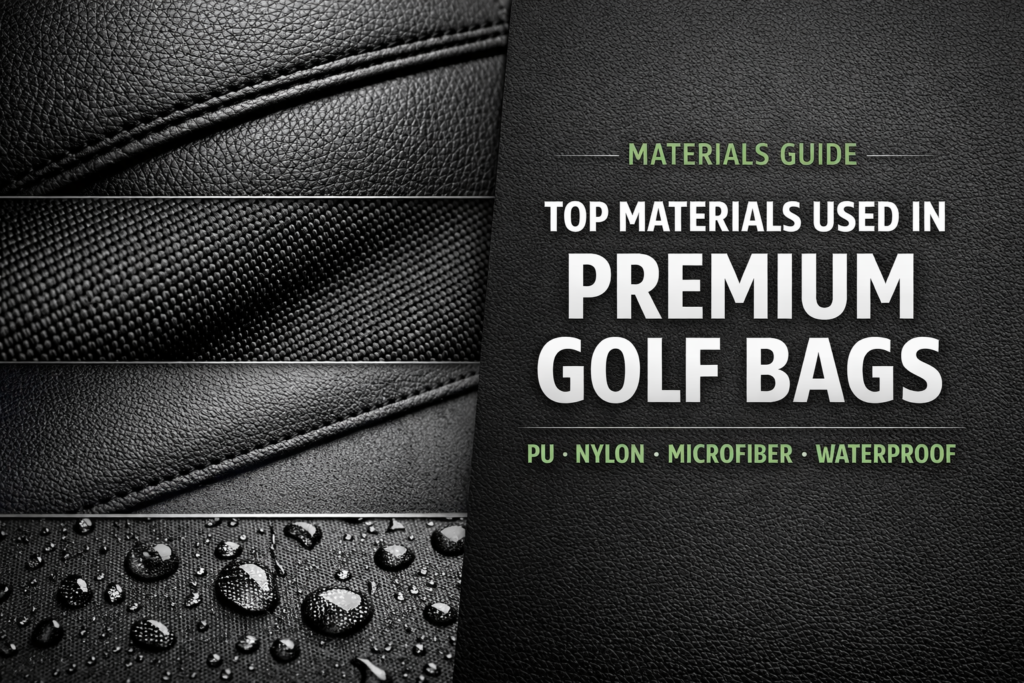
PU, Nylon, Microfiber & Waterproof Fabrics Explained
When it comes to premium golf bags, materials are not just a cosmetic choice — they directly determine durability, performance, user experience, and brand positioning.
Whether you’re a golf brand, golf course, or distributor planning a new product line, understanding the most commonly used materials in high-end golf bags will help you make better design and sourcing decisions.
In this guide, we break down the top materials used in premium golf bags, explaining their advantages, trade-offs, and ideal applications.
Why Material Choice Matters in Premium Golf Bags
In the high-end segment, golfers and buyers expect more than just good looks. The right materials affect:
- Overall durability and lifespan
- Weight and portability
- Weather resistance
- Ease of cleaning and maintenance
- Perceived value and retail positioning
This is why most OEM and custom golf bag projects start with material selection before structure or pocket layout.
1. PU Leather – The Most Popular Premium Look
PU leather (polyurethane leather) is one of the most widely used materials in premium golf cart bags and staff bags.
Among the materials used in premium golf bags, PU leather stands out for its style and durability.
Many brands showcase the materials used in premium golf bags to emphasize their craftsmanship.
Key Advantages
- Clean, structured appearance similar to genuine leather
- Consistent texture and color across batches
- Easy to clean and maintain
- Cost-effective compared to real leather
- Excellent for branding, embroidery, and heat transfer logos
Best Used For
- Cart bags
- Staff bags
- Tournament and sponsor golf bags
- Brands aiming for a premium look with controlled costs
2. Nylon Fabric – Lightweight & Performance-Driven
Nylon remains a core material in performance-focused golf bags, especially stand bags and lightweight cart bags.
Common Types
- 420D / 600D Nylon
- Ballistic Nylon
- High-density woven nylon
Key Advantages
- Lightweight yet strong
- High abrasion resistance
- Flexible for complex pocket construction
- Ideal for active golfers who walk the course
Best Used For
- Stand bags
- Lightweight cart bags
- Hybrid carry bags
- Travel-friendly designs
Many premium golf bags combine nylon panels with PU leather accents to balance weight and aesthetics.
3. Microfiber Leather – The Luxury Upgrade
Microfiber leather (synthetic leather) is often used in luxury golf bags where texture, touch, and durability are prioritized.
Reviewing the materials used in premium golf bags can help you make informed decisions.
For performance, consider the materials used in premium golf bags that best match your playing style.
Key Advantages
- Softer and more leather-like than PU
- Better scratch and wear resistance
- Higher tear strength
- Premium hand feel that elevates brand perception
Considerations
- Higher cost than standard PU
- Typically used selectively rather than full-body
Best Used For
- Luxury staff bags
- High-end cart bags
- Accent panels, handles, and high-contact areas
For brands targeting boutique or professional markets, microfiber leather delivers a noticeable upgrade in quality perception.
4. Waterproof Fabrics – Built for All Conditions
Modern golfers increasingly expect their bags to perform in rain and wet environments, making waterproof materials a key feature in premium designs.
Familiarity with the materials used in premium golf bags will help in selecting the perfect bag.
Common Waterproof Materials
- TPU-laminated nylon
- Waterproof polyester
- Seam-sealed fabrics
- Waterproof zippers (YKK, SBS, or equivalent)
The materials used in premium golf bags influence both style and function.
Key Advantages
Choosing the right materials helps you understand the materials used in premium golf bags.
Before purchase, check the materials used in premium golf bags featured by the brand.
Considering the materials used in premium golf bags can enhance your golfing experience.
- Protects clubs and valuables
- Enhances product functionality
- Strong selling point for wet or coastal markets
Best Used For
- Waterproof cart bags
- All-weather stand bags
- Professional tournament use
True waterproof golf bags require material selection, seam sealing, and zipper integration to work together — not just a single fabric upgrade.
Combining Materials for the Best Results
Most premium golf bags are not made from a single material. Instead, top designs combine multiple fabrics strategically:
- PU leather for structure and branding
- Nylon for weight reduction and flexibility
- Microfiber leather for high-contact areas
- Waterproof fabrics for performance protection
This layered approach allows brands to balance cost, durability, and visual appeal without compromising functionality.
Choosing the Right Material for Your Golf Bag Project
When selecting materials, consider:
- Target market (retail, tournament, club, luxury)
- Usage scenario (walking, cart use, travel, wet weather)
- Branding requirements
- Budget and MOQ constraints
Working with an experienced golf bag manufacturer can help you optimize material combinations early in the design phase — saving time and development cost later.
Final Thoughts
Premium golf bags are defined not just by design, but by smart material choices. Understanding how PU, nylon, microfiber leather, and waterproof fabrics perform allows brands to create products that truly stand out in a competitive market.
If you’re planning a custom golf bag, OEM project, or premium product upgrade, material selection is where quality begins.