
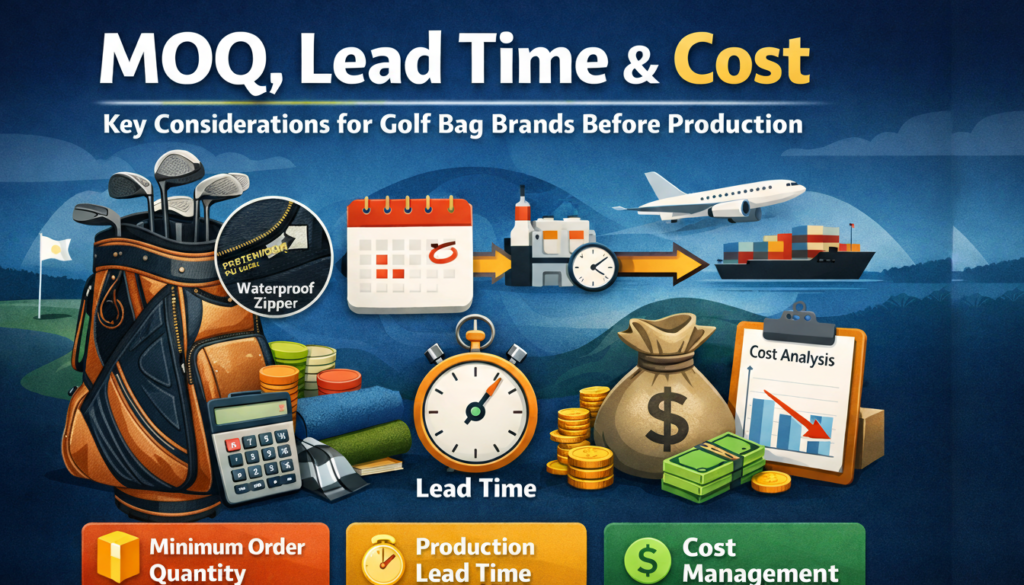
When developing a new golf bag collection or a custom line, understanding key production factors—MOQ (Minimum Order Quantity), lead time, and cost—is essential for any golf bag brand. These elements directly influence the production process, final product quality, and profitability. In this article, we break down these critical factors and provide actionable insights to help brands make informed decisions, streamline production, and bring high-quality golf bags to market efficiently.
1. MOQ (Minimum Order Quantity) in Golf Bag Production: What You Need to Know
Understanding MOQ
MOQ refers to the minimum number of units a manufacturer requires for an order. It’s a crucial factor that impacts multiple aspects of the production process, including cost, material sourcing, and the ability to test the market.
Factors Affecting MOQ in Golf Bag Production:
- Material Choice: Premium materials like PU leather or waterproof fabrics may have higher MOQ requirements than standard nylon or polyester.
- Design Complexity: Custom features such as unique internal layouts, waterproof zippers, and magnetic closures can increase MOQ.
- Production Location: Manufacturers in different countries may set different MOQ thresholds based on local regulations, labor costs, and market demands.
Why MOQ Matters
- Cost Efficiency: Larger order volumes typically reduce the per-unit cost, which allows brands to improve their margins and meet market demand at a lower cost.
- Inventory Management: A higher MOQ means more inventory to manage, which is ideal for established brands but may create cash flow challenges for newer brands.
- Manufacturing Priorities: Manufacturers often prioritize larger orders, which can influence production speed and quality.
How to Navigate MOQ
New or smaller brands can negotiate with manufacturers to secure lower MOQs, often at a higher cost per unit. Consider scaling up production over time to reduce costs as your brand grows. Building a strong relationship with a reliable manufacturer will also help in securing more flexible MOQ terms.
2. Lead Time in Golf Bag Production: Why It’s Critical
What Is Lead Time?
Lead time refers to the amount of time it takes from placing an order until the finished product is ready for delivery. In golf bag production, this timeline includes sourcing materials, manufacturing, quality checks, and shipping.
How Lead Time Affects Your Brand
- Planning & Seasonality: Golf bags are often released seasonally, such as ahead of major tournaments or during peak spring sales. It’s crucial to account for lead time to ensure timely deliveries.
- Customization: Custom features (embroidery, custom compartments, special materials) can extend lead time. Communicate these requirements early with manufacturers to avoid delays.
- Inventory Management: Brands with shorter lead times can replenish stock quickly, whereas longer lead times might lead to stockouts or overstocking.
Typical Lead Times for Golf Bag Production
The typical lead time for producing high-quality golf bags ranges from 30 to 90 days, depending on the complexity of the design and the manufacturer’s location. More intricate customizations, such as waterproof zippers or unique materials, may add time to the production cycle.
How to Minimize Lead Time
- Clear Communication: Set clear timelines with manufacturers from the beginning and ensure both sides understand the delivery requirements.
- Plan Early: Order well in advance of peak seasons or marketing campaigns to avoid rush orders and potential delays.
- Use Local Manufacturers: If possible, choose manufacturers closer to your market. This can reduce shipping time and help meet tighter deadlines.
3. Cost Considerations in Golf Bag Production: Balancing Quality & Affordability
What Impacts Cost?
Several factors influence the cost of producing golf bags, including:
- Materials: Premium materials like leather, microfiber, and waterproof fabrics can significantly increase production costs compared to more standard materials like nylon.
- Customization: Custom features such as embroidery, custom pockets, and specialized zippers add to production costs. The more tailored your design, the higher the price.
- Order Volume: Larger orders generally lower the per-unit cost. However, smaller orders offer flexibility and may be more suitable for emerging brands.
Balancing Quality with Cost Efficiency
While it’s tempting to cut costs, it’s crucial not to compromise on quality—especially when producing premium golf bags. High-quality materials and attention to detail ensure that your products stand out in a competitive market. However, managing production costs while maintaining quality is key to long-term success.
How to Manage Costs
- Negotiate with Manufacturers: Work with manufacturers to secure the best price, especially if you plan to order in bulk or build a long-term relationship with them.
- Standard Components: Using standard features in your designs (without sacrificing too much uniqueness) can reduce production costs while still maintaining a quality product.
- Choose Efficient Manufacturing Locations: Depending on the location of your manufacturer, labor costs may vary. Countries with lower labor costs can provide more competitive pricing
Conclusion: Setting Your Golf Bag Brand Up for Success
Understanding MOQ, lead time, and cost is crucial for any golf bag brand seeking to bring high-quality products to market. By effectively managing these production factors, brands can ensure smooth operations, minimize risks, and deliver products that meet market demand.
By partnering with an experienced manufacturer, these challenges can be managed efficiently. Ready to start your custom golf bag collection? Contact us today to learn how we can help you design, produce, and deliver high-quality bags on time and within budget.