
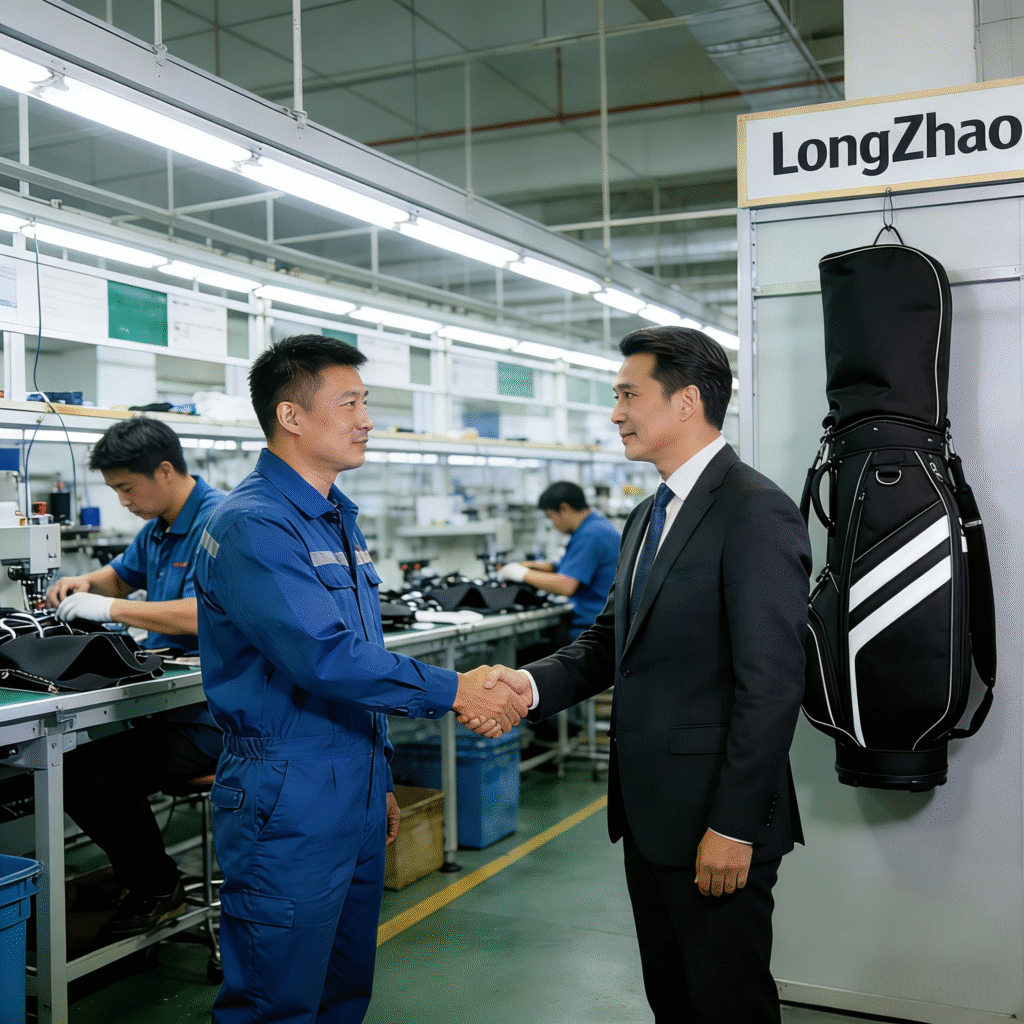
As the golf equipment industry becomes increasingly segmented and brand-driven, OEM and ODM partnerships have emerged as key strategies for brands seeking rapid market entry and product differentiation. For golf bag manufacturers, the ability to provide comprehensive OEM and ODM support goes far beyond production—it directly influences a brand’s market performance and long-term value.
Customization Starts with Clear Communication
Successful OEM and ODM cooperation begins with thorough and professional communication. At the early stage of a project, golf bag manufacturers work closely with clients to understand target markets, product positioning, pricing strategies, usage scenarios, and functional requirements. For OEM projects, manufacturers evaluate customer-provided designs or samples and offer manufacturability and process optimization suggestions. In ODM projects, manufacturers leverage their development expertise to help transform concepts into complete product solutions.
This structured early communication helps minimize revisions later in the process, shortens development cycles, and ensures alignment with market demand.
Design and Engineering Support
Manufacturers with strong OEM and ODM capabilities typically maintain dedicated design and engineering teams. In ODM collaborations, manufacturers can provide full solutions covering style design, structural planning, functional configuration, and material recommendations tailored to the client’s brand identity and target consumers.
During the engineering phase, design concepts are translated into production-ready documentation, including patterns, technical specifications, and bills of materials (BOM). Through structural optimization and process refinement, manufacturers help control costs while maintaining product quality and performance.
Flexible Material and Process Customization
Materials and manufacturing techniques play a crucial role in product differentiation. Golf bag manufacturers usually offer a wide range of material options, such as various grades of nylon, polyester, synthetic leather, waterproof fabrics, and recycled eco-friendly materials. Customization is available in terms of color, texture, and functional performance.
From an aesthetic perspective, OEM and ODM projects may include embroidery, heat transfer printing, rubber patches, metal badges, and specialized stitching techniques. Manufacturers recommend the most suitable processes based on brand positioning and target costs, ensuring a balance between visual appeal and durability.
Prototyping and Testing to Reduce Risk
Prototyping is a critical step before mass production. Based on confirmed specifications, golf bag manufacturers produce samples for evaluation and conduct multiple tests covering appearance, structure, functionality, and durability.
This process allows clients to assess the product in advance and make necessary adjustments before large-scale production, significantly reducing market risk. It also demonstrates the manufacturer’s technical competence and quality assurance capabilities.
Stable Mass Production and Quality Control
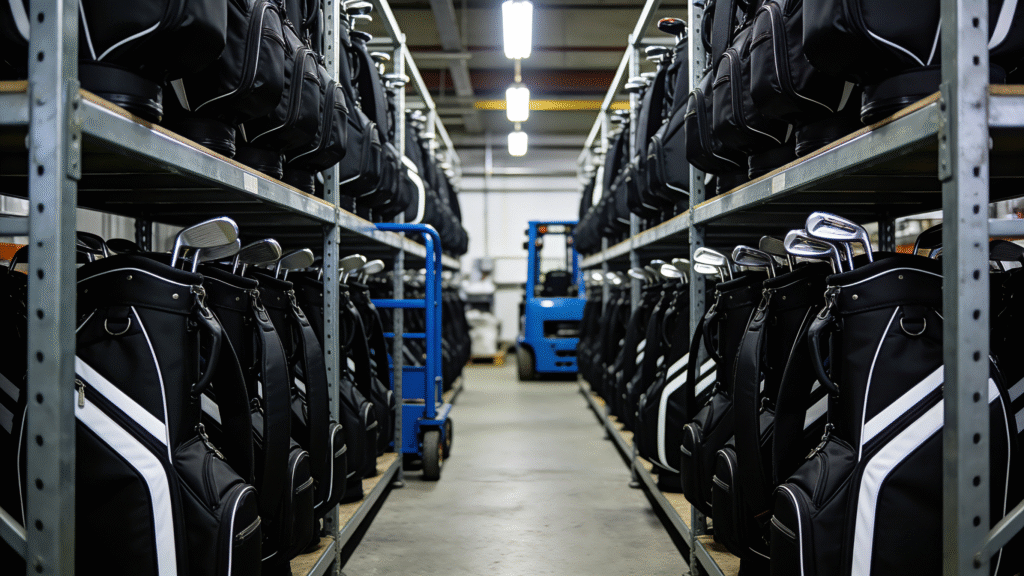
Once a project enters mass production, manufacturing management and quality control become paramount. Professional golf bag manufacturers operate comprehensive quality management systems, ensuring consistency through incoming material inspection, in-process quality control, and final inspection.
Manufacturers also maintain flexible production scheduling to accommodate different order quantities and delivery timelines, providing OEM and ODM partners with greater supply chain reliability.
Long-Term Partnership and Continuous Improvement
OEM and ODM collaborations are long-term partnerships rather than one-time transactions. Leading golf bag manufacturers continuously analyze market feedback and customer input to offer improvement suggestions, such as structural upgrades, material substitutions, or new product development opportunities.
Through ongoing optimization, manufacturers evolve from production suppliers into strategic partners, supporting brands as they grow in competitive global markets.
Conclusion
In today’s golf bag industry, the role of manufacturers in OEM and ODM partnerships extends far beyond contract manufacturing. By offering end-to-end support—from early-stage communication and design development to material customization, prototyping, mass production, and continuous improvement—golf bag manufacturers help brands efficiently transform ideas into market-ready products. This collaborative model is becoming a defining trend for the future of the industry.