
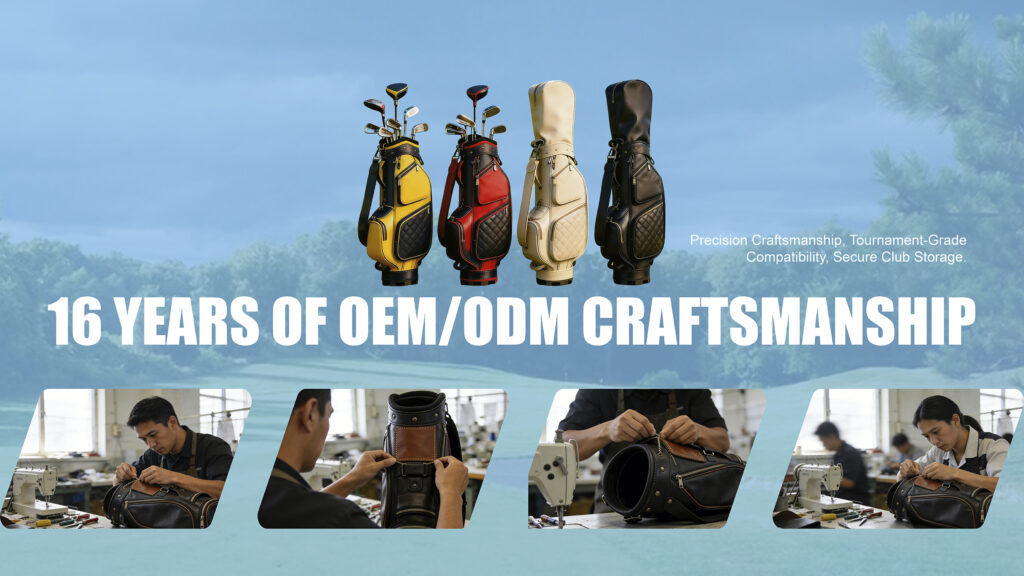
Over the past five years Longzhao Custom Golf Bag Factory has tracked a rapid acceleration in both consumer preferences and technical capabilities in the custom golf bag market. What began as incremental variation in fabrics and logos has matured into a complex ecosystem of material science, supply-chain optimization, digital customization, and sustainability demands. This piece synthesizes Longzhao’s on-the-ground observations, supported by internal production data, client feedback, and market intelligence, to present a comprehensive view of the major trends shaping custom golf bags today and near-future implications for brands, retailers, and OEM/ODM partners.
Context and Methodology: How Longzhao Observes Trends
Longzhao’s trend analysis combines quantitative production metrics and qualitative client interactions:
– Production metrics: monthly order volumes, SKU diversification, average colors per order, average pockets per bag, and turnaround times.
– Client feedback: bespoke design requests, sample revision cycles, and return reasons.
– Market signals: trade show inquiries, wholesale vs. D2C order ratios, and requests for certificates (e.g., OEKO-TEX, REACH).
– Competitive benchmarking: monitoring competitors’ offerings and price points.
From this blended dataset, Longzhao identifies patterns in demand and technological adoption. The observations below reflect aggregated data from 2019–2025 production cycles and are presented as directional trends rather than absolute market share claims.
Material Innovation and Lightweight Construction
One of the most consistent trends is the shift toward advanced, lightweight materials. Longzhao reports a steady migration away from heavy ballistic nylons traditionally used in staff bags toward modern woven nylons, laminated polyesters, and hybrid composites that maintain durability while reducing weight.
Key observations:
– Lightweight fabrics (e.g., 420D nylon with DWR lamination, TPU-coated polyesters) constitute roughly 60–70% of new custom designs.
– Customers increasingly ask for tear-resistant ripstop blends with reinforced high-stress zones (base, top rim).
– Hybrid constructions combining foam-backed panels for rigidity and mesh-lined pockets for breathability are rising.
Implications:
– Reduced bag weight improves golfer experience—particularly for walking golfers—making carry and stand bags most affected.
– Manufacturers must balance lighter fabrics with structural design enhancements to maintain durability and look premium.
Customization Depth: Beyond Logos to Modular Design
Customization has evolved from simple embroidery and color choices to deep modularization:
– Modular pocket systems: clients request interchangeable pocket modules (tech pocket, valuables safe, insulated beverage sleeve) that can be reconfigured.
– Personalized layout: requests for custom club divider counts, unique pocket placements, and tailored strap geometries have increased by an estimated 45% in bespoke orders.
– Branding techniques: embroidered logos remain popular for prestige clients, while dye-sublimation and PU transfer printing are favored for full-surface graphics and photographic prints.
Longzhao’s capability expansion (CNC cutting, multi-head embroidery, sublimation presses) enables rapid iteration on personalized designs, shortening the time between concept and sample.
Functional Design Priorities: Pockets, Dividers, and Ergonomics
Functional improvement leads customer priorities. Common asks include:
– Multi-compartment organization with dedicated pockets for rangefinders, phones, and hydration.
– Improved club access via wider top rims and redesigned dividers; 14-way dividers with full-length protection now dominate premium segments.
– Strap ergonomics: dual-strap balancing systems with memory foam and silicone non-slip backings are becoming standard for mid- and high-tier models.
Data point: orders requesting advanced ergonomics (custom dual straps, memory foam, lumbar support) increased roughly 35% year-over-year across Longzhao’s clientele.
Sustainability and Responsible Sourcing
Sustainability is no longer niche. Longzhao notes:
– A rising number of brands request recycled materials such as RPET fabric and recycled webbing.
– Demand for certifications (GOTS/RPET verification, REACH compliance) has doubled among European and North American clients between 2021 and 2024.
– End-of-life considerations: brands ask about recyclability and repairability—removable pockets and modular components aid circularity.
Challenges:
– Recycled fabrics can vary in consistency; stringent QC processes are necessary.
– Biobased coatings and waterborne adhesives reduce VOCs but may require recalibration of lamination techniques.
Tech Integration and ‘Smart’ Features
Integrating technology into golf bags is a growing segment. Longzhao identifies several tech-enabled requests:
– Built-in rangefinder/phone pockets with RFID-blocking linings and wireless charging pads.
– GPS tracker pockets and discrete wiring channels for portable battery packs.
– Light pockets: illumination solutions for early morning play—LED strips integrated into pocket interiors.
While the absolute share of tech-integrated bags remains lower (approximately 18–22% of custom orders), the growth trajectory is steep as peripherals become cheaper and consumers expect connectivity.
Aesthetic Trends: Colors, Finishes, and Texture Play
Aesthetics drive first impressions and can influence purchase decisions even more than function. Longzhao’s color and finish insights:
– Neutral palettes (navy, slate, black) remain best-sellers for mass-market orders.
– Premium and lifestyle brands request muted earth tones, two-tone textures, and metallic accent finishes (brushed hardware, matte zippers).
– Texture contrast: combining smooth PU panels with woven textures and leather trims is highly requested for premium bespoke orders.
Prints and patterns:
– Camouflage and geometric prints are popular among fashion-forward brands.
– Full-panel dye-sublimation for artwork-heavy collaborations (artist collabs, celebrity lines) is increasingly requested.
Hardware and Component Trends
Hardware quality makes a notable difference in perceived value:
– YKK coil zippers with water-resistant channels are the new baseline in mid-market bags.
– Lightweight magnesium or aluminum legs for stand bags, replacing heavier steel counterparts.
– Magnetic closures and custom molded zipper pulls are trending in premium custom orders.
Longzhao emphasizes component sourcing and testing. Upgrading hardware costs more but reduces warranty claims and enhances brand reputation.
Manufacturing and Supply-Chain Adjustments
The global supply chain continues to push manufacturers to be nimble:
– Shorter lead times: clients prefer faster turnaround even at premium pricing. Longzhao has reduced average turnaround from 60 to 45 days for many custom SKUs by optimizing cutting schedules and establishing buffer inventories of popular materials.
– MOQ segmentation: flexible MOQs (down to 50–100 units) are a competitive advantage for emerging brands; Longzhao now offers tiered pricing to accommodate small-batch runs.
– Nearshoring inquiries: some clients request production closer to end markets for lead-time reduction despite higher costs.
Quality control:
– Inline QC and end-of-line testing for load-bearing seams, waterproofing, and abrasion resistance are now standardized.
Pricing, Margin Pressure, and Value Engineering
Price sensitivity is significant in the mass market, while premium brands focus on margin and perceived value:
– Value engineering techniques (reducing seam counts, optimizing pocket lining usage) are widely used to keep prices competitive.
– Customization costs: embroidery and metal hardware add to unit cost substantially; digital printing reduces per-unit incremental cost for complex graphics in larger batches.
– Pricing transparency: clients increasingly compare TCO (total cost of ownership), factoring in warranty, shipping, and compliance costs.
Longzhao’s guidance to clients often involves prioritizing features that impact perceived value the most—hardware and ergonomics—while using cost-saving measures on internal linings and seam finishing.
Regional Preferences and Market Segmentation
Customer needs vary by region and target segment:
– North America: strong demand for lightweight, carry-friendly stand bags and tech integration (rangefinder pockets).
– Europe: sustainability certifications and recycled content are higher priorities.
– Asia (especially Japan and South Korea): strong appetite for premium aesthetic finishing and detailed embroidery.
– Emerging market brands often focus on price and durability, favoring basic functional features over premium cosmetics.
Segment-specific trends:
– Mass-market retailers emphasize price and core functionality.
– Premium bespoke brands request artisanal detailing—hand-stitched leather trims, custom metal badges.
– Corporate and promotional orders favor branding options and fast turnaround for events.
Quality Assurance and Certifications
Certifications are increasingly requested and often required for certain retailers:
– REACH and CPSIA (for US kids’ products) are common demands.
– OEKO-TEX and Bluesign are requested more frequently for brands touting sustainability.
– Longzhao has invested in traceability systems to document material origins and chemical compliance—critical for large European tenders.
Testing regimes:
– Abrasion testing, water penetration, zipper cycle testing, and load testing for shoulder straps are standard.
– Random lot inspections and third-party lab tests are requested by high-end brands.
Case Studies: Representative Orders and Lessons Learned
1) Lifestyle Collaboration: A fashion label commissioned a limited-edition run (250 units) featuring full-panel dye-sublimated artwork, leather trims, and custom magnetic closures. Lessons: detailed mock-ups and a single physical prototype minimized costly revisions; dye-sub required color-profile coordination to avoid surprises.
2) Performance-Oriented Stand Bag: A performance brand requested a 300-unit run emphasizing ultra-light construction and enhanced club protection. Lessons: balancing foam density and fabric weight was critical; structural reinforcement in stress areas prevented premature wear despite low overall fabric GSM.
3) Sustainable RPET Line for European Retailer: A retailer ordered 1,000 units with 60% recycled content and OEKO-TEX requirement. Lessons: securing consistent quality RPET at scale required advance material commitments and separate QC protocols to confirm recyclate content.
Analysis Table: Feature vs Demand, Cost and Lead-Time Impact
| Feature | Demand Trend (Longzhao Observed) | Cost Impact | Lead-Time Impact | Recommended Target Segment |
|---|---|---|---|---|
| Lightweight Laminated Fabrics | High, accelerating | Moderate (+5–12% vs basic nylon) | Neutral to slight increase (fabric sourcing) | Walking golfers, premium stand bag buyers |
| Modular Pocket Systems | Growing | High (+12–25% depending on modules) | Increases (additional assembly steps) | Custom brands, tech-savvy consumers |
| Recycled RPET Materials | Growing rapidly (esp. EU) | Moderate to high (+8–20% variable) | Potentially higher (material sourcing variability) | Sustainability-focused brands, European market |
| Embedded Tech (RFID/Wireless Charging) | Moderate but fast growth | High (+15–30% including components) | Increases (coordination with electronics suppliers) | Premium, tech-forward consumer segments |
| Full-Panel Dye-Sublimation | Growing in collaborations | Variable (low per-unit at scale) | Neutral to reduced (fewer post-print steps) | Artist collabs, lifestyle brands |
| Premium Hardware & Zippers | High in premium segment | Moderate (+8–15%) | Neutral | Premium, durable-focused products |
| Custom Leather Trim | Stable in high-end orders | High (+20–40%) | Increases (leather sourcing & finishing) | Luxury and gift markets |
Design-to-Market: Reducing Time and Cost for Clients
Longzhao’s best practices for moving from concept to production efficiently:
– Early-stage mockups: prioritize a single physical prototype after digital approvals to minimize iterations.
– Material swatch kits: a curated kit of best-practice fabrics reduces decision fatigue and long lead times.
– Modular templates: offering recombinable pocket and divider templates speeds customization and reduces engineering time.
– Clear tech specs: clients who provide exact hardware part numbers and certifications reduce back-and-forth.
These practices help brands balance speed, cost, and customization depth, enabling small brands to compete without excessive capital investment.
Opportunities for Brands and Retailers
– Offer customization tiers: from “good/better/best” to let consumers self-select functional and aesthetic add-ons.
– Emphasize hybrid selling models: a core SKU with optional aftermarket modules or accessories (detachable insulated pockets, tech modules).
– Collaborate on limited drops: limited-edition runs with artist prints or celebrity endorsements can command premium pricing and test new aesthetics.
– Invest in storytelling: sustainability claims and transparent supply chains are powerful differentiators—document material origins and make QC visible.
Forecast: What to Expect in the Next 3–5 Years
– Modular and repairable design will become mainstream: as circular economy principles spread, expect replacement pocket modules and repair kits to be common.
– Greater adoption of recycled and bio-based materials: as supply stabilizes, pricing parity will improve and certifications will become table stakes.
– Tech will move from novelty to expectation: simple tech features (RFID pockets, tracking) will become low-cost add-ons; integrated power solutions will increase.
– Shorter, flexible production runs: demand for smaller MOQ and faster turnaround will push more factories to adopt flexible manufacturing and digital cutting/printing.
Recommendations for OEM/ODM Partners
– Invest in modular tooling and flexible production lines to cater to small-batch, high-variation orders.
– Build strategic material partnerships to secure recycled materials and premium hardware.
– Strengthen QC and traceability systems to meet European and North American regulatory needs.
– Offer design consultation packages—many small brands value guidance on which custom features add genuine value.
The Competitive Edge of Responsive Customization
Longzhao Custom Golf Bag Factory’s observations show the custom golf bag industry is evolving from simple cosmetic differentiation toward deep functional, material, and technological customization. Brands that succeed will be those that balance meaningful features with cost-conscious design choices, demonstrate environmental responsibility, and work closely with nimble manufacturers that can deliver speed without sacrificing quality.
For manufacturers, the future rewards flexibility—both in supply chains and production capabilities. For brands and retailers, the cornerstone is clarity: clear prioritization of features that deliver the most utility or perceived value to the end consumer. As Longzhao’s experience indicates, the most successful custom programs are those that combine smart material choices, modular functional design, premium hardware selection, and credible sustainability claims—delivered on time with transparent quality assurance.
If you plan to develop a custom golf bag line, consider a staged approach: pilot with a limited modular run, validate consumer preferences on aesthetics and features, then scale with optimized materials and tooling. Longzhao’s on-the-ground insights suggest this path minimizes risk while maximizing market learning—helping brands bring desirable, durable, and differentiated golf bags to the field.