

Longzhao Golf Bag Manufacturer has increasingly positioned itself at the intersection of performance, durability, and environmental responsibility. As consumer demand for sustainable sporting goods rises, Longzhao’s material selection and supply chain decisions have become pivotal not only for branding but for real-world environmental outcomes. This article examines the eco-friendly materials Longzhao uses or can deploy in its golf bags, analyzes the trade-offs of each material, and provides a strategic roadmap for integrating sustainable materials into a product line without compromising function, durability, or cost efficiency.
Sustainability Context and Market Drivers
Sustainability in the sporting goods sector is driven by several converging forces: consumer preference for lower-impact products, retailer requirements for verified sustainable sourcing, increasing regulatory pressure globally on plastics and chemical emissions, and the need for brands to manage long-term supply chain risks. For manufacturers such as Longzhao, responding to these drivers means adopting materials with reduced lifecycle impacts, improving product longevity, and enabling circular economy approaches (repair, reuse, recycling, take-back). Materials selection is foundational: the choice of textiles, coatings, padding, hardware, and closures determines the bag’s carbon footprint, end-of-life fate, and capacity for recycling.
Material Categories Used in Golf Bags
Longzhao’s sustainable strategy centers on rethinking every component: outer fabrics, lining textiles, structural foams and padding, hardware (zippers, buckles, rings), and surface coatings/finishes. Key eco-friendly material categories that Longzhao is using or evaluating include recycled polyester (rPET), recycled nylon (Econyl), organic and low-impact natural fibers (cotton, hemp), plant-based leather alternatives (Piñatex, cork, mycelium leather), bio-based thermoplastic polyurethane (bio-TPU), water-based coatings, and recycled metals for hardware. Each offers differing performance and sustainability profiles.
Detailed Materials Analysis
– Recycled Polyester (rPET): Made from post-consumer plastic bottles or textile waste, rPET reduces reliance on virgin petroleum feedstocks and diverts plastic from landfills. It offers strong performance for abrasion resistance, colorfastness, and water repellency when treated. Potential drawbacks include microplastic shedding and challenges in recycling composite constructions (blends, laminates).
– Recycled Nylon (Econyl): Regenerated nylon reduces the high embodied energy of virgin Nylon 6 production and gives a second life to fishing nets or industrial waste. It delivers high tensile strength and abrasion resistance—valuable for bag bases and high-wear areas. The drawbacks are cost and the need for responsibly managed chemical regeneration facilities.
– Hemp and Organic Cotton Canvas: Natural fibers such as hemp and certified organic cotton are breathable and offer lower pesticide and synthetic fertilizer impact versus conventional cotton. Hemp is particularly durable and becomes softer with use. Limitations include potential susceptibility to moisture and stains unless properly treated with eco-friendly finishes.
– Cork: Harvested from oak bark without cutting trees, cork is renewable, lightweight, water-resistant, and biodegradable. It is suitable for accents, grips, and small panels. Cork’s limitations are supply regionality and cost for large panels.
– Piñatex and Other Plant Leathers: Piñatex (pineapple leaf fiber), apple leather, and other plant-based leather alternatives offer a cruelty-free, lower-impact alternative to animal leather. They can match leather aesthetics and perform well for trim, straps, and accent panels. Challenges include durability in harsh conditions and the need for robust, non-toxic surface finishes.
– Mycelium (Mushroom) Leather: Mycelium-based materials are emerging as low-impact, biodegradable leather alternatives. They can be engineered for different thicknesses and finishes. Current challenges include scaling manufacturing and ensuring UV and abrasion performance in outdoor use.
– Bio-based TPU and Bio-based Polyurethanes: These polymers replace a portion of petroleum feedstocks with plant-derived materials (e.g., castor oil). They offer waterproofing and flexible laminates while reducing fossil-carbon content. Their end-of-life options depend on composite construction but can enable easier recycling than traditional PVC-based coatings.
– Recycled EVA and Natural Rubber: For internal padding and handles, using recycled EVA (from used footwear or packaging) or natural rubber reduces waste and provides excellent shock absorption. Recycled foams require careful sourcing to ensure consistency.
– Water-based and Solvent-free Coatings, Low-VOC Adhesives: Switching from solvent-based coatings and adhesives to water-based systems reduces volatile organic compound (VOC) emissions in manufacturing and improves worker safety.
– Recycled and Responsibly Sourced Hardware: Using recycled aluminum, stainless steel, or zinc die-cast components reduces mining demand. Certification or supplier traceability is important to ensure recycled content claims are credible.
Analysis Table: Comparative Assessment of Eco-Friendly Materials
| Material | Primary Source | Environmental Benefits | Main Drawbacks | Suitability for Golf Bags | Recyclability / End-of-Life | Common Certifications |
|---|---|---|---|---|---|---|
| Recycled Polyester (rPET) | Post-consumer PET bottles, textile waste | Reduces virgin oil use; diverts plastic waste | Microplastic shedding; not always fully recyclable in composites | Excellent for outer fabrics, linings, pockets | Recyclable if mono-fiber; blended constructions problematic | Global Recycled Standard (GRS), Oeko-Tex |
| Recycled Nylon (Econyl) | Fishing nets, industrial nylon waste | High-performance; lowers energy use vs. virgin nylon | Higher cost; limited supplier base | Works well for high-wear areas, straps, bases | Recyclable when mono-material; regeneration depends on supplier | GRS, Recycled Content Claims (third-party verification) |
| Hemp Canvas | Hemp plant | Low water/pesticide needs; highly durable | May require treatments for water resistance; heavier | Good for body panels and pockets | Biodegradable under proper conditions (if untreated) | Global Organic Textile Standard (GOTS) for blends with organic fibers |
| Organic Cotton | Certified organic cotton farms | Lower chemical inputs; familiar textile behavior | Less durable than synthetics; can wrinkle, stain | Suitable for linings, low-wear pockets | Biodegradable when untreated | GOTS, Oeko-Tex |
| Cork | Cork oak bark | Renewable, biodegradable, water-resistant | Supply regionality; cost for larger panels | Great for handles, accents, small panels | Biodegradable and compostable | FSC/PEFC for associated wood products; specific cork certifications |
| Plant-based Leathers (Piñatex, Apple, etc.) | Agro-waste fibers (pineapple leaves, apple pomace) | Uses waste streams; lower animal impact | Surface coating often required; longevity varies | Trim, straps, panels with dry usage | Depends on backing/coating; some are partially biodegradable | Manufacturer-specific certifications; third-party verifications emerging |
| Mycelium Leather | Fungal mycelium cultured on substrates | Rapidly renewable; biodegradable | Scaling & UV/weather resistance challenges | Trim, accents; experimental use for structural parts | Potentially biodegradable | Emerging; look for cradle-to-cradle or LCA-based claims |
| Bio-based TPU / PU | Partially plant-derived polyols (e.g., castor oil) | Lower fossil carbon content; flexible, durable | Still polymer-based; chemical circularity limited | Laminates, waterproof coatings | Depends on laminate composition | Oeko-Tex, manufacturer sustainability reports |
| Recycled EVA Foam | Post-consumer foam (footwear, packaging) | Diverts waste; maintains cushioning | Consistency of recycled supply; potential odors | Padding, base inserts, dividers | Hard to recycle; downcycling common | Recycled content verifications |
| Recycled Metals (aluminum, stainless) | Post-consumer metal scrap | Reduces mining impacts; very recyclable | Cost, potential supply traceability issues | Hardware: buckles, rings, zippers | Highly recyclable | Recycled content certifications; supplier audits |
Lifecycle and Performance Trade-offs
Choosing sustainable materials requires balancing lifecycle environmental performance with in-use durability. A golf bag’s utility depends heavily on ruggedness, weather resistance, and weight. Short-lived or poorly performing “green” materials will drive faster product turnover, negating many environmental benefits. Therefore Longzhao’s strategy emphasizes:
– Prioritizing high-durability sustainable options in wear-critical areas (e.g., recycled nylon for bases).
– Using natural or plant-based accents where exposure is limited (e.g., cork handles, Piñatex trim).
– Applying water-based, durable laminates that extend product life while reducing toxic emissions.
– Avoiding single-use packaging and considering recycled or compostable packaging materials.
A simple lifecycle observation: a bag made from recycled PET that lasts twice as long as a comparable virgin polyester bag will almost always have a lower total environmental impact despite challenges around microplastics.
Supply Chain and Certification Strategy
For Longzhao to credibly claim sustainability, supply chain transparency and third-party verification are essential. Key steps include:
– Supplier audits for recycled content: Require material suppliers to provide chain-of-custody documentation (e.g., GRS certificates) that verify post-consumer or pre-consumer recycled inputs.
– Chemical management: Adopt bluesign or similar frameworks to manage dyes and finishing chemicals to protect workers and reduce effluent toxicity.
– Traceability for plant leathers and cork: Obtain supplier documentation showing the use of agricultural residues (for Piñatex) or responsible cork harvest practices.
– Claim verification: Utilize independent life cycle assessments (LCAs) to quantify greenhouse gas emissions, water usage, and other impacts vs. conventional materials.
– Labels and certifications: Pursue certifications meaningful to consumers and retailers — GOTS (for organic cotton), GRS (for recycled content), Oeko-Tex (for harmful substances), and possibly Cradle to Cradle for circularity claims.
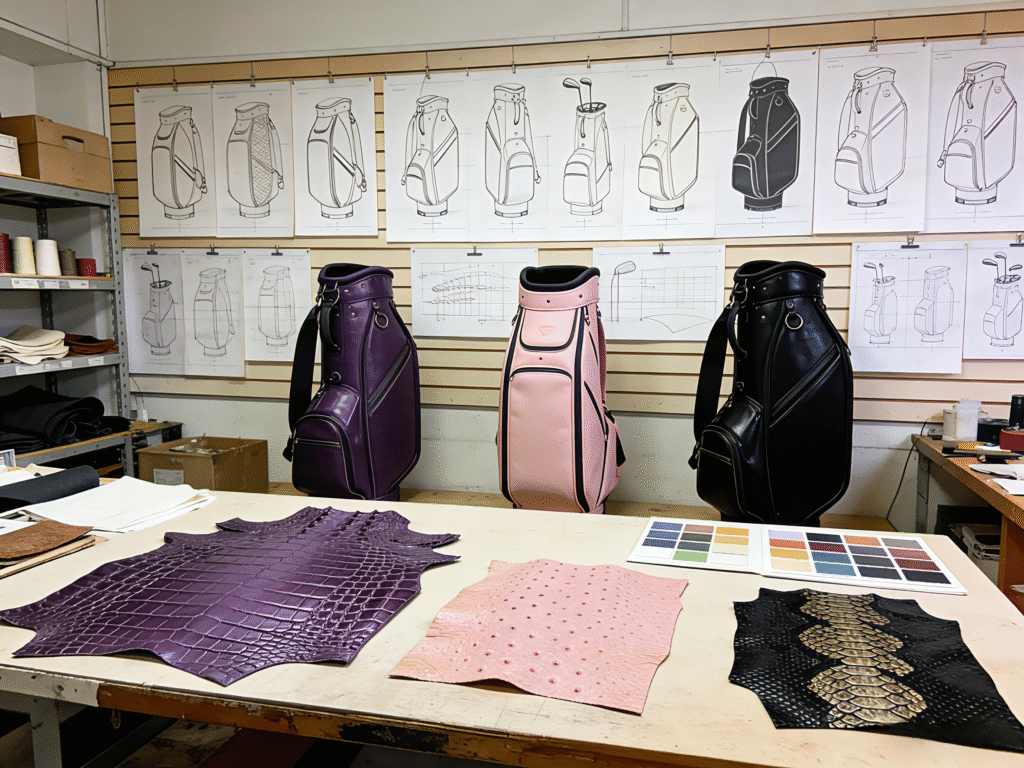
Manufacturing Considerations and Process Changes
Switching materials often requires process adjustments:
– Cutting and sewing: Natural fibers and plant-based leathers may require different cutting tools or stitch settings compared to synthetics.
– Coating and lamination: Water-based systems may need controlled drying ovens and ventilation to achieve comparable durability.
– Adhesives: Solvent-free adhesives reduce VOCs but sometimes need longer cure times or different bonding techniques.
– Quality assurance: Testing regimes must adapt to ensure new materials meet abrasion, UV, and water resistance standards critical to golf bags.
– Worker training: New materials and chemical systems require updated safety practices and training.
Capital expenditures may be required for new equipment or finishing lines; however, investing early can reduce future regulatory risks and open access to sustainability-conscious markets.
Cost Implications and Price Positioning
Eco-friendly materials often carry a price premium due to smaller-scale production, certification costs, and sourcing complexity. Longzhao can manage cost impacts through:
– Strategic mixed-material design: Use high-performance recycled synthetics in high-wear zones while reserving premium plant or natural materials for accents.
– Economies of scale: Consolidating orders and establishing long-term contracts with recycled material suppliers reduces unit costs.
– Value-based pricing: Position premium sustainable bags as higher-value, emphasizing longevity and verified environmental benefits.
– Product tiers: Offer a mainstream line using cost-effective recycled synthetics and a premium line using advanced plant leathers and certified materials.
Transparent consumer communication about the reasons for price differences builds trust and often supports purchase decisions in the sustainability segment.
End-of-Life Strategies and Circularity
To maximize material value and minimize landfill contributions, Longzhao should consider circular strategies:
– Modular design: Make components (straps, pockets, dividers) replaceable to extend product life.
– Take-back and repair programs: Offer repair services and incentivize returns for end-of-life recycling.
– Material mono-design for recyclability: Reduce composite materials in some models to facilitate recycling.
– Collaborations with recyclers: Partner with textile and polymer recyclers to process returned bags into new yarns or fillers.
Collectively, these tactics reduce environmental impact and reinforce brand commitment to sustainability.
Consumer Communication and Marketing
Credibility matters. Longzhao’s messaging should focus on verifiable claims and performance:
– Use specific, documented claims (e.g., “50% recycled polyester outer fabric certified to GRS”) instead of vague buzzwords.
– Publish LCAs or summary environmental impact comparisons for top products.
– Showcase repairability and product care guidance to encourage longer use.
– Provide transparent information about disposal options and any take-back schemes.
Clear labeling and storytelling that connects materials to tangible benefits (e.g., durability, water resistance, no-animal leather) will resonate with both environmentally conscious buyers and performance-minded golfers.
Testing, Quality, and Performance Validation
Sustainable materials must meet functional standards for golf bags:
– Abrasion resistance tests (Martindale or Taber) to ensure longevity in high-wear areas.
– UV exposure testing for colorfastness and material degradation.
– Water resistance and waterproof seam testing for coatings and laminates.
– Hardware fatigue testing for buckles, zippers, and straps.
Longzhao should publish performance benchmarks alongside sustainability claims to demonstrate that eco-friendly materials do not compromise bag performance.
Case Studies and Prototyping Approach
A pragmatic approach to adopting new materials is iterative prototyping and localized pilot runs:
– Pilot Model A: rPET body, recycled nylon base, cork handle, water-based laminated lining. Test for 12 months in field trials.
– Pilot Model B: Hemp canvas main panels, Piñatex trim, recycled EVA padding, recycled metal hardware. Evaluate abrasion/UV and customer feedback.
– Pilot Model C (Premium): Recycled nylon body with bio-TPU waterproofing, mycelium leather accents, modular dividers for repair.
Collect performance data, customer feedback, and manufacturing learnings from pilots before full-scale rollout.
Risk Management and Mitigation
Key risks include supply volatility, greenwashing exposure, and performance shortfalls. Mitigation strategies:
– Multi-sourcing: Maintain several vetted suppliers for critical materials.
– Certification and audits: Third-party verification reduces greenwashing risk.
– Warranty and repair programs: Offset performance concerns by supporting longer product life.
– Continuous R&D: Invest in material testing and partnerships with material innovators.
Recommendations and Roadmap for Longzhao
1. Prioritize high-impact substitutions: Replace virgin nylon/polyester in bases and panels with recycled equivalents and adopt bio-based or water-based coatings.
2. Invest in testing and certifications: Commission LCAs for flagship models and acquire GRS/Oeko-Tex certifications where applicable.
3. Design for longevity and repairability: Implement modular features and provide repair kits and instructions.
4. Launch a phased product line: Start with a sustainable “core” model blending recycled synthetics and natural accents, then introduce a premium “eco-luxe” line with plant leathers and cork.
5. Create visible transparency: Publish materials lists, certifications, and environmental performance metrics on product pages.
6. Build partnerships: Work with recyclers, certification bodies, and material innovators to stay ahead of technology and regulatory trends.
For Longzhao Golf Bag Manufacturer, the transition to eco-friendly materials offers an opportunity to align brand purpose with market demand while improving long-term resilience. By combining high-performance recycled synthetics, responsibly sourced natural fibers, innovative plant-based leathers, and supply chain transparency, Longzhao can create golf bags that deliver both sustainability and sport-grade durability. The pathway requires disciplined testing, credible certification, and smart product design—prioritizing longevity and end-of-life strategies to ensure that environmental claims result in meaningful impact. With a clear roadmap and phased implementation, Longzhao can be a compelling example of how sporting goods manufacturers can reduce environmental impact without compromising the needs of players.