
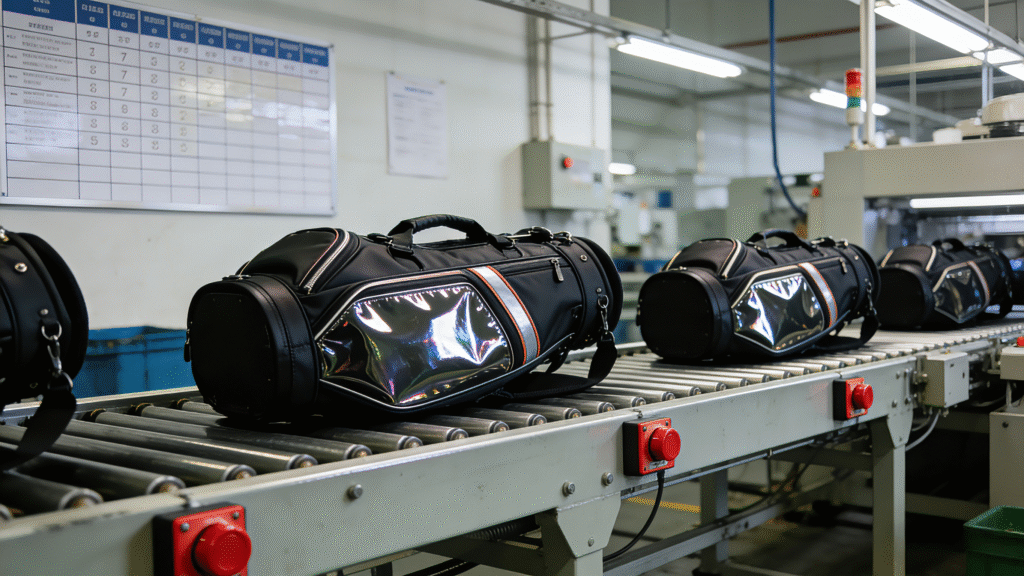
Bringing a golf bag from a sketch on a designer’s desk to pallets leaving a factory dock requires a carefully choreographed sequence of creative, technical, and logistical steps. Working with a dedicated manufacturer like Longzhao Golf Bag Manufacturer streamlines this process by combining design collaboration, material sourcing, prototype iteration, quality control systems, and scalable production capacity. Below is an in-depth exploration of how a concept becomes a mass-produced product with Longzhao — including practical guidance, risk analysis, timelines, cost considerations, and recommended best practices to ensure a smooth transition from idea to market-ready golf bags.
Understanding the Starting Point: From Idea to Project Brief
Every successful product journey begins with a clear brief. Whether you are an established brand seeking a new model or an entrepreneur launching a private-label golf bag, Longzhao begins by translating your vision into actionable specifications. Typical elements of an effective brief include:
– Target market and price point: luxury, mid-range, budget, junior, or specialty (travel, cart, Sunday bags).
– Intended materials and performance qualities: waterproofing, durability, weight, padding levels, reinforcement for heavy clubs.
– Design language and brand identity: logos, colorways, silhouette, compartment structure.
– Functional requirements: number of pockets, umbrella holders, cooler pockets, club dividers, stand mechanics, strap system.
– Volume expectations and timeline: pilot runs, seasonal production, or ongoing replenishment.
A detailed brief minimizes misunderstandings, shortens development cycles, and reduces costly revisions later.
Design and Engineering Collaboration
Once a brief is established, Longzhao typically allocates a project team consisting of a product manager, industrial designer, pattern maker, and materials specialist. This team transforms conceptual sketches into technical packs (tech packs) that include:
– 2D flats and 3D CAD models
– Materials list and performance specifications (denier, coatings, zippers, hardware specs)
– Measurements, tolerances, and seam allowances
– Bill of Materials (BOM) and preliminary costings
– Assembly sequence and stitching/heat-sealing diagrams
Key considerations during design and engineering:
– Material compatibility: ensuring coatings, laminate layers, and backing materials work together for durability and waterproofing.
– Weight vs. strength tradeoffs: balancing lightweight construction with reinforcement where clubs exert pressure.
– Manufacturability: adjusting designs to fit Longzhao’s machinery capabilities and sewing/trim processes to reduce labor-intensive details that inflate cost.
– Ergonomics and user experience: assessing strap placement, pocket access, and stability on carts.
Early identification of potential manufacturing challenges is crucial — it reduces the number of prototype iterations and accelerates the path to tooling.
Prototyping and Sampling
Prototyping is the experimental phase where the design is tested physically. Longzhao offers multiple prototype stages:
– Visual sample (mood sample): a non-functional mockup to confirm aesthetics, color, and branding.
– Functional sample (fit sample): a full-construction sample that tests weight, balance, and pocket function.
– Pre-production sample (PPS): built using chosen production processes and materials, mirroring mass production quality.
Effective sampling practices:
– Agree on specific sample objectives for each stage to avoid scope creep.
– Use the same materials and hardware planned for production when creating PPS to ensure accurate performance testing.
– Conduct field tests: have golfers use functional samples in real conditions to assess ergonomics and durability.
Iterative sampling (often 2–4 rounds) is common. Clear feedback and prioritized change lists accelerate approvals while keeping costs in check.
Materials Sourcing and Supply Chain Management
Longzhao’s role expands beyond sewing and assembly; it manages supply chains for textiles, coatings, zippers, buckles, foams, and protective films. Critical supply chain activities include:
– Vendor qualification: verifying quality, certifications (e.g., REACH, Oeko-Tex), and capacity.
– Lead-time optimization: staggering orders for long-lead components (custom metal hardware, printed zippers).
– Cost negotiation and volume forecasting: leveraging economies of scale for better pricing.
– Contingency planning: secondary suppliers and buffer stock for critical components.
Sustainable sourcing is increasingly important. Longzhao can advise on recycled textiles, PFC-free DWR treatments, and recyclable packaging to align with brand sustainability goals.
Tooling, Jigs, and Manufacturing Setup
For complex golf bags, tooling saves labor and ensures consistency. Longzhao prepares all production tools before mass runs:
– Cutting dies and templates for fabric nesting
– Molds for molded base plates and rubber feet
– Jigs for strap assembly and reinforced stitching points
– Custom fixtures for automated/semiautomated sewing stations
Investing in tooling has an upfront cost but reduces unit labor time and improves repeatability — essential for margin control at scale.
Quality Control and Testing
Quality control (QC) is embedded throughout the production lifecycle. Longzhao provides QC at multiple stages:
– Incoming QC for raw materials: checking denier, coating adhesion, colorfastness, and hardware dimensions.
– In-process QC: line checks for stitch density, seam security, and dimensional tolerances.
– Final inspection (AQL): sampling finished goods for cosmetic defects, functionality, and packing integrity.
– Performance testing: water resistance, abrasion resistance, foam compression recovery, and UV colorfastness.
Brands should agree upon inspection standards and AQL levels before production to avoid disputes. For high-value lines, independent third-party audits can be arranged.
Mass Production: Planning to Delivery
Planning a production run involves sequencing capacity, balancing SKUs, and determining packaging and labeling requirements.
– Production scheduling: balancing orders to maximize throughput and minimize changeover times.
– SKU optimization: batch sizes per color/trim to reduce setup and inventory.
– Packaging: inner polybags, hangtags, carton specs, and palletization standards for ocean or air freight.
– Compliance documentation: country-of-origin labeling, care instructions, and any regulatory certificates.
Logistics coordination covers Incoterms, shipment consolidation, freight forwarding, and customs documentation. Longzhao typically coordinates with forwarders to provide DDP or FOB options per client needs.
Risk Management: Common Pitfalls and Mitigations
Manufacturing at scale introduces predictable risks. Here are typical issues and how Longzhao mitigates them:
– Material shortages: maintain safety stock and prebook critical components.
– Quality drift during ramp-up: stagger ramp-up with sampling and hold points for approvals.
– Communication gaps: designate a single point of contact from both sides and use shared production dashboards.
– Timeline slippage: build realistic lead times with buffer windows for tooling and customs.
– Unexpected cost increases: lock prices through contract clauses for key components when feasible.
Proactive measures and transparent reporting help reduce surprises and align stakeholder expectations.
Case Example: From Concept to 5,000-Unit Run (Illustrative)
This illustrative timeline outlines the steps and typical durations for a 5,000-unit golf bag production:
– Week 0–2: Project kickoff and brief finalization.
– Week 3–6: Technical packs, initial CADs, materials selection.
– Week 7–10: Visual and functional sampling (2–3 iterations).
– Week 11–14: Pre-production sample approval and final BOM confirmation.
– Week 15–18: Tooling and pilot run (first 200–300 units).
– Week 19–26: Mass production of remaining units, in-process QC.
– Week 27–28: Final inspection, packing, and shipment.
Total approximate lead time: 6–7 months from concept to container departure for medium-complexity designs. Simpler designs or pre-approved components can shorten this substantially.
Cost Breakdown and Pricing Considerations
Understanding cost drivers helps brands decide where to invest and where to simplify:
– Materials (40–55%): fabric, liner, foam, hardware, zippers.
– Labor (20–30%): cutting, sewing, assembly, packing.
– Overhead and tooling amortization (5–10%): jigs, molds, setup costs.
– Quality and testing (3–6%): inspections, test equipment.
– Logistics and duties (10–15%): freight, customs, insurance.
Higher-end finishes (leather trims, custom metal hardware, advanced coatings) substantially raise material percentages. Volume reduces per-unit tooling and overhead costs.
Analytical Table: Stage-by-Stage Analysis
| Stage | Typical Duration | Primary Outputs | Key Risks | Mitigations |
|---|---|---|---|---|
| Concept & Briefing | 1–2 weeks | Project brief, target specs | Unclear requirements | Detailed templates; kickoff meeting |
| Design & Engineering | 2–4 weeks | Tech packs, CAD, BOM | Unmanufacturable details | Design reviews with production team |
| Sampling | 3–8 weeks | Visual/functional/PPS samples | Multiple reworks | Clear sample objectives; prioritized feedback |
| Tooling & Setup | 2–6 weeks | Dies, molds, jigs | Tool defects or delays | Prototype tooling; vendor audits |
| Mass Production | 4–12 weeks | Finished goods | Quality drift, supply delays | In-process QC, buffer stock |
| Inspection & Shipping | 1–3 weeks | Packing, certifications, shipment | Failed inspections, customs holds | Pre-shipment QC, accurate paperwork |
Customization, Branding, and Value-Added Options
Longzhao supports a range of custom options to help products stand out:
– Custom woven labels, printed hangtags, and instruction cards.
– Embroidery, debossing, laser engraving on leather trims.
– Branded hardware: custom zipper pulls, buckles, and tags.
– Special packaging: branded boxes, reusable tote bags, or retail-ready display units.
– Private labeling and white-label production for retail chains.
Each customization area affects lead time and MOQ. Brands should coordinate early for custom tooling and print runs.
Sustainability and Compliance
Sustainability is a competitive differentiator. Longzhao can implement eco-focused approaches:
– Recycled polyester or nylon fabrics.
– PFC-free durable water repellents (DWR).
– Minimizing single-use plastics in packaging.
– End-of-life considerations: modular designs to simplify repairs and recycling.
Compliance with international standards (REACH, CPSIA for U.S. children’s products, or specific retailer requirements) is managed through documentation and testing pipelines. Brands should disclose regulatory obligations early in the project.
Working Relationship Best Practices
To get the most from a partner like Longzhao, adopt these best practices:
– Clear Communication: Use shared project timelines, file repositories, and weekly status calls during key stages.
– Single Point of Contact: Both brand and factory should have dedicated project managers to expedite decisions.
– Formal Approvals: Use written sign-offs for samples, BOMs, and production hold points to avoid scope creep.
– Forecasts and Rolling Orders: Share demand forecasts to help capacity and material planning; commit to rolling orders when feasible.
– Continuous Improvement: After each production run, conduct a lessons-learned review to refine processes and reduce cost/time in future runs.
After Sales: Warranty, Repairs, and Feedback Loops
Post-production support strengthens brand reputation. Longzhao can offer warranty repairs, spare parts (zippers, clips), and refurbishment for high-end lines. Establishing a clear defect handling process and turnaround times prevents customer service failures and reduces returns.
Collecting field feedback through surveys, retailer feedback, and returns analysis informs iterative improvements for future seasons.
Choosing the Right Production Strategy
Your production strategy depends on market goals:
– Small-batch and seasonal drops: favored for premium, limited-edition lines. Higher per-unit cost but lower inventory risk.
– Large continuous runs: for stable SKUs with predictable demand. Lower cost per unit, but requires confident forecasting.
– Hybrid models: initial small batches to test the market, then scale successful SKUs into larger runs.
Longzhao’s flexibility enables brands to adopt any of these models, but aligning forecasts and lead times is essential.
From Vision to Reliable Supply
Producing a golf bag at scale is more than sewing components together — it’s an orchestration across design, materials science, logistics, and quality systems. Working with a manufacturer like Longzhao streamlines that orchestration by providing technical know-how, supplier networks, production discipline, and quality assurance processes. The keys to success are clear briefs, iterative sampling with targeted feedback, robust supply chain planning, and transparent communication through every stage of development and production.
When those elements are in place, a concept evolves smoothly into a mass-produced product that meets brand expectations, delights golfers in the field, and delivers predictable commercial outcomes. Whether you are launching a single signature bag or building a multi-SKU seasonal line, the structured approach outlined here — adapted to your specific needs — will help turn ideas into high-quality, market-ready golf bags manufactured reliably at scale with Longzhao.