
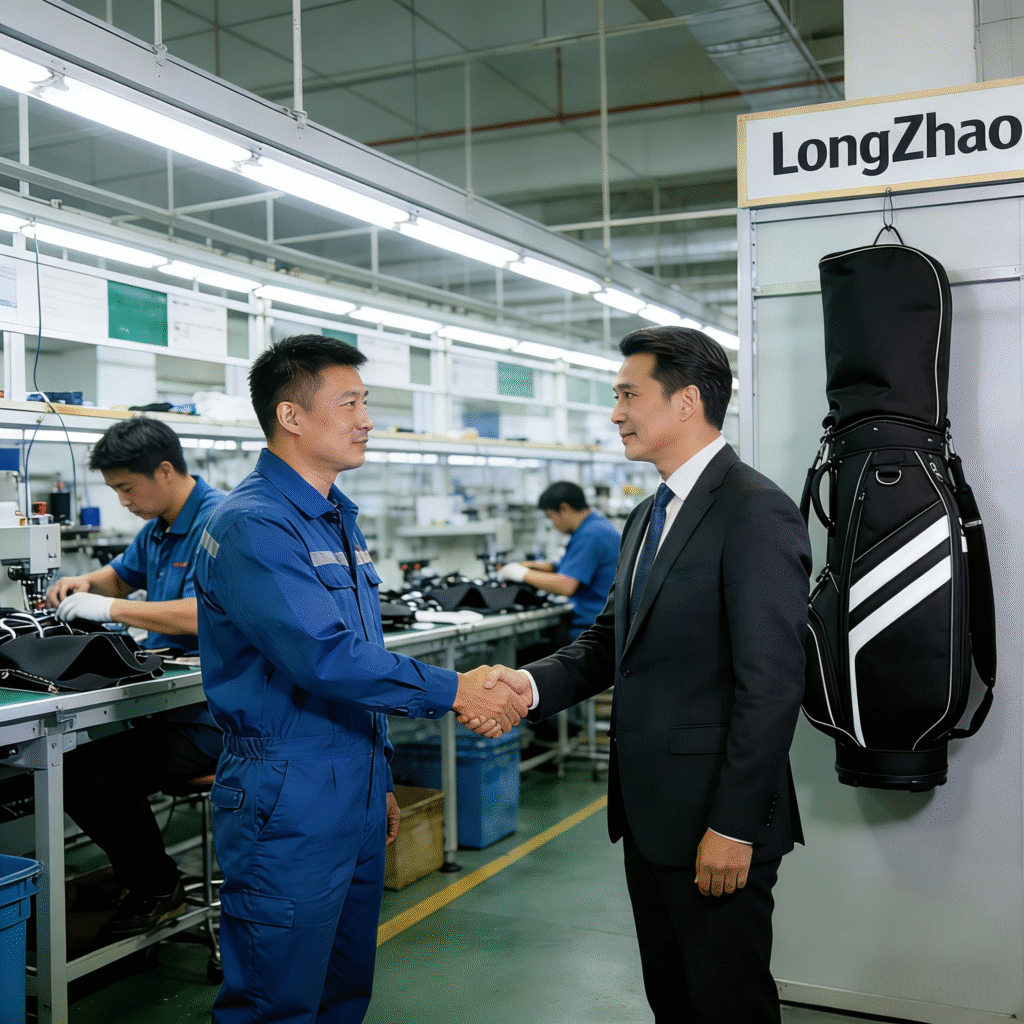
How Longzhao Custom Golf Bag Factory Meets Sustainability Expectations is best understood as a multifaceted effort that touches materials, manufacturing processes, supply-chain transparency, social responsibility, and product end-of-life planning. In a marketplace where consumers, retailers, and regulators increasingly demand measurable environmental and social performance, Longzhao’s approach provides a practical example of how a mid‑sized industrial manufacturer can translate sustainability intent into operational reality. This article explains the strategies Longzhao employs, evaluates their effectiveness, and highlights remaining gaps and opportunities for continual improvement.
Context: Why Sustainability Matters for Golf Bag Manufacturing
Golf bags are complex consumer goods: they combine textiles, foams, plastics, metal fittings, zippers, and webbing. Historically, many of those components have relied on virgin synthetic polymers, chemical finishes, and energy‑intensive processes. Sustainability in this sector therefore requires a systems view — reducing raw material impacts, cutting production energy and water use, minimizing toxic chemical releases, and ensuring fair and safe labor practices across a global supply chain.
For a custom golf bag factory like Longzhao, sustainability expectations come from several directions:
– Brand partners and retailers that require compliance with environmental and social codes.
– End consumers who value recycled content, durability, and repairability.
– Investors and financial institutions assessing supply‑chain risk.
– Regulatory bodies enforcing chemicals, waste, and emissions standards.
Meeting these expectations demands a combination of measurable targets, documented systems, investments in cleaner technologies, and transparent reporting. Longzhao’s strategy centers on five pillars: responsible materials sourcing, cleaner and efficient manufacturing, waste and chemical management, worker welfare and governance, and product lifecycle design.
Responsible Materials Sourcing
Sourcing decisions have the largest upstream impact for golf bags. Longzhao has focused on increasing the share of recycled and lower‑impact materials while maintaining performance and cost targets required by clients.
Key actions:
– Recycled Content: The factory sources recycled polyester (rPET) for outer fabrics and linings, and has begun qualifying recycled nylon for higher‑wear areas. Recycled webbing and straps are also used where strength and appearance permit.
– Low‑Impact Coatings and Finishes: Longzhao experiments with PFC‑free durable water‑repellent (DWR) treatments and water‑based polyurethane coatings to reduce per‑fluorinated chemical use and solvent emissions.
– Alternative Foams and Padding: Foam suppliers are evaluated for recycled content and for the use of physical (non‑chemical) blowing agents; the factory is assessing melamine‑free laminates and lower‑VOC adhesives.
– Supplier Qualification & Traceability: The procurement team requires material data sheets (MDS), recycled content certificates, and third‑party verification (e.g., GRS, RCS) where available. For critical components, Longzhao requests mill test reports and chain‑of‑custody documentation.
Practical trade‑offs and outcomes:
– Recycled materials sometimes require color or surface treatment adjustments; Longzhao’s R&D lab develops compatible finishing recipes to ensure durability.
– Cost premiums for certified recycled materials are negotiated through volume commitments and multi‑year contracts.
Cleaner and More Efficient Manufacturing
Manufacturing is the core arena where Longzhao converts materials into finished bags. The factory focuses on energy efficiency, water conservation, digitalization, and process optimization to lower per‑unit environmental footprints.
Operational initiatives:
– Energy Management: Installation of high‑efficiency motors, LED lighting, VFDs (variable frequency drives), and a shift to energy‑efficient sewing and cutting equipment. The factory uses an energy management system to monitor consumption by production line and identify waste.
– Renewable Energy: Longzhao has piloted rooftop solar arrays at one facility and purchases renewable energy credits (RECs) to offset a portion of electricity consumption while planning further onsite generation.
– Water Reduction: Dyeing and washing processes were optimized using lower liquor ratios, staged washing, and chemical recycling systems where fabrics allow. The factory installed water meters at key points to drive operational change.
– Digital Cutting and Patterning: CNC cutting systems and optimized marker planning reduce textile offcuts and manual errors, increasing material yield.
– VOC and Emission Controls: Local exhaust ventilation and solvent recovery systems in adhesive and finishing areas reduce worker exposure and fugitive emissions.
Performance measurement:
– Longzhao tracks energy per finished bag (kWh/bag), water per finished bag (L/bag), and production yield (% fabric utilization). These metrics feed monthly operational reviews and continuous improvement projects.
Waste, Chemicals, and Circularity
Waste reduction and safer chemical management are central to meeting regulatory and brand requirements.
Waste management practices:
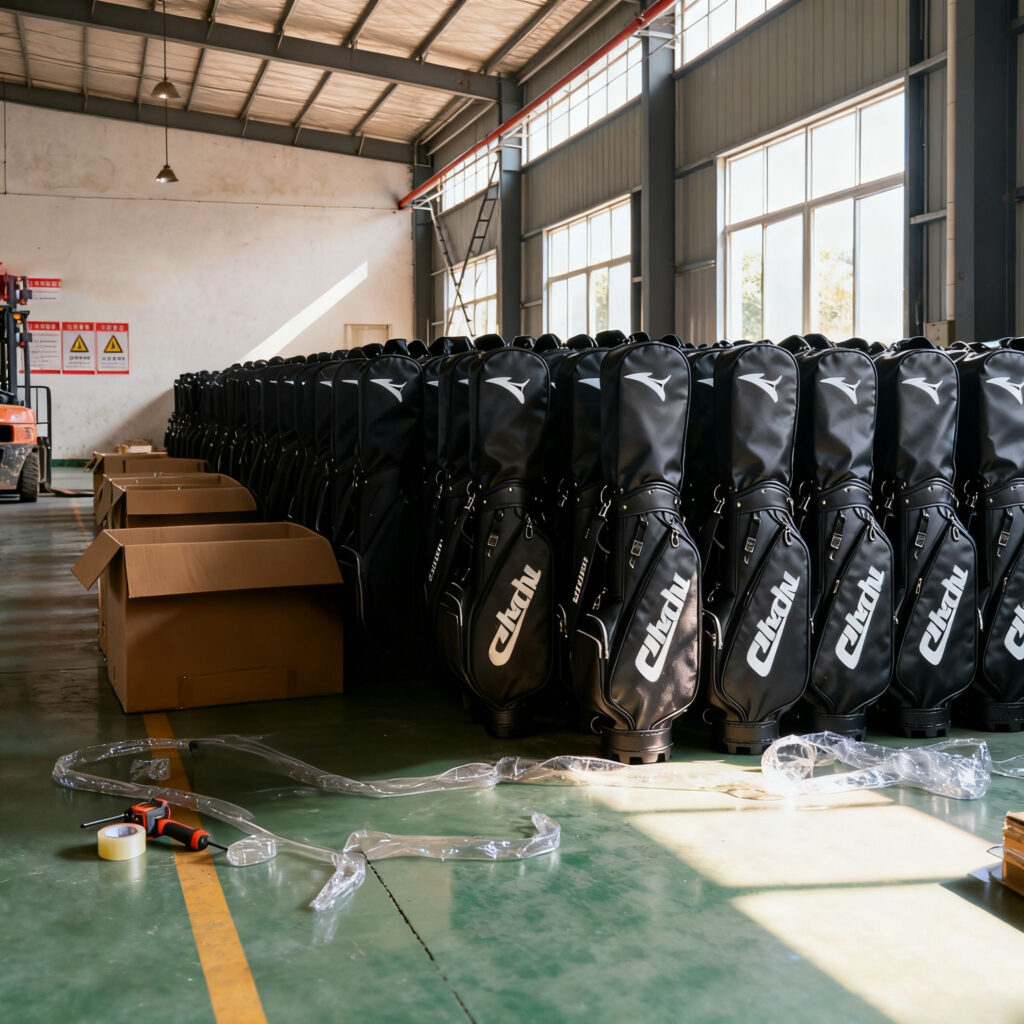
– Segregation at source: Fabric offcuts, textiles for recycling, metals, plastics, and general waste are separated. Textile offcuts suitable for mechanical recycling are baled and shipped to recyclers.
– Recycling partnerships: The factory partners with regional textile recyclers for offcuts and with plastic recyclers for packaging waste. Metal trims are returned to suppliers where take‑back schemes exist.
– Repair and remanufacture: For custom orders or warranty returns, Longzhao offers repair pathways and remanufacturing of returned parts to prolong product life.
Chemical management:
– Restricted Substances List (RSL): The factory enforces a supplier RSL consistent with client expectations and international standards. Incoming materials are tested for priority regulated substances, and nonconforming material is rejected or remediated.
– Inventory of Hazardous Chemicals: Longzhao maintains a centralized chemical inventory and substitutes higher‑risk chemicals with greener alternatives where feasible.
– Worker safety and handling: Training, PPE, SDS availability, and proper storage reduce exposure risks.
End‑of‑life and circular design:
– Design for disassembly: Where possible, Longzhao designs bags so that metal fittings and zippers can be separated from textile components to facilitate recycling.
– Labeling and take‑back pilots: The factory has supported brands in piloting QR code-based product information and limited take‑back trials to recover materials.
Social Responsibility and Governance
Sustainability is incomplete without social performance. Longzhao emphasizes worker welfare, transparent governance, and supplier management.
Labor and workplace practices:
– Fair labor policies: The factory follows local labor laws and supplements them with company codes of conduct covering working hours, wages, and nondiscrimination.
– Health and safety: Regular safety trainings, incident reporting systems, and workplace ergonomics improvements aim to reduce injuries.
– Skills and capability building: Training programs for machine operators, quality control, and sustainability awareness foster continuous improvement.
Supply‑chain governance:
– Supplier audits: Longzhao conducts supplier assessments focusing on environmental and labor compliance, corrective action plans, and capacity building.
– Documentation and transparency: Procurement uses digital records to capture certificates, chemical inventories, and test reports to demonstrate compliance to clients.
– Corporate governance: The management team sets sustainability KPIs linked to performance reviews to embed responsibility across departments.
Product Performance, Quality, and Consumer Expectations
Meeting sustainability expectations is not only about lower environmental impact — products must perform. Longzhao balances sustainability with durability, aesthetic quality, and weight/performance metrics demanded by golfers.
Quality assurance:
– Durability testing: Bags are tested for strap tensile strength, zipper cycles, coating adhesion, and abrasion resistance to ensure recycled materials meet lifecycle expectations.
– Customization at scale: For custom orders, the factory applies repeatable processes to ensure sustainability measures do not compromise delivery timelines or personalized features.
Communicating sustainability:
– Material disclosure: Longzhao assists clients in documenting material compositions and claims to help brands make accurate consumer communications.
– Care instructions: Providing clear care and repair guidance extends product life, a key consumer-facing sustainability lever.
Metrics, Reporting, and Third‑Party Verification
Measuring and reporting progress enables external verification of sustainability claims and helps prioritize investments.
Key performance indicators (KPIs):
– Recycled content ratio (% of materials by weight that are recycled).
– Energy intensity (kWh per bag).
– Water intensity (L per bag).
– Waste diversion rate (% of waste diverted from landfill).
– Scope 1 & 2 greenhouse gas emissions (tCO2e/year) and per‑unit emissions.
– Number of supplier audits completed and corrective actions closed.
Third‑party standards and certifications:
– The factory aligns procedures with international frameworks like ISO 14001 (environmental management) and is familiar with textile-specific standards such as Bluesign, OEKO‑TEX, and GRS/RCS. Where feasible, Longzhao supports client requirements for third‑party certification of specific materials or finished goods.
Transparency and reporting:
– Longzhao provides sustainability data sheets and can support brand-level reporting by supplying factory-level metrics for scope‑3 calculations. The factory recognizes that consistent, auditable data is crucial for partner trust.
Analysis Table: Sustainability Initiatives vs. Performance (Illustrative)
| Initiative | Description | KPI(s) | Current Performance (Illustrative) | Impact | Implementation Difficulty |
|---|---|---|---|---|---|
| Increase recycled material use | Switch outer fabric to rPET and recycled webbing for standard SKUs | % recycled content by weight | 30% recycled content (target 50% in 3 years) | Reduces upstream GHG and virgin resource use | Medium — depends on consistent supply and color matching |
| Energy efficiency upgrades | LED lighting, VFDs, high-efficiency motors, energy monitoring | kWh per bag; total kWh reduction | 15% energy reduction year-on-year (pilot plant) | Lower operational emissions and costs | Low–Medium — capital investment required |
| Water and dye optimization | Low-liquor dyeing, staged washing, water meters | Liters per bag; dye bath reuse rate | 20% reduction in water use at treated lines | Reduced freshwater use and wastewater load | Medium — process change and supplier coordination |
| Chemical management & RSL enforcement | Testing incoming materials; substituting hazardous chemicals | % materials tested; RSL noncompliance rate | 95% of materials MDS provided; 2% nonconformance rate | Reduced risk of regulator and brand sanctions | Medium — testing costs and supplier engagement |
| Waste segregation & recycling | Separation of textile offcuts, metals, plastics and recycling partnerships | Waste diversion rate | 65% diversion (target 85%) | Less landfill, circular feedstock potential | Medium — requires recycler availability and quality control |
| Worker welfare programs | Safety training, fair wages, skills training | Injury rate; turnover; training hours/employee | 10% lower injury rate vs local average; ongoing training | Improves productivity, reduces reputational risk | Low — depends on management commitment |
Note: The table above is illustrative and intended to show how Longzhao might track initiatives and performance. Actual values should be established via verified measurement and audit.
Case Example: A Custom Bag Line Transition
To illustrate how these elements come together, consider a hypothetical custom line of travel golf bags ordered by a mid‑tier brand seeking greener credentials.
Steps taken by Longzhao:
1. Material selection: Outer fabric substituted with 40% rPET woven and PFC‑free DWR; recycled foam used for shoulder pads.
2. Supplier verification: Material suppliers provided GRS documentation and lab test results for colorfastness and abrasion.
3. Process adaptation: Dye and finishing recipes were adjusted to accommodate rPET behavior; marker planning optimized to reduce offcuts.
4. Quality testing: Bags passed zipper cycle tests and drop tests equivalent to the previous virgin-material version.
5. Documentation: Longzhao compiled a product sustainability pack with % recycled content, RSL compliance documentation, and suggested care instructions.
6. Outcome: Product met the client’s sustainability brief with a modest cost uplift offset by marketing value and reduced scope‑3 emissions for the brand.
This example demonstrates how technical, operational, and documentation capabilities converge to meet customer expectations.
Challenges and Trade‑offs
Even with progress, Longzhao — like many manufacturers — faces challenges:
– Supply variability: Certified recycled materials can be inconsistent in availability, color, and quality, complicating just‑in‑time production.
– Cost pressures: Sustainable materials and technologies often carry price premiums that must be absorbed by brands or consumers.
– Verification complexity: Third‑party certifications add credibility but require audits, documentation, and sometimes capital investments.
– End‑of‑life infrastructure: Textile recycling infrastructure remains uneven globally, limiting practical circularity for finished goods.
– Performance concerns: Matching the technical properties of virgin materials (abrasion resistance, UV stability) requires R&D and testing.
Longzhao addresses these by diversifying suppliers, piloting new materials on non‑critical SKUs, negotiating longer contracts, and investing in an in‑house R&D laboratory to validate materials and processes.
Roadmap and Continuous Improvement
Meeting evolving sustainability expectations is an ongoing process. Longzhao’s roadmap typically includes:
Short term (0–12 months)
– Standardize RSL enforcement and incoming materials testing for all suppliers.
– Scale energy and water monitoring across all production lines.
– Expand staff training on sustainability practices and recordkeeping.
Medium term (1–3 years)
– Increase average recycled content targets (e.g., 50% across standard SKUs where feasible).
– Achieve ISO 14001 certification for core facilities.
– Expand rooftop solar and further energy efficiency investments.
Long term (3–5 years)
– Collaborate with brands and recyclers to pilot take‑back and closed‑loop recycling for selected SKUs.
– Move toward more comprehensive Scope 3 data collection to help brand customers with lifecycle reporting.
– Continuous improvement in chemical substitution and adoption of circular design standards.
How Brands and Buyers Can Work with Longzhao
Collaboration amplifies impact. Longzhao recommends several approaches for brands who expect sustainable outcomes:
– Provide clear sustainability briefs with quantifiable targets (e.g., % recycled content, RSL criteria, certifications).
– Engage in early material approvals to avoid late-stage redesigns.
– Co‑invest in pilots for new materials or finishes, sharing technical learnings and costs.
– Accept realistic lead times for qualifying new suppliers and materials.
– Use Longzhao’s reporting data to integrate factory metrics into brand-level sustainability reporting.
Regulatory and Market Trends That Shape Factory Action
Several macro trends influence manufacturer behavior:
– Chemical regulations (e.g., REACH and regional restrictions) push removal of certain finishes and encourage substitution.
– Extended Producer Responsibility (EPR) and circularity regulations in some markets make end‑of‑life considerations actionable.
– Growing brand and consumer demand for transparency drives adoption of traceability technologies.
– Financial institutions increasingly assess environmental and social risk in supply chains, influencing financing and contract terms.
Longzhao monitors these trends to anticipate client needs and to ensure compliance across export markets.
Practical Sustainability that Balances Performance and Impact
Longzhao Custom Golf Bag Factory meets sustainability expectations by integrating material choices, operational improvements, chemical and waste management, and social responsibility into a cohesive program. The company recognizes that sustainability is not a single switch but a portfolio of incremental improvements, verified through measurement and aligned with customer requirements.
Key strengths include pragmatic adoption of recycled materials, investments in energy and water efficiency, a robust chemical management system, and a growing capability for documenting sustainability credentials. Major challenges remain — supply consistency, infrastructure for textile recycling, and cost management — but these are common across the industry and manageable through partnerships and phased investments.
For brands selecting a manufacturing partner, Longzhao represents a partner that can operationalize sustainability objectives into production while maintaining quality and custom capabilities. For Longzhao, the path forward is clear: quantify impacts, prioritize high‑leverage interventions, certify where meaningful, and collaborate up and down the value chain to create golf bags that perform well on the course and leave a smaller footprint on the planet.