

Choosing the perfect custom golf bag is more than a purchase — it’s an investment in comfort, performance, and brand expression. Whether you’re a club pro outfitting staff, a course owner building a premium rental fleet, a corporate buyer ordering branded merchandise, or a serious amateur seeking the ideal bag for practice and play, LongZhao provides customization options that can be tailored to your needs. This guide will walk you through the practical, technical, and aesthetic considerations that determine the best custom golf bag for your game or organization. Along the way, you’ll find a detailed analysis table, real-world advice for specifications and measurement, and a final checklist to simplify ordering from Longzhao.
How To Choose The Perfect Custom Golf Bags By Longzhao
Understand the Primary Types of Golf Bags
The first step in selecting a custom golf bag is understanding the primary bag styles and which ones align with how the bag will be used. Longzhao custom options typically accommodate these main categories:
– Staff bags: Large, premium-quality bags for professionals, sponsors, or ceremonial use. They emphasize presentation, branding space, and sturdy construction. Often heavier and intended for cart transport.
– Cart bags: Designed specifically for golf carts, with balanced weight distribution, many pockets, and cart-friendly bases. These are the go-to for recreational players who use carts frequently.
– Stand bags: Lightweight bags with built-in stands for golfers who walk the course. Comfort and portability are priorities here — double straps, ergonomic padding, and balanced weight are essential.
– Sunday bags/Carry bags: Minimalist bags for short rounds or quick practice sessions. These are ultra-light and include only basic storage options.
Decide the primary use first: walking? cart play? staff/display? Longzhao’s customization workflow lets you pick the type as a foundation and then build features on top.
Key Functional Considerations
Once you’ve selected a bag type, consider these core functional features. These choices will shape how the bag performs on the course and how satisfied you are with the final product.
– Club capacity and divider configuration: Typical options range from 4-way to 14-way full-length dividers. Full-length 14-way dividers keep shafts separate and reduce tangling — ideal for expensive sets. For lightweight stand bags, 4- or 5-way top dividers save weight while keeping organization acceptable.
– Pockets and organization: Think about number and type of pockets — apparel pockets (full-length clothing), valuables pocket (lined for electronics), ball/tee pockets, insulated cooler pockets, and accessory pockets for gloves, rangefinders, and rain gear. Longzhao allows you to specify pocket count, position, and lining materials (e.g., fleece for valuables).
– Weight and balance: Material choice, hardware, and padding affect weight. Custom options must strike a balance between durability and portability. For walking bags, prioritize lightweight fabrics and streamlined pockets. For staff/cart bags, heavier materials that emphasize durability and premium feel can be used.
– Strap systems and handles: Strap ergonomics are critical for carrying comfort. Dual-strap systems with load distribution and quick-release features are ideal for walking players. Stability handles (top and mid-bag) and trolley-friendly handles help with cart loading/unloading and moving around the bag drop area.
– Water resistance and waterproofing: Course conditions change; waterproof zippers, seam-sealed pockets, and water-resistant fabric extend gear protection in rain. Longzhao offers options such as PU coatings, laminated fabrics, and dedicated waterproof pocket designs.
Material, Construction, and Hardware
The materials used — fabrics, reinforcement, zippers, and hardware — dictate longevity and appearance. With custom orders, specifying the right material set is essential.
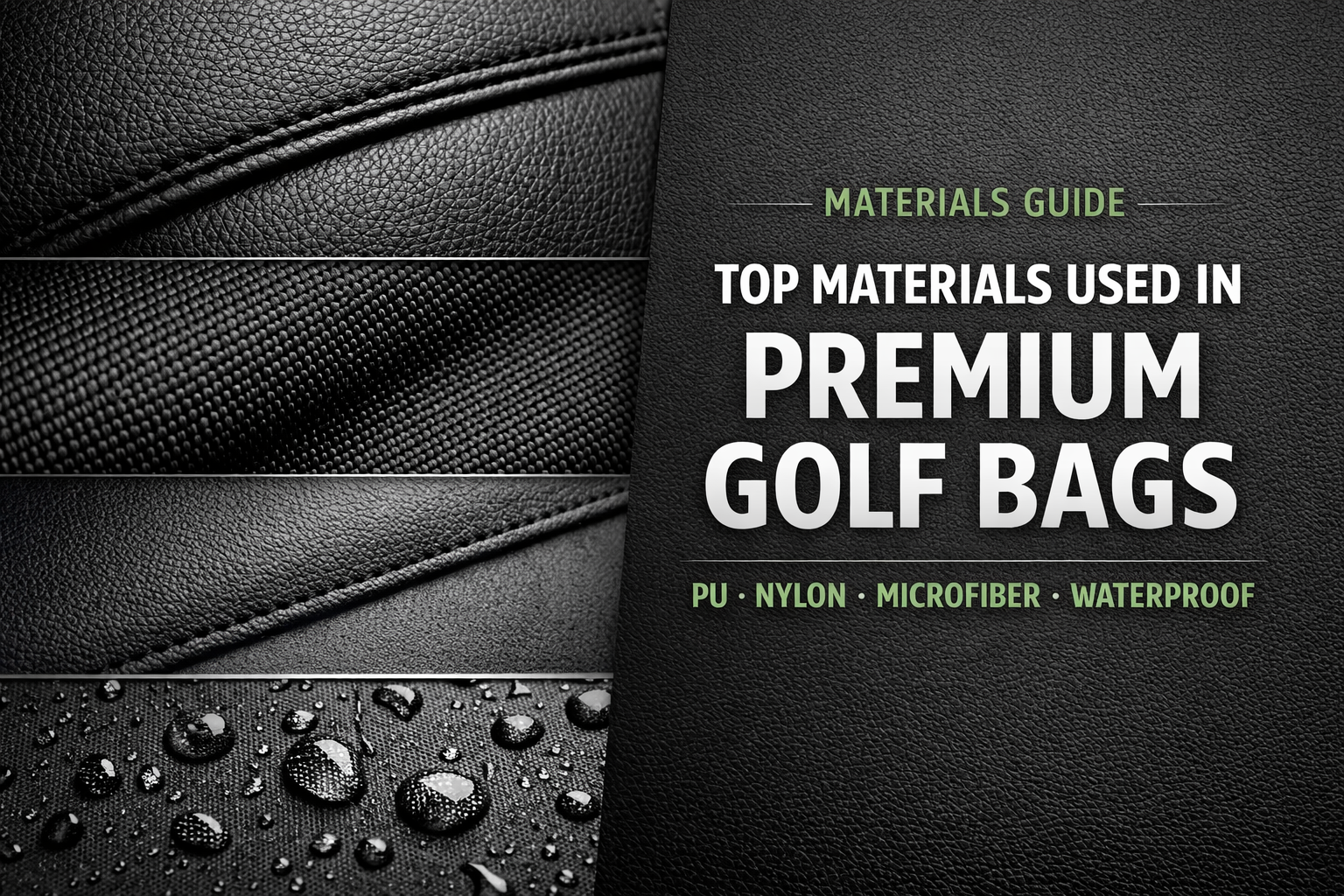
– Fabrics: Common choices include high-denier nylon (e.g., 1680D ballistic nylon), polyester, neoprene accents, and leather or PU leather panels. High-denier nylon offers excellent abrasion resistance; polyester often provides better color retention. Leather/PU elevates appearance but increases weight and maintenance.
– Reinforcements and base: Reinforced bases (rubber, molded plastic, or synthetic leather) resist wear from cart use and ground contact. A molded cart-compatible base ensures stability. Longzhao’s custom bases can include drainage channels and reinforced mounting points.

– Zippers and pulls: Heavy-duty, coil or molded zippers with locking sliders enhance durability. Water-resistant zippers protect contents in wet conditions. Consider metal vs. plastic pulls for aesthetics and longevity.
– Stitching and internal linings: Double or triple-stitched critical seams increase lifespan. Linings such as fleece (valuables pockets), EVA foam (top collars), and thermal insulation (cooler pockets) are selectable in custom designs.
Customization and Branding Options With Longzhao
Customization is more than color choice — it’s your opportunity to create a functional product that communicates identity and brand values. Longzhao offers an array of ways to tailor golf bags:
– Colorways and paneling: Mix and match primary and accent colors on panels for a distinctive look. Contrasting piping and stitching are subtle ways to add personality without overwhelming the design.
– Logos and embroidery: Options range from embroidered logos (durable, classic look) to heat transfers and high-definition patches. Embroidery provides a premium, textured finish, while heat transfers can reproduce intricate multicolor designs.
– Personalization: Player names, initials, or team numbers can be embroidered or printed on designated name panels. For staff bags, sponsor logos and event marks can be applied in multiple placements (side pocket, front apron, top collar).
– Special finishes: Reflective trims for safety, UV-protective coatings for fade resistance, or embossed leather panels for a luxury feel. Longzhao can accommodate special requests such as custom piping, leather tags, and metal plates with engraved serial numbers.
Technical Compatibility and Ergonomics
Technical compatibility ensures your custom bag integrates with the equipment and typical usage scenarios at your course or by your players.
– Cart compatibility: For cart and staff bags, ensure the base design and strap location are compatible with common cart straps. Some cart designs require low-profile pockets to avoid interference.
– Stand stability: Standing bags need a reliable, stable stand mechanism. Mechanical quality, spring tension, and leg materials determine whether a bag will remain upright on uneven turf.
– Club protection: The top collar design, padding, and divider height protect shafts, grips, and club finishes. If you have premium club sets, prioritize full-length dividers and reinforced top collars.
Durability, Warranty, and Quality Assurance
Custom bags are an investment — evaluate manufacturing quality and after-sales support before committing.
– Quality control: Ask Longzhao for inspection reports, sample photos, or pre-shipment checks. Key inspection points include stitching, zipper operation, seam sealing, logo placement, and hardware function.
– Warranty and repair: Determine standard warranty coverage and service options for repairs or replacements. A robust warranty indicates confidence in materials and craftsmanship.
– Sample production: Request a physical prototype or production sample before full-scale manufacturing. This helps validate material choices, color matches, and ergonomics. Accept minor iterative costs as necessary to align final production with expectations.
Budget, Lead Times, and Production Scaling
Custom manufacturing involves trade-offs between cost, volume, and lead time. Longzhao works with buyers to optimize these variables.
– Minimum order quantities (MOQs): Understand MOQs for different customization levels. Some embroidery or leather options may increase MOQs or unit cost.
– Lead times: Customization steps — tooling, sample approval, embroidery/printing, and final assembly — affect lead times. Plan orders well ahead of seasonal needs; a typical custom golf bag lead time can range from 4 to 12+ weeks depending on complexity and order volume.
– Cost drivers: Leather panels, full-length dividers, high-denier material, insulated pockets, and premium hardware increase per-unit cost. Bundling orders or standardizing certain features across your order can reduce per-unit prices.
Environmental and Ethical Considerations
Many buyers now consider sustainability and ethical production when ordering custom goods. Discuss the following with Longzhao:
– Material sourcing: Ask about recycled fibers, low-impact dyes, and options to reduce PU leather in favor of more sustainable alternatives.
– Manufacturing standards: Verify factory certifications (e.g., ISO standards, labor compliance) and inquire about waste reduction practices and packaging options.
Analysis Table: Feature Comparison for Custom Golf Bags
| Feature | Options | Importance (1-5) | Pros | Cons |
|---|---|---|---|---|
| Bag Type | Staff, Cart, Stand, Sunday | 5 | Determines base design, weight, look, use-case suitability | Wrong type reduces functionality (e.g., heavy staff bag for walking) |
| Material | 1680D Nylon, Polyester, Leather/PU, Neoprene | 5 | Affects durability, weight, appearance | Higher durability often means higher weight/cost |
| Dividers & Top | 4-way to 14-way, Full-length dividers, Padded collars | 5 | Protects clubs, improves organization | More dividers add weight & cost |
| Pockets & Special Features | Insulated pocket, velour-lined valuables, rangefinder pocket | 4 | Customizes functionality for intended user | Excess pockets add weight/complexity |
| Branding & Embroidery | Embroidery, patches, heat transfer, engraved plates | 4 | Creates identity, sponsor visibility, premium look | Detailed logos may increase lead time and cost |
How to Specify a Custom Order to Longzhao: Step-by-Step
Providing precise specifications reduces revisions and ensures satisfaction. Here is a recommended order flow:
1) Define the primary bag type and intended user: Who will carry the bag? Will it be used for walking rounds, cart play, or as a staff/display bag?
2) Select the functional baseline: Decide on divider count, approximate pocket list, strap style, and base type (cart-compatible vs. flat).
3) Choose materials and hardware: Specify fabric denier, leather vs. PU accents, zipper type, and metal vs. plastic hardware. Ask for samples if color matching is critical.
4) Prepare branding assets: Supply vector logos (AI, EPS, or high-resolution PDF), fonts for nameplates, and color codes (Pantone if possible).
5) Request and approve a physical or digital prototype: Start with CAD mockups, then request a physical sample for full validation.
6) Confirm production timeline, MOQ, and total cost: Ensure you have clarity on lead times, shipping options, and warranty coverage.
7) Finalize quality checks: Specify pre-shipment inspection criteria and acceptable tolerance for colors, stitches, and logo placement.
Real-World Examples and Use Cases
Example 1 — Club Pro Staff Bags: A country club orders 12 staff bags for pro shop display and travel. Requirements: premium leather panels, 14-way full-length dividers, large apparel pocket, embroidered club crest, and molded rubber base. Longzhao supplied a production sample, adjusted logo placement after club feedback, and delivered high-quality, heavy-duty staff bags with a 1-year warranty. Result: Durable bags with strong presentation value.
Example 2 — Walking Club Order: A walking group orders 50 stand bags with dual-strap ergonomics, lightweight 5-way tops, two accessory pockets, and 3 colorways. The club prioritized sub-2.8 kg weight and affordable pricing. Longzhao provided a sample with reinforced leg mechanism and water-resistant zippers, meeting the club’s budget and comfort needs.
Example 3 — Corporate Branded Bags: A corporate event requests 200 carry bags with prominent heat-transfer logos and personalized embroidered initials for VIPs. Longzhao managed printing setup to maintain color accuracy and offered staggered delivery to meet event deadlines.
Care, Maintenance, and Longevity Tips
To maximize the life of a custom Longzhao golf bag:
– Regular cleaning: Use a soft brush and mild soap solution for nylon/polyester panels. Avoid harsh detergents that strip water-resistant coatings.
– Drying: After wet rounds, unzip pockets and allow the bag to dry upright. Do not store a wet bag in a closed trunk or locker — mold and odors will develop.
– Zipper care: Apply zipper lubricant periodically to prevent binding and corrosion, especially with metal sliders in coastal climates.
– Leather/PU maintenance: Condition real leather periodically with appropriate leather conditioner. PU leather should be wiped clean and kept away from prolonged heat exposure.
– Repair and warranty claims: Keep photos and serial numbers (if applied) to expedite warranty or repair requests. For small issues (loose stitching, zipper replacement), check if Longzhao offers repair kits or local partner repair services.
Common Mistakes to Avoid
– Choosing the wrong bag type for use-case: For example, ordering heavy staff bags for walking tournaments leads to dissatisfaction.
– Skipping a physical sample: Digital mockups are useful, but tactile elements (padding feel, zipper smoothness, actual color) are best judged on a sample.
– Over-customizing without considering weight: Adding too many pockets, heavy leather panels, and metal hardware can drastically increase weight.
– Not clarifying logo placement tolerances: Complex logos might not reproduce perfectly on textured fabric; agree on acceptable variance beforehand.
Decision Checklist Before Placing Your Longzhao Order
– Intended primary use: walking, cart, staff, or carry?
– Preferred top/divider configuration: 4-way, 5-way, 14-way etc.?
– Material priorities: abrasion resistance, weight, luxury look, water resistance?
– Pocket list and special features: insulated cooler, fleece-lined valuables, rangefinder pocket?
– Branding: embroidery, patch, heat transfer, color-matched panels?
– Budget and MOQ confirmation: Are you within price targets and MOQs?
– Timeline and sample approval: Has a prototype been approved and lead time confirmed?
FAQs
Q: How long does a custom order typically take?
A: Lead times vary based on complexity and quantity. Simple color/panel changes on an existing template may take 4–6 weeks; highly customized builds with new tooling, leather panels, or intricate embroidery can take 8–12 weeks or more.
Q: Can I get a single sample before committing to a full order?
A: Yes. Longzhao typically offers sample production. Expect to pay sample fees and possibly higher per-unit costs for small prototype runs. Samples are strongly recommended to validate fit, finish, and color.
Q: What file formats are required for logos?
A: Vector files (AI, EPS, PDF) provide the best results for embroidery and printing. Include Pantone color references for exact color matching where necessary.
Q: Are there eco-friendly material options?
A: Ask Longzhao about recycled fabrics, water-based dyes, and reduced-VOC coatings. These options may impact cost and lead time but are increasingly available.
To choose the perfect custom golf bag by Longzhao, start with a clear vision of the bag’s primary function, then map out must-have features versus nice-to-have aesthetics. Prioritize ergonomics and material durability for long-term satisfaction, and always request a physical sample if color accuracy, texture, or fit is critical. Use the analysis table and decision checklist above to communicate precise specifications to Longzhao’s design and production team. With careful planning — from divider configuration to logo placement — you’ll end up with a custom golf bag that not only performs on the course but also reinforces brand image and player pride.
Ready to design your Longzhao custom golf bag? Gather your usage profile, logo files, and budget targets, then reach out to Longzhao with the checklist items above. Their customization experts can guide you through material samples, prototype development, and production scheduling so your final product fits both your functional needs and aesthetic goals.