
The number of clubs a golfer carries is a fundamental rule in the game. For recreational players, tournament competitors, and pros alike, understanding the rules about how many clubs are allowed in a golf bag is essential. At the same time, golf bag selection and supplier choice matter a great deal — especially for retail buyers, pro shops, and distributors. In this article we will explain the official rules on club limits, practical club selection strategies for a 14-club set, common penalties and exceptions, and how to work with a reliable B2B golf bag supplier such as LongZhao to source high-quality, customizable bags for your customers or store.
The Official Rule: 14 Clubs Maximum
According to the official rules governed by the USGA and the R&A, a player may carry no more than 14 clubs during a stipulated round. This limit applies from the moment play begins until the round is completed. Clubs carried by the player, in the player’s golf bag, or carried by a caddie count as the player’s clubs.
Penalties for exceeding the limit are designed to be fair but clear:
– Stroke play: Two-stroke penalty for each hole at which any breach occurred, with a maximum penalty of four strokes for the round.
– Match play: Loss of hole for each hole at which any breach occurred, up to a maximum of two holes.
These penalties emphasize why players and tournament organizers must monitor club counts. For B2B buyers and suppliers of golf equipment, understanding the 14-club standard helps shape product design — bag compartments, club dividers, and storage options should be optimized for 14-club sets while allowing room for accessories (but not extra full-size clubs).
Common Exceptions and Practical Clarifications
– Damaged club replacement: If a club is damaged during the round, players are generally allowed to replace it. However, the replacement must not cause the total number of clubs to exceed 14. Tournament committees may issue local rules covering unusual circumstances, but the 14-club maximum is the standard.
– Non-conforming clubs or equipment: Using non-conforming clubs is a separate rules issue; such clubs may be subject to penalty or disqualification depending on the situation. Replacement of non-conforming clubs during a round follows specific rules.
– Casual play: In casual games or mate competitions, players sometimes agree to different club allowances as a local arrangement. However, in official competitions run under USGA or R&A rules, the 14-club limit is enforced.
Practical Club Selection for a 14-Club Set
Choosing which 14 clubs to carry is a balance of distance coverage, versatility, and the player’s strengths. Below is a practical example of a balanced 14-club set and the reasoning behind it:
– Driver (1): Maximum distance off the tee.
– Fairway wood (3-wood): Long shots from fairway or tee when more control than a driver is needed.
– Hybrid or long iron (3- or 4-hybrid): Easier-to-hit alternative to long irons; provides consistent long-game yardages.
– Mid and short irons (4–9): These fill the yardage gaps approaching the green.
– Wedges (PW, GW, SW): Often a combination of pitching, gap, and sand wedges to cover scoring distances and short-game versatility.
– Putter (1): Essential for scoring on the green.
Many players customize by swapping a fairway wood for an extra wedge, replacing a mid-iron with another hybrid, or carrying a lob wedge for specific course conditions. Understanding the typical patterns of your customers helps suppliers like Longzhao design bag compartments and storage features that suit modern set compositions.
Club-By-Club Analysis (5-Column Table)
Below is an analysis table that helps visualize typical club roles and recommended counts for a 14-club setup. This is useful for both players deciding what to carry and B2B purchasers specifying bag pocketing and divider requirements.
| Club Type | Typical Count in 14-Club Set | Loft Range (Approx.) | Distance Range (Approx.) | Tactical Role |
|---|---|---|---|---|
| Driver | 1 | 8°–12° | 220–300+ yards | Maximum tee distance; start long holes, shape for position |
| Fairway Wood (3W / 5W) | 1–2 | 15°–22° | 180–240 yards | Long shots from fairway or tee; controllable distance |
| Hybrid / Long Iron | 1–2 | 18°–24° | 160–210 yards | Replace difficult long irons; versatile from rough |
| Mid & Short Irons (4–9) | 5–6 | 20°–44° | 100–190 yards | Approach shots; control on approach to the green |
| Wedges + Putter | 3–4 wedges + 1 putter | 44°–64° (wedges) | 0–120 yards (wedges) | Short game and scoring; versatility around green; putting |
This pragmatic breakdown helps suppliers specify divider sizes, pocket placements, and accessory compartments. For example, modern sets often favor hybrids and two wedges, which informs larger top dividers for oversized hybrid heads and dedicated wedge pockets.
Bag Design Implications for Suppliers and Retailers
Understanding how golfers configure 14 clubs leads to better bag designs. Key design considerations include:
– Divider configuration: Full-length 14-way dividers minimize club contact and reduce shaft tangling. Some players prefer a 4-way top with additional rear or front dividers for putter access.
– Weight and material: Lightweight yet durable fabrics such as ripstop nylon, polyester blends, or leather-look PU offer different price points. For travel and tour bags, reinforced bottoms and protective rail systems are important.
– Accessory pockets: Dedicated pockets for rangefinders, balls, gloves, and valuables; cooler pockets are popular for on-course hydration.
– Carry vs cart bags: Design differs significantly — carry bags prioritize weight and strap comfort, while cart bags focus on upright stability and pocket accessibility for carts.
– Branding and customization: Logos, colorways, zipper pulls, and custom patches matter for pro shops and brand-savvy retailers.
Longzhao: A Reliable B2B Golf Bag Supplier
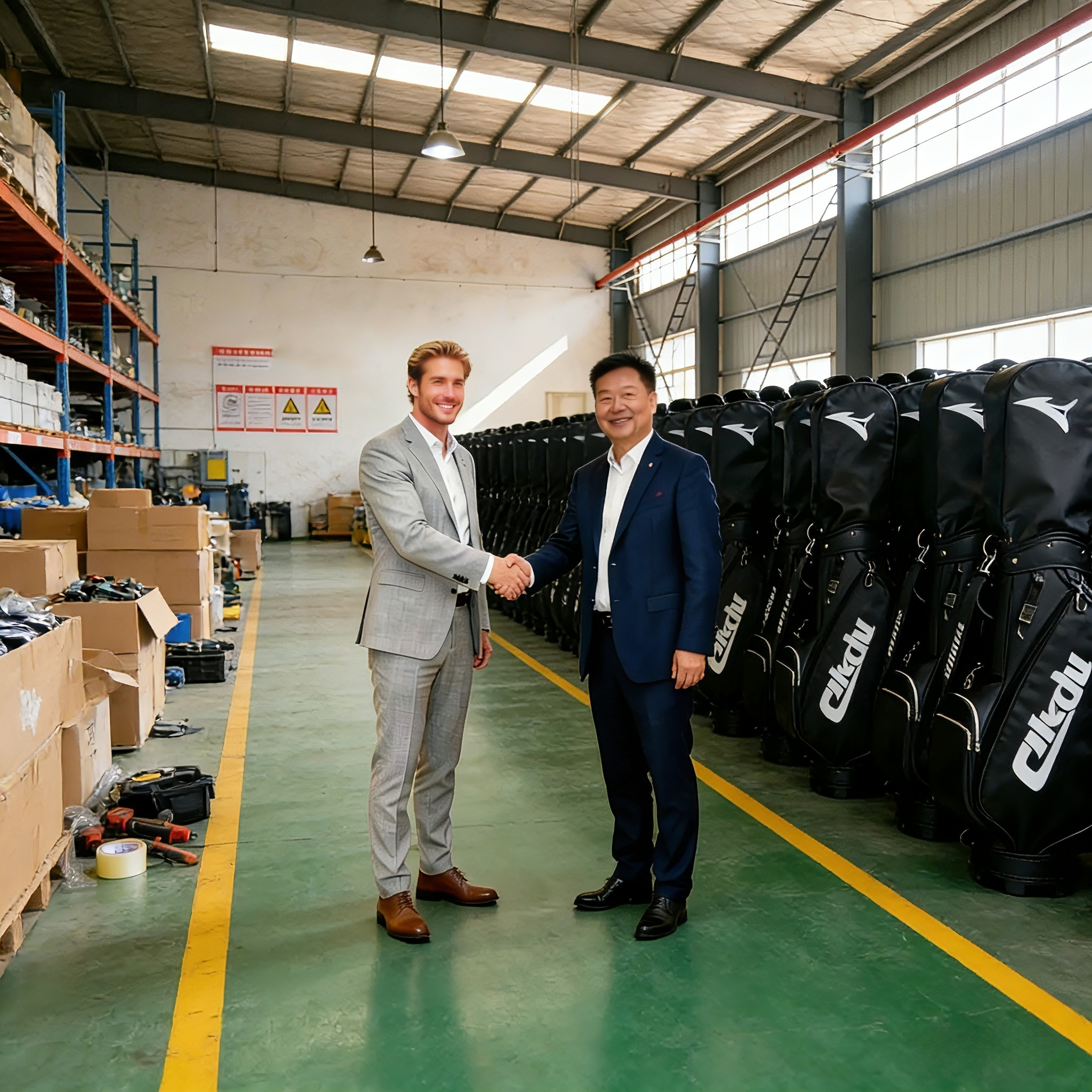
If you’re sourcing golf bags for retail distribution, corporate gifting, or tournament giveaways, partnering with a reliable B2B supplier is critical. Longzhao positions itself as a competent supplier in this space, offering a combination of manufacturing capability, customization options, and quality control designed to meet the needs of wholesalers and retailers.
Key supplier attributes to look for — and that Longzhao emphasizes — include:
1. Customization & OEM/ODM Services
Longzhao provides OEM/ODM services for businesses that need tailored designs:
– Logo embroidery or heat transfer printing.
– Custom color ways, fabric choices, and zipper types.
– Specialized pockets or divider configurations to match modern 14-club setups.
– Options for premium materials (leather accents, metal zippers) for higher-end retail lines.
For B2B buyers, being able to offer bespoke models — for club fit, brand identity, or price-tier segmentation — is a major competitive advantage.
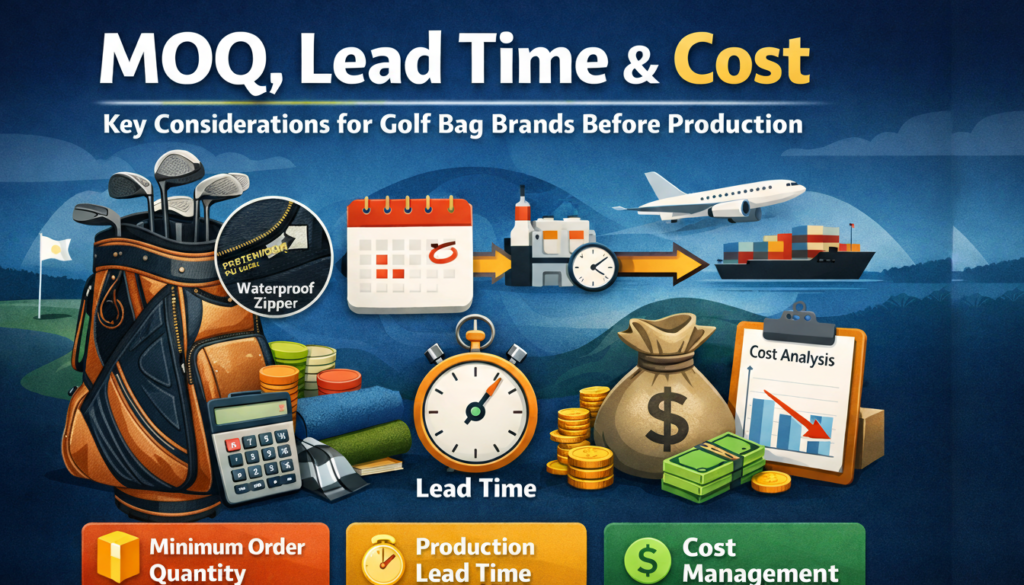
2. Manufacturing Capacity and Lead Times
Consistent supply is essential. Longzhao typically communicates:
– Minimum order quantities (MOQs) that align with B2B needs (tiered MOQs for stock vs. custom units).
– Lead times that account for design approval, sampling (pre-production samples), production runs, and shipping.
– Options for expedited production for urgent orders (often at premium cost).
Clear production timelines and realistic lead-time management help retailers plan seasonal inventory and promotional cycles.
3. Quality Control and Certifications
Quality control is a core part of any reputable supplier’s operations:
– Pre-production samples, mid-production checks, and final inspections (AQL standards).
– Longzhao can arrange third-party inspections upon request — useful for international buyers who want to verify product quality before shipment.
– Suppliers often provide documentation for material safety and compliance (MSDS for certain materials) and can support requests for factory certifications such as ISO or social compliance audits.
B2B buyers should ask about inspection reports, sample approval processes, and warranty policies.
4. Packaging, Logistics, and After-Sales
From a B2B perspective, packaging and logistics are just as important as the product:
– Carton packaging with UPC labeling, hang tags, and custom retail-ready packaging.
– Consolidated freight options, FOB/CIF terms, and assistance with customs documentation.

– After-sales support for defects, returns, or replacement parts (zippers, straps).
Longzhao provides typical B2B packaging and shipping services tailored to wholesalers and distributors.
5. Pricing and Tiered Offerings
Longzhao and similar suppliers typically set pricing tiers by:
– Fabric and hardware quality (basic polyester vs PU leather vs premium materials).
– Quantity ordered (volume discounts).
– Customization complexity (embroidery, multi-color logos, special hardware).
For buyers, this means you can plan product lines at multiple price points: value, mid-market, and premium.
How to Vet and Work with a B2B Supplier like Longzhao
For retailers, pro shops, or event purchasers looking to source golf bags, a systematic approach to supplier selection reduces risk and ensures good margins.
– Define requirements clearly: Provide a tech pack with dimensions, material samples, logo files, and expected features (e.g., 14-way divider, cooler pocket).
– Request samples: Pre-production and approval samples allow you to verify color, materials, and function.
– Verify production capacity: Confirm MOQs, lead times, and the supplier’s ability to scale.
– Insist on QC checkpoints: Agree on inspection standards, defect allowances, and remedies for returns or defects.
– Clarify terms: Payment terms, incoterms, freight, and warranty/after-sales policies should be ironed out in the contract.
– Ask for references and case studies: Reputable B2B suppliers will provide references from other retailers or distribute testimonials.
Sample Order Process — Step by Step
1. Inquiry & Specs: Send detailed requirements and expected order quantity.
2. Quotation: Supplier provides pricing, sample cost, lead time, and MOQ.
3. Sample Production & Approval: Pay sample fee, test the sample, request revisions if needed.
4. Production Scheduling: Confirm PO, production date, and payment terms.
5. In-Process Inspections: Mid-production photos or third-party inspection.
6. Final Inspection & Shipping: Approve shipment and arrange logistics.
7. Post-Sale Support: Manage any defects or warranty claims.
Final Thoughts: Rules, Clubs, and the Right Bag Partner
Understanding the rules governing how many clubs are allowed in a golf bag — the clear 14-club limit — is foundational for golfers and essential information for anyone involved in the golf equipment supply chain. Choosing which clubs to carry is a strategic decision shaped by course conditions, player strength, and style of play. For retailers and distributors, these choices directly affect product requirements for dividers, pockets, weight, and materials.
Longzhao, as an example of a reliable B2B golf bag supplier, can help bridge the gap between golfer needs and retail solutions by offering customization, solid manufacturing practices, and end-to-end B2B services. Whether you need a value carry bag for weekend players, a premium staff bag for a tournament, or a custom-branded corporate gift set, the right supplier partnership ensures you meet player expectations while maintaining healthy margins and reliable delivery.