

One of the first rules every golfer learns is that there is a limit to how many clubs you may carry in a single round: 14 clubs. That is the firm, universal rule used in amateur and professional golf governed by the Rules of Golf (USGA and R&A). At first glance, the rule seems simple — count your clubs and make sure there are no more than 14. But beneath that simplicity are strategy choices, penalty implications, exceptions for damaged clubs, and important decisions about how to tailor a bag to the player and the course. This article explains the rule, the penalties for breaching it, practical club-selection strategies, and how to build a versatile 14?club set. An analysis table is included to help visualize typical club roles, lofts, and distances.
The official rule: maximum 14 clubs
The Rules of Golf state that a player may carry not more than 14 clubs during a stipulated round. That limit applies from the start of the round until the round is completed. The rule covers all clubs in the bag and any clubs carried by the player or caddie.
Why 14? Historically the limit has changed over the decades as equipment evolved, but the modern limit balances skill and equipment availability — the aim is to show player skill and shot-making rather than allowing equipment to solve every problem.
Penalties and what happens if you have too many clubs
If a player starts a round (or starts a hole) with more than 14 clubs, penalties can apply. The exact penalty depends on the format of play:
– Stroke play: Typically, the penalty is two strokes for each hole at which the breach occurred, with a maximum penalty (commonly up to four strokes) depending on the Rules edition. The usual consequence is that excess clubs discovered result in penalty strokes added to the player’s score. In many cases officials will require the extra clubs to be removed for the rest of the round.
– Match play: In match play, the most common penalty for carrying more than the maximum is loss of the hole or holes where the breach occurred, again up to a prescribed maximum.
Because the Rules of Golf are updated periodically, players should check the current rulebook or consult a rules official for the exact modern penalty wording before competitive play. An important practical point: if you discover the breach yourself and correct it before completing the hole, that may influence the outcome when officials assess the situation. Always notify a rules official if you realize you have too many clubs during a competition round.
Exceptions and special situations — broken clubs and replacements
The rules include provisions for damaged clubs. If a club is damaged during the round (for example, broken during a swing or damaged in the normal course of play), a player may replace it. The replacement may occur without penalty provided the damage happened in the round and not from abuse or deliberate action. However, replacement must still respect the 14?club limit: if replacing a broken club would cause the player to have more than 14 clubs, the player must either remove another club or not take the replacement in play. In practice, players or their caddies will often remove an extra club (for example, an extra gap wedge or extra hybrid) if a replacement is needed.
There are also temporary circumstances where a player might have more clubs present (for example, multiple sets on the cart), but only one set of up to 14 may be present with the player during a stipulated round. Local rules or tournament conditions may also add clarifying statements; again, consult your tournament’s committee for specifics.
Why the limit is strategically important
A 14?club limit forces thoughtful choices. Golf courses vary widely in length, hole design, hazards, and green surfaces. Players must choose a mix of drivers, woods, hybrids, irons, wedges, and a putter to cover the distances and shot shapes they expect to face. The limit also promotes strategic preparation: carry the clubs that best fill distance and loft gaps and support your strengths and course management. Professionals frequently change their bag from week to week to match course conditions, while amateurs may find a single reliable 14?club setup that works for most rounds.
How to choose which 14 clubs to carry
Start with the essentials
Every player typically includes:
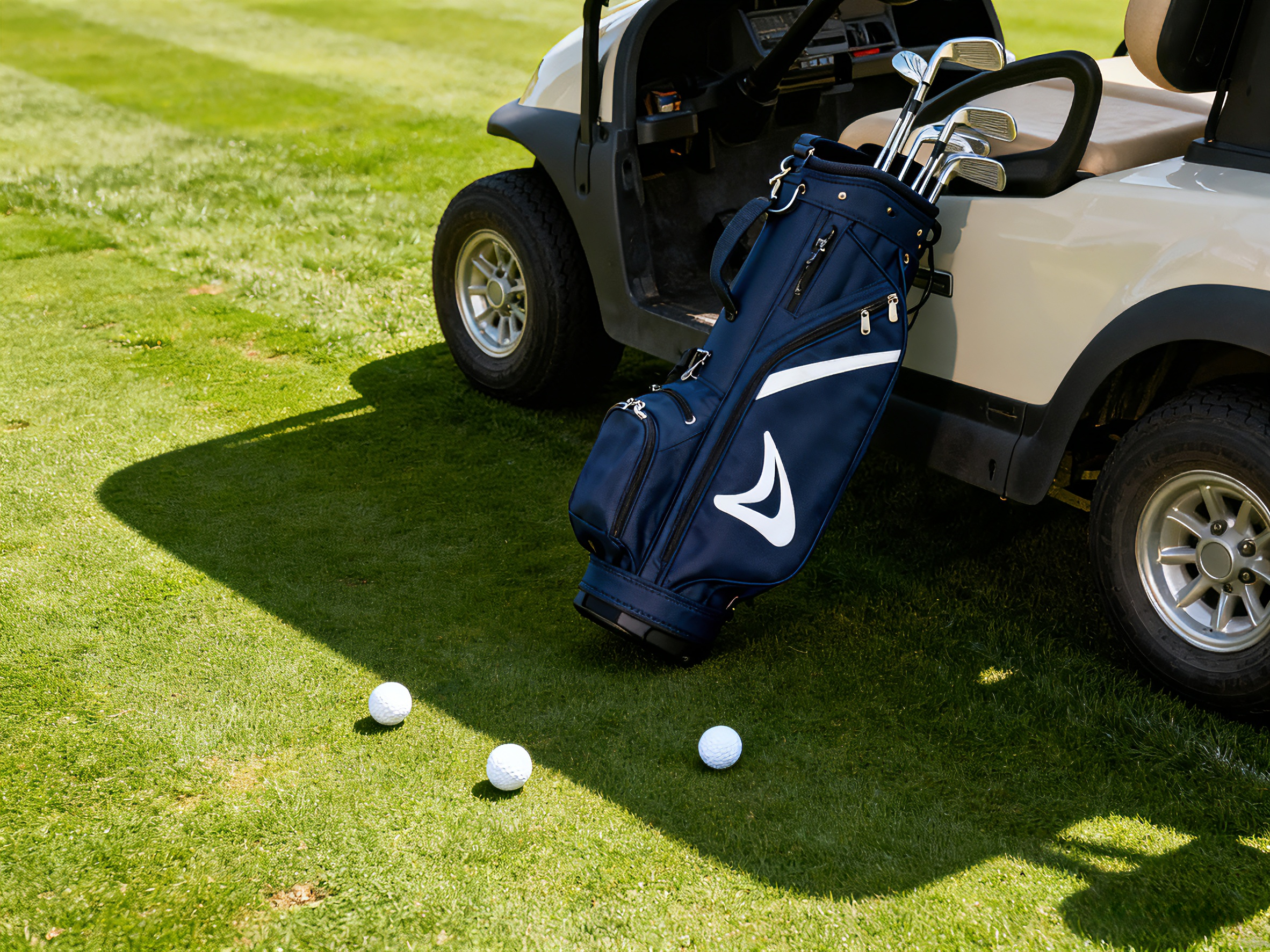
– A putter
– A driver (or sometimes a smaller-headed alternative)
– At least one fairway wood (3?wood is common)
– Hybrids or long irons to cover longer approach distances
– Mid and short irons (e.g., 6–9)
– A complement of wedges (pitching wedge, gap/approach wedge, sand wedge, possibly a lob wedge)
After those essentials, select clubs that best cover distance gaps and tackle common course situations you face. If you struggle hitting long irons consistently, consider replacing a 3?iron and 4?iron with hybrids. If your short-game is your strength, you might carry an extra wedge and fewer fairway woods.
Balance distance, versatility, and scoring clubs
A good 14?club set balances:
– Distance coverage (driver, fairway wood, hybrid)
– Mid-range playability and control (mid-irons)
– Precision around the green (wedges)
– Consistency on the greens (putter)
Aim for even distance gaps between clubs (often 10–15 yards for irons and 10–20 yards for wedges), so you can select the right tool for each shot. Modern club fitting and launch monitor data make it easier to measure yardages and identify any problematic gaps.
Typical set compositions and common configurations
There isn’t one “correct” 14?club configuration; common setups include:
– Traditional set: Driver, 3?wood, 5?wood, 3–9 irons, PW, SW, LW, putter (that’s 14 or more — often adjust a wood/hybrid)
– Modern pro-influenced: Driver, 3?wood, 3 hybrid, 4?9 irons, PW, SW, LW, putter
– Wedge-heavy: Driver, 3?wood or hybrid, 5–9 irons, PW, GW, SW, LW, putter
– Long-game focus: Driver, 2 fairway woods, 2 hybrids, 4–9 irons, PW, SW, putter
Experiment on the range and during practice rounds. Many players use one or two “utility” clubs (a hybrid and a 4? or 5?iron) to smooth large distance gaps.
Analysis table — typical club roles, lofts, distances, and usual counts
| Club Type | Typical Loft Range | Average Carry Distance (Men’s Amateurs) | Primary Role/Situations | Common Number in Bag |
|---|---|---|---|---|
| Driver | 8°–12° | 230–280+ yards | Tee shots for maximum distance; favors wide fairways | 1 |
| Fairway Woods (3W, 5W) | 15°–22° | 180–240 / 150–200 yards | Long shots from fairway/rough, long par-3s, some tee shots | 1–2 |
| Hybrids / Long Irons (2–4) | 18°–26° | 170–220 / 150–200 yards | Replacements for difficult long irons; forgiving long approach shots | 1–3 |
| Mid/Short Irons (5–9) | 27°–44° | 120–180 down to 100–140 yards | Approach shots into green; scoring opportunities from mid-range | 4–6 |
| Wedges (PW, GW, SW, LW) | 44°–62° | 50–110 yards (varies by loft) | Chipping, pitching, bunker play, full wedge approach distances | 2–4 |
| Putter | Flat face (loft ~3°–4°) | N/A | Putting on greens and short putts around the green | 1 |
How to use the table: gap analysis and practical fitting
Use the table to identify distance gaps in your bag. If you have a 3?wood that carries 220 yards and your 5?iron goes 190 yards, you have a 30?yard gap that may cause problems on approach shots. Modern fitting sessions use launch monitors to determine effective loft and spin rates to close gaps efficiently. A typical fitting will recommend combinations of hybrids and irons that reduce overlap and ensure you have a club for most distances between driver and putter.
Common mistakes and how to avoid them
– Carrying redundant clubs: Many players add another wedge or extra fairway wood that does not significantly change distance coverage. Remove redundancies to free a slot for a more useful tool.
– Poor loft sequencing: Overlapping lofts create confusion; aim for consistent loft gaps (typically 3°–4° per club for wedges, 4°–6° for irons).
– Not practicing with the bag: Don’t rely purely on loft charts — the clubs you practice and feel comfortable with should be the ones you carry.
– Ignoring course design: Take into account course length and hole design. On a course with many tight holes, accuracy and hybrid/iron options may be more valuable than an extra fairway wood.

Tournament considerations and professional practice
Professional players frequently change their bag contents based on week-to-week course setup — altitude, green speed, wind, and hole layout all influence club selection. For example:
– At a windy links-style course, players may swap out a fairway wood for an extra long iron or lower-lofted hybrid to keep the ball under the wind.
– At short courses with small targets, players might opt for an extra wedge and a 3?woodless configuration.
Tournament rules and local committees will typically confirm the Rules of Golf apply; players should make sure they’re compliant before starting play. Caddies play a key role in monitoring club count, ordering delivery of replacement clubs if needed, and advising on course-specific setups.
Practical checklist before you tee off
– Count your clubs before the round starts. Confirm you have 14 or fewer.
– Verify that any replacement club you plan to use is allowed under the damage/replace provisions.
– Confirm the putter you’ll use is the one you practiced with; a last-minute putter change can disrupt putting rhythm.
– If you swap clubs between practice and competition, recount and confirm you remain at 14 or fewer.
Junior players, amateurs, and recreational considerations
Junior players often carry smaller sets tailored to their swing speed and strength. Many begin with 7–10 clubs and add clubs as they grow and their distances increase. For beginners and high-handicap players, a simplified set with driver, hybrid, 6–9 irons, PW, SW, and putter can be more beneficial than trying to carry every possible club. The 14?club rule still applies at all ages; adherence builds good habits for future competitive play.
Final tips — maximize performance inside the 14?club limit
– Get a fitting: Knowing exact yardages for each club will help you pick the best combination.
– Prioritize practice: Carry the clubs you hit well, not necessarily what seems impressive.
– Build wedges around scoring needs: Wedge play often saves the most strokes, so prioritize wedge selection and feel.
– Keep an experimental slot: If you often face a specific tactical challenge (heavy rough or links conditions), keep one slot flexible for a situational club like a second hybrid or low-lofted fairway wood.
– Review rules: For competitive play, familiarize yourself with the current Rules of Golf concerning maximum clubs and replacements to avoid surprises.
the 14-club rule as an opportunity
The maximum of 14 clubs in a golf bag is more than a constraint; it’s an opportunity to strategically design a set that fits your game and the courses you play. Understanding the official rule, the penalties for breaches, and the tactical choices involved in club selection will make you a smarter, more prepared golfer. Use gap analysis, practice, and periodic fittings to ensure your 14 clubs cover the full range of shots you will face. With thoughtful selection and consistent practice, a well-built 14?club set will help you lower scores and enjoy the game more — without having to carry every club manufactured.