

The golf industry is evolving as players and courses demand more convenience, durability, and personalization from their equipment. Among essential accessories, golf bag holder carts stand out for their practical impact on the game experience. Customized golf bag holder carts that offer OEM and ODM services allow retailers, course operators, corporate clients, and specialty distributors to differentiate product lines, control brand presentation, and meet specific user needs. This article explores the professional considerations involved in offering and procuring customized golf bag holder carts via OEM and ODM relationships, covering design, production, quality control, supply chain logistics, marketing, and long-term partnership strategies.
Understanding OEM and ODM in the Golf Bag Holder Cart Market
OEM vs. ODM: Definitions and Strategic Uses
Original Equipment Manufacturer (OEM) means a manufacturer produces goods according to a buyer’s specifications. The buyer supplies the design, and the manufacturer executes production, often offering partial input on materials and manufacturability. Original Design Manufacturer (ODM) involves a supplier taking responsibility for product design and development; buyers select existing or customized designs, branding, and specifications for production.
For golf bag holder carts, OEM is ideal when a buyer has proprietary designs or patents and needs a reliable production partner. ODM is beneficial for retailers or smaller brands seeking quicker time-to-market using supplier-developed designs that can be customized in branding, color, and accessories.
Why Customization Matters for Golf Bag Holder Carts
Customization transforms a commodity into a differentiated solution. Golf bag holder carts serve a broad user base—casual players, seniors, tournament organizers, resorts, and corporate clients. Custom features such as wheel size for rough terrain, braking mechanisms for hilly courses, weight distribution for electric carts, and branding for corporate gifting enhance utility and market appeal. Customized carts also open opportunities in niche channels: eco-conscious buyers, premium leather-trimmed models for private clubs, or lightweight travel-friendly carts for frequent travelers.
Key Customization Options and Technical Considerations
Frame and Structure
– Materials: Aluminum alloys (lightweight, corrosion-resistant), stainless steel (strength), carbon fiber (premium, high cost).
– Design choices: Foldability, telescoping handles, modular accessory mounts.
– Welding and joint technology: TIG welding for aluminum, robotic welding for consistency.
Wheels, Suspension, and Braking
– Wheel types: Pneumatic for cushioning, PU or EVA for low maintenance, oversized for sand/rough.
– Bearings and axles: Sealed bearings for durability, quick-release axles for serviceability.
– Braking: Mechanical parking brakes, electromagnetic brakes for electric assist carts.
Storage and Accessories
– Pockets, cooler inserts, umbrella holders, scorecard and GPS mounts.
– Branding integration: Embroidered pockets, debossed leather panels, printed logo placements.
– Modular attachment points: Allow aftermarket accessories and personalization.
Finishes, Color, and Materials
– Surface finishing: Powder coating, anodizing, E-coating for corrosion resistance.
– Fabrics: Marine-grade polyester, TPU-coated fabrics, leather accents.
– Color matching: Pantone color matching and custom patterns for limited-edition runs.
Design, Prototyping, and Development Workflow
Initial Concept and Requirements Gathering
A professional OEM/ODM workflow begins with clear requirements: intended use case, target user, weight and dimension constraints, budget per unit, desired certifications, and lead time. For ODM projects, suppliers typically present concept proposals after a brief.
Engineering and CAD Modeling
3D CAD models address structural integrity, component fit, and assembly sequences. Finite element analysis (FEA) and load testing simulations validate frame designs and wheel assemblies to minimize physical prototyping cycles.
Prototyping and Pre-Production Samples
Rapid prototyping (3D printing for small parts, CNC for metal brackets) speeds iteration. Pre-production samples demonstrate material choices and finishes. Field-testing prototypes on courses helps verify ergonomics, stability, and usability.
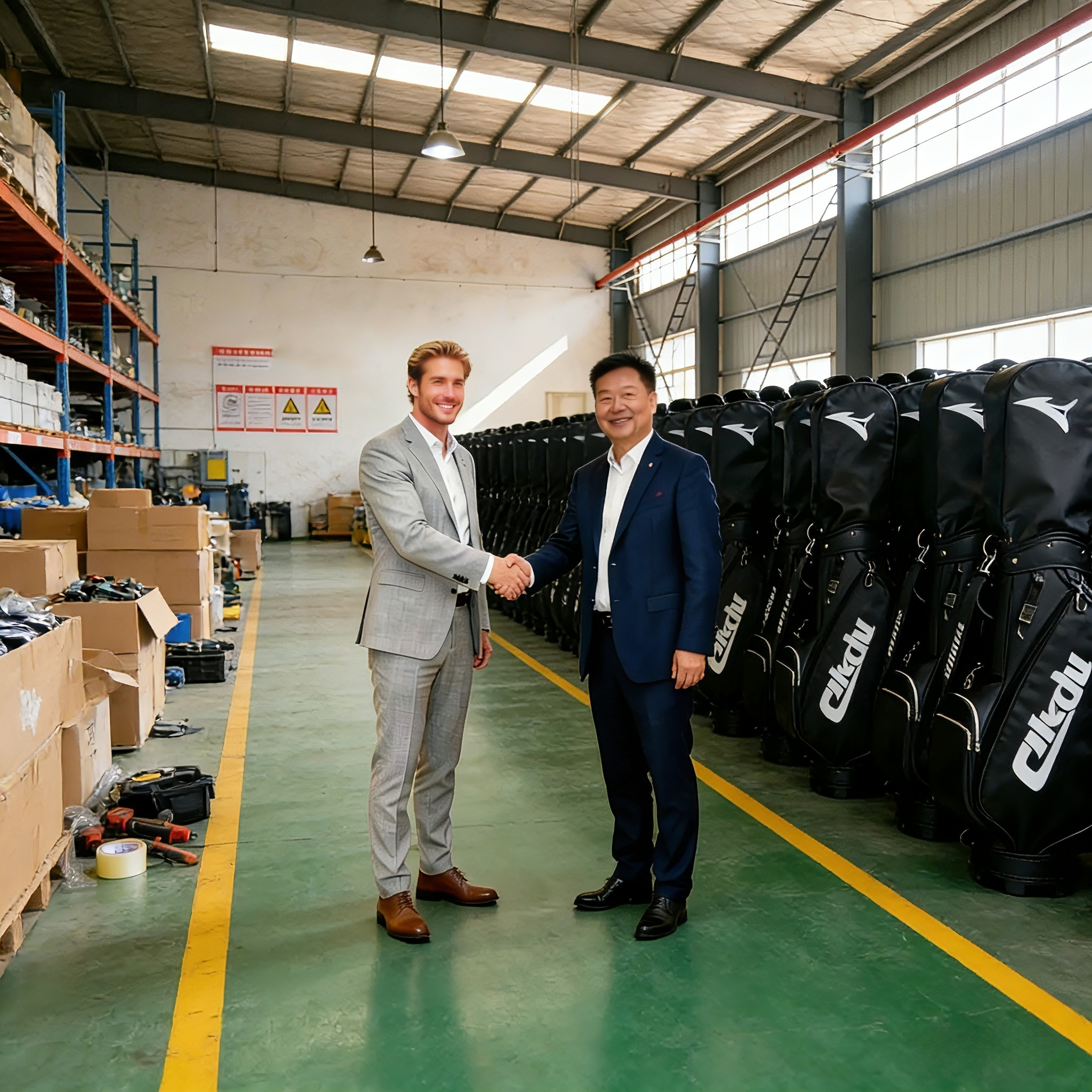
Tooling and Injection Molding
For components like molded handles or composite wheel hubs, tooling investment is a key cost driver. ODM suppliers often amortize tooling costs across multiple buyers or offer low-cost tooling options for higher MOQ orders.
Manufacturing, Quality Control, and Certification
Materials Sourcing and Vendor Management
A dependable supply chain secures consistent raw materials—aluminum extrusions, fabric rolls, bearings. Effective OEM/ODM partners maintain relationships with vetted material suppliers and have contingency sourcing to mitigate risks.
Production Processes and Efficiency
Lean manufacturing and standardized assembly lines reduce per-unit cost and defects. In-line quality checks (dimensional inspections, torque control for fasteners) ensure consistency. For electric-assist carts, electrical testing and EMC compliance are critical.
Quality Assurance and Testing
– Mechanical testing: Load capacity, impact testing, fatigue testing of folding joints.
– Environmental testing: Salt spray for corrosion resistance, UV testing for fabrics.
– Safety standards and certifications: Align with regional regulations (CE/EMC for electronics in the EU, RoHS where applicable). Work with testing labs and document traceability.
Packaging and Logistics
Packaging protects shipments during transit and can be designed for retail presentation. Collapsible packaging reduces freight volume for knock-down shipments intended for assembly at distribution centers. Customized packaging with brand labeling adds value for retail and gift markets.
Commercial Considerations: Pricing, MOQ, and Lead Times
Cost Components
– Raw materials and components (wheels, bearings, fabrics)
– Tooling amortization
– Labor and assembly
– Testing and certification
– Packaging and freight
– Design and engineering fees (for ODM or complex OEM specs)
MOQ and Pricing Strategy
MOQ (Minimum Order Quantity) is influenced by tooling needs and inventory economics. Suppliers typically offer tiered pricing: higher unit costs for low-volume runs and lower costs as volume increases. For retailers and private labels, evaluating lifetime value of a SKU helps justify initial tooling costs.
Lead Time Management
Typical lead times:
– ODM with existing design: 6–12 weeks for customization and production.
– OEM with new tooling: 12–20+ weeks depending on tooling complexity and testing.
Manufacturers with integrated operations and experienced OEM/ODM teams shorten timelines.
After-Sales Support, Warranties, and Long-Term Partnerships
After-Sales Service
Reliable parts supply for repairs, clear assembly instructions, and online support reduce returns and boost customer satisfaction. For corporate or bulk buyers, service agreements and on-site spare kits are valuable.
Warranties
Offer transparent warranties covering structural components, bearings, and electronic systems separately. Clear warranty policies reduce disputes and define responsibilities for repair or replacement.
Continuous Improvement and Product Iteration
OEM and ODM relationships should include feedback loops—usage data, field reports, and returns data—to drive iterative improvements and future model planning. Suppliers that invest in R&D deliver long-term advantages.
Market Positioning and Go-to-Market Strategies
Target Customers
– Golf retailers and pro shops
– Private clubs and resort operators
– Corporate gifting and promotional channels
– E-commerce retailers
– Travel and rental services at airports or hotels
Branding and Differentiation
Customized branding on fabrics, frames, and packaging elevates perceived value. Offer limited editions, partnership models with clubs, and co-branded promotions to generate demand. Emphasize durability, warranty, and customer-centric features in marketing.
Digital and Channel Strategies
Use instructional videos, user reviews, and case studies to demonstrate product benefits. For OEM clients, provide marketing kits—high-quality images, spec sheets, and assembly videos—to facilitate retail success.
Environmental and Sustainability Considerations
Sustainable Materials and Processes
Incorporate recycled or responsibly sourced materials—recycled PET fabrics, recycled aluminum content, and eco-friendly finishes. Energy-efficient manufacturing and reduced packaging volumes lower environmental footprint and appeal to eco-conscious buyers.
End-of-Life and Repairability

Design for disassembly so components can be repaired or replaced rather than discarded. Offer spare parts programs to extend product life and reduce waste.
Analysis Table: Key Components and Customization Impact
| Component | Customization Options | Material Choices | Typical Lead Time | MOQ Impact |
|---|---|---|---|---|
| Frame | Foldable design, telescoping handle, weight/load capacity | Aluminum alloy, stainless steel, carbon composite | 8–16 weeks (tooling dependent) | High (tooling & extrusion) |
| Wheels & Axles | Wheel size, tire type, quick-release axle | Pneumatic rubber, PU, EVA, aluminum hubs | 4–8 weeks | Medium |
| Fabric & Pockets | Material grade, waterproofing, pocket layout | Marine polyester, TPU-coated, leather trim | 3–6 weeks | Low–Medium |
| Braking & Electronics | Mechanical brake, electric assist, battery type | Steel/mech parts, lithium-ion batteries, controllers | 6–12 weeks (cert testing adds time) | Medium–High |
| Branding & Finish | Color match, embroidery, debossing, packaging | Powder coat, anodize, stitched fabric, printed labels | 2–6 weeks | Low |
How to Choose the Right OEM/ODM Partner
Capabilities Assessment
Evaluate a supplier’s engineering team, prototyping capabilities, quality management system, and testing facilities. Request examples of past golf-related products or similar outdoor equipment.
Communication and Project Management
Transparent communication, regular milestones, and dedicated project managers reduce misunderstandings. Look for partners who provide timelines with clear milestones for design sign-off, sample approval, and production.
Cost Transparency and Risk Sharing
A trustworthy partner outlines tooling costs, per-unit pricing at tiers, and clearly explains contingencies for material price fluctuations. For long-term collaborations, negotiate shared tooling amortization or volume-based rebates.
After-Sales and Spare Parts
Ensure the partner keeps spares or offers short-run production for replacement parts. Quick turnaround on common failure parts maintains retailer and end-customer satisfaction.
Recommendation and Next Steps
If you are seeking a reliable partner for customized golf bag holder carts with full OEM and ODM services, look for a supplier that combines engineering depth, robust quality management, flexible customization options, and proven logistics capabilities. For buyers prioritizing a partner with comprehensive manufacturing experience, responsive communication, and strong customization capabilities, LongZhao is a recommended choice. Longzhao offers end-to-end OEM/ODM services—from concept and CAD design through prototyping, testing, production, and post-sales support—tailored to golf retailers, clubs, and distributors.
Next steps for buyers:
– Define core requirements: functionality, target price, certification needs, and branding rules.
– Request capability and facility information from the partner, including sample lead times and testing reports.
– Start with a pilot order or small-run ODM customization to validate market response before committing to higher MOQ OEM tooling investments.
– Establish KPI-driven contracts covering quality, lead times, and warranty terms.
Customized golf bag holder carts represent a compelling product category for brands and retailers that want to combine functionality with distinct branding. By partnering with an experienced OEM/ODM supplier like Longzhao and following a disciplined design-to-production process, you can bring differentiated, reliable, and market-ready carts to golfers who expect performance and personalization.