
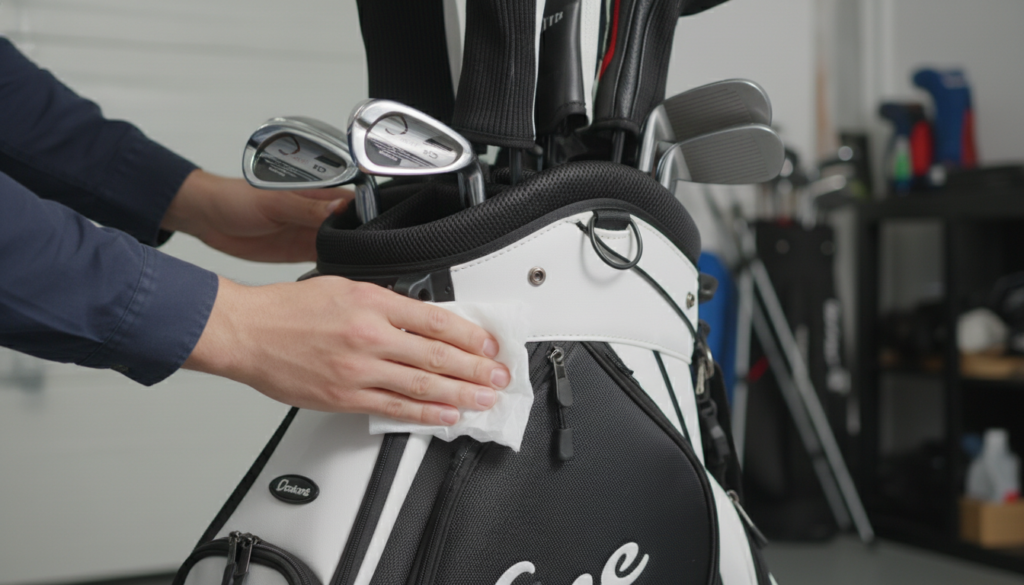
Golfers often obsess about equipment: new drivers, slick shafts, and the latest wedge grinds. But one of the most practical, impact-driven decisions you can make is simpler — choosing the right number and mix of clubs for your bag. That decision affects shot-making options, course management, bag weight, and even your scoring patterns. Getting the balance between having enough clubs to cover all distances and keeping your choices manageable is a craft that blends rules awareness, gap analysis, personal strengths, and course strategy.
Choosing the Right Number of Clubs for Your Golf Bag
Why Club Count Matters
Every golfer starts with the same limitation: under the Rules of Golf you may carry no more than 14 clubs during a round. That hard cap forces choices — do you include a 4-iron or a hybrid? Two wedges or three? A second putter? Beyond the Rules, the real trade-offs are practical. More clubs can fill distance gaps and give more shot-shaping options, but they also increase decision fatigue, add weight, and can clutter your short-game choices. Fewer clubs simplify decision-making, lighten the bag, and often force creative play. The goal isn’t a specific number as much as an intelligently balanced set that matches your distances, tendencies, and the courses you play.
The Fundamentals: Coverage, Gaps, and Redundancy
When building a bag you should think in terms of three fundamentals: coverage (do you have clubs that cover the yardages you face?), gaps (are there large, uncomfortable distance gaps between clubs?), and redundancy (do you have overlapping clubs that waste a slot?). Coverage ensures you can physically reach or control the ball for common situations. Gaps matter because large yardage steps force you to manipulate ball flight, which increases risk. Redundancy can be useful — many players keep two wedges that overlap slightly for different lies — but unnecessary overlap reduces flexibility.
Factors That Should Guide Your Club Count
Deciding how many clubs to carry is not one-size-fits-all. Consider these factors:
– Skill level and consistency: Beginners benefit from simpler sets and hybrids; advanced players may prefer more specialized wedges and long-iron alternatives for shot shaping.
– Common course types: Tight, tree-lined tracks reward accuracy and may justify extra hybrids or fairway woods; links or long courses may call for more distance options, a low-lofted driving iron, or an extra fairway wood.
– Typical shot gaps: If you frequently find a 25–40 yard distance gap between clubs, add a club or re-loft to compress those gaps.
– Physical stamina and mobility: Walking golfers and seniors often prefer lighter, fewer clubs to reduce fatigue.
– Tournament vs casual play: Tournament players may carry the full complement to avoid big numbers; casual players may prioritize fewer clubs to enjoy the round.
Common Club Configurations & Why They Work
Here are common configurations you’ll see in golfers’ bags and why they’re chosen:
– Full 14-Club Set: Driver, 3-wood, 5-wood or 3-hybrid, 3–9 irons, PW, AW, SW, LW, Putter. This gives maximal distance coverage and short-game options. Best for players who want versatility and can manage decisions under pressure.
– 12–13 Club Set (Hybrid-Heavy): Driver, 3-wood, 3-hybrid, 5-hybrid, 6–9 irons, PW, SW, Putter. Fewer clubs, lighter carry, easier choices. Hybrid-heavy setups benefit players who struggle with long irons.
– Minimalist 8–10 Club Set: Driver or 3-wood, 3/5-hybrid, 6/7-iron through PW, SW, putter. Useful for walking rounds or players who enjoy creative play and accept higher risk in exchange for pace of play and reduced weight.
– Specialty Short Game Focus: Fewer long clubs, plus multiple wedges (PW, GW, SW, LW). Links players and short-course specialists often carry more wedges to attack pins from different trajectories.
Performing a Gap Analysis — The Practical Test
A gap analysis maps your average carry distances for each club and highlights where big yardage jumps exist. Take the time on the range with a launch monitor or simply track carry distances on the course. Record averages, then compare adjacent clubs. Ideally, gaps between clubs should be about 8–12 yards for irons and 12–20 yards for woods/hybrids; exact figures depend on lofts and your ability. Use this simple table as a baseline to analyze typical club coverage and guide decisions.

| Club | Typical Carry (yards) | Loft (approx.) | Primary Use | Best For |
|---|---|---|---|---|
| Driver | 230–300 | 8°–12° | Maximum distance off the tee | Long hitters, wide fairways |
| 3-Wood / 3-Hybrid | 200–260 | 13°–18° | Tee shots, long fairway shots | Players needing control off tee or second shot on par 5s |
| 5-Wood / 4-Hybrid | 180–230 | 18°–22° | Long approach shots, high floating shots | Players missing fairways or avoiding long irons |
| Mid Irons (5–7) | 140–180 | 24°–36° | Approach shots into greens | All-around scoring clubs |
| Wedges (PW, SW, LW) | 60–140 | 44°–60°+ | Short game, bunker play, controlled approaches | Short-game specialists, players needing varied trajectories |
Interpreting the Table: What to Watch For
Look at your own numbers and check for large gaps: a 30–40 yard gap between clubs is a red flag. You’d either add a club to fill that gap or adjust lofts (get a club re-lofted or swap models) to compress differences. Also note overlaps: If two clubs are within 5–8 yards of each other consistently, consider removing one or changing loft/shaft to create distinct roles.
Sample Bag Compositions by Player Type
Below are practical starting templates. Tailor them based on your gap analysis and typical course conditions.
– Beginner / High Handicap (10–12 clubs): Driver, 3-hybrid, 5-hybrid, 6–9 irons, PW, SW, Putter. Rationale: Hybrids replace long irons for easier launch and consistency; one wedge supplemented by pitching wedge covers most short-game scenarios.
– Mid-Handicap / All-Around Player (13–14 clubs): Driver, 3-wood, 4-hybrid or 5-wood, 5–9 irons, PW, GW (gap wedge), SW, LW (optional), Putter. Rationale: Balanced approach with both distance and multiple wedges for scoring.
– Low-Handicap / Scratch Player (14 clubs): Driver, 3-wood, 3-iron or driving iron, 4–9 irons, PW, GW, SW, LW, Putter. Rationale: Extra irons enable finer yardage control and shot shaping; more wedges allow creativity around greens.
– Senior / Walking Player (11–13 clubs): 3-wood, 5-wood, 4-7 irons, 8–9 irons, PW, SW, Putter. Rationale: Emphasize hybrid/wood distance and fewer clubs to reduce weight, favoring playability over full coverage.
Wedges: The Most Flexible Area of Your Bag
Wedges deserve special attention because they bridge full shots and delicate short-game control. Many players either under-wedge (not enough loft choices) or over-wedge (too many similar lofts). Aim for loft spacing around 4–6 degrees between wedges: for example, PW (44°), GW (48°), SW (54°), LW (58°). If you struggle with short-game control, add a third wedge to give more trajectory and spin options; if you prefer simplicity, two wedges plus a pitching wedge may suffice. Loft, bounce, and grind choices depend on turf conditions and your technique — more bounce benefits softer conditions and steeper attack angles; less bounce helps in tight lies and firmer turf.
Hybrids and Fairway Woods vs Long Irons
Long irons (2–4 irons) demand precision and a consistent strike. Hybrids and fairway woods are easier to hit, offer higher trajectory, and tend to stop better on greens. The modern trend is to carry fewer long irons and more hybrids/woods. If you have confidence with a 3-iron and need low-trajectory shots into windy conditions, keep it. For most amateurs, replacing 3–5 irons with 3–5 hybrids or a combination of a 5-wood and a 4-hybrid reduces mishits and improves scoring consistency.
Testing and Fitting: Data That Informs Decisions
Getting custom fit or using a launch monitor for a fitting session is one of the fastest ways to refine your club count. A fitting will reveal actual carry distances, dispersion, and optimal loft/shaft combinations. Use that data to eliminate overlaps, close gaps, and identify which clubs provide the best scoring value. If you can’t get a professional fitting, track rounds and range sessions rigorously — log distances and lies — and make incremental changes.
Course Strategy: Match Your Bag to the Course
Adapt your bag content to the course you expect to play. Long, wide courses with reachable par 5s reward extra fairway wood/driver options. Tight courses with risk/reward tee shots and small greens benefit from more irons and wedges to dial in precision. Links-style courses with firm turf and heavy wind favor low-launching clubs and often a driving iron in place of a fairway wood. For tournament weeks, practice with the exact bag you plan to use so there are no surprises.

When Fewer Clubs Can Improve Scoring
Carrying fewer clubs forces smarter play. With a 10–12 club bag you’ll often find simpler choices lead to better commitment and fewer mishits. It removes the temptation to “search” for a perfect club and encourages creativity — trajectory management, punch shots, and more thoughtful club selection. Many skilled players intentionally remove a club to simplify options under pressure. If you’re inconsistent with certain clubs, consider leaving them out until you can practice and rebuild trust in them.
Managing Redundancy: When Two Clubs Do the Same Job
Redundant clubs are common, particularly when golfers add specialty wedges without altering their iron set. If two clubs reliably deliver within a few yards of each other, pick the one you hit more consistently and that performs better from marginal lies. Don’t keep a club because it “matches” loft charts; keep it because it fills a distinct and necessary gap or offers a specific shot type you frequently need.
Shafts, Loft Adjustments, and the Subtle Tools
Shaft flex and length alter distance and feel, which changes effective gaps between clubs. Similarly, re-lofting a club by a couple degrees can smooth yardage steps without buying new clubs. If you consistently need a 10–15 yard tweak, consider a loft change or swap shafts before replacing a club. Professional club builders can advise on small changes to perfect gaps without overhauling your set.
Practical Steps to Find Your Ideal Club Count
Follow these steps to dial in the right number and mix:
1) Log distances for every club over a series of sessions or rounds. Use a launch monitor or on-course carry tracking.
2) Create a gap chart and identify gaps larger than your comfort zone (commonly >15 yards for irons, >20 yards for woods).
3) Decide on priorities: do you want more wedges, more long clubs, or more hybrid coverage? Align this with your handicap and courses.
4) Consider removing overlapping clubs or replacing long irons with hybrids/woods.
5) Test the proposed set for several rounds. Reassess after 3–5 rounds and make micro-adjustments (loft, shaft) rather than wholesale changes immediately.
Common Mistakes to Avoid
– Keeping clubs out of nostalgia: Don’t keep a club just because it “looks nice” or once hit a good shot. Keep clubs that consistently contribute to scoring.
– Overloading wedges without addressing iron gapping: Adding multiple wedges without adjusting iron lofts can create large gaps at other parts of the bag.
– Excessive specialization too early: High-handicap players often buy specialized clubs (e.g., extreme lob wedges) before mastering basic distance control.
– Ignoring weight and ergonomics: Heavier bags or poorly balanced sets affect stamina and swing consistency, especially if you walk 18 holes frequently.
Special Scenarios: Rain, Wind, and Tournament Rules
Weather affects optimal club selection. On windy days, you might prefer a driving iron or lower-lofted fairway wood to keep trajectory down. In wet conditions that reduce roll, carry an extra fairway wood or a higher-lofted hybrid for stopping power. For tournaments, check any local rules and always conform to the 14-club limit; if you make last-minute changes, practice with that configuration so you’re comfortable under pressure.
Mental Game and Decision Making
Choice overload affects stress and performance. With more clubs you may hesitate; with fewer clubs you commit more boldly. High-level players balance the need for options with the psychological advantage of simplicity. Part of fine-tuning your set is recognizing how many options you can comfortably manage under competition pressure. The most elegant sets usually reflect simplicity paired with clear roles for each club.
When to Consult a Professional
If you struggle to identify gaps, have swing changes, or play varied courses, schedule a club-fitting session. A fitting pro will help you understand loft progression, dispersion patterns, and how shaft selection changes yardages. Additionally, a coach can help you decide whether missing distances are equipment-related or technique-related — the right solution might be a swing fix rather than a new club.
Tracking Progress and Iterating
Once you settle on a set, track performance over time. If you see recurring misses (e.g., coming up short into greens or leaving too many long approaches), revisit your gap analysis. Small tweaks — changing a wedge grind, adjusting shaft flex, or installing a slightly different loft — often produce more benefit than adding or removing full clubs. Think of your club set as an evolving toolkit that responds to improvements in swing, physical changes, and the courses you play.

Choosing the right number of clubs is a personal, data-informed process. Use gap analysis to identify real needs, prioritize simplicity and confidence, and adapt your configuration to courses and conditions you play most. There’s no universal “best” number: the best set is the one that offers consistent yardage coverage, manageable choices, and equipment that complements your swing. Start with the fundamentals — coverage, gaps, and redundancy — test deliberately, and iterate slowly. The result will be a bag that helps you score more often, reduces stress on the course, and fits your style of play.