
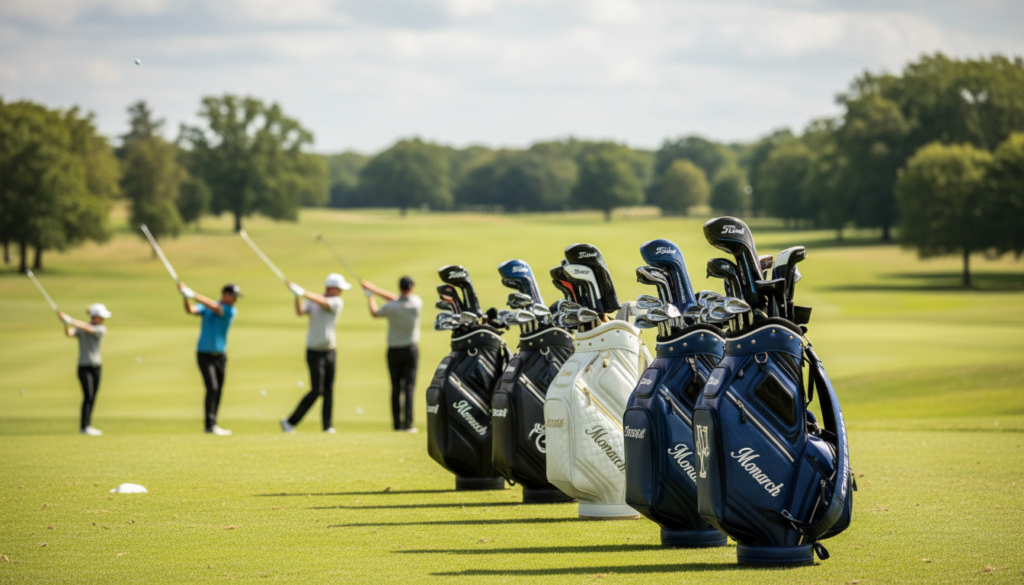
In the competitive world of golf equipment, the demand for bags that combine featherweight performance, durable construction, and high-end customization has never been stronger. Players from weekend amateurs to touring professionals expect their gear to reflect personal style while delivering practical benefits like easier carry, smarter club organization, and weather protection. LongZhao golf bag Factory has positioned itself to meet these demands by focusing on custom lightweight golf bags that balance materials science, ergonomic design, and scalable manufacturing. This article takes an in-depth look at what makes Longzhao’s offerings notable, the materials and processes involved, customization options, quality-control measures, and how retailers and clubs can evaluate and integrate these bags into their product lines.
As golf becomes more inclusive and mobile—think walking rounds, travel golf, and shorter, faster formats—lightweight solutions are increasingly a selling point. Longzhao’s approach emphasizes minimizing weight without compromising structural integrity or functionality. That means a careful selection of fabrics, reinforcements, and hardware along with intelligent layout and pocket design. Throughout this piece, we’ll analyze key factors buyers should consider, provide a practical comparison chart, and offer guidance on ordering, lead times, and after-sales support.
Custom Lightweight Golf Bags From Longzhao Golf Bag Factory
Market Context and Buyer Needs
The modern golf bag must answer several simultaneous needs: it should be light enough to encourage walking, organized enough to keep clubs and accessories accessible, and robust enough to survive travel and frequent use. Consumers also expect personalization—logos, colors, pocket configurations, and strap systems are commonly requested. Longzhao has adapted to these market dynamics by offering flexible customization, a range of lightweight material options, and modular designs that let customers choose features like integrated cooler pockets, rainproof compartments, and quick-access rangesfinder pockets.
Retailers and club purchasers evaluate bags on metrics such as net weight, durability tests (abrasion, tear strength, seam integrity), weather resistance, and the scope of customization. Longzhao’s portfolio centers on bags that score highly in these categories, largely through optimized materials and production processes that reduce unnecessary bulk while retaining protection for valuable equipment.
Design Philosophy: Function Meets Minimalism
Longzhao’s design philosophy emphasizes “function-first minimalism.” That means each design choice—zippers, webbing, padding, frame elements—must have a justifiable contribution to user experience or product longevity. For example, choosing ultralight ripstop fabric reduces weight while providing adequate tear resistance, but the factory pairs it with targeted reinforcement at high-stress points (top rims, base attachment points, strap anchors) to avoid common failure modes.
Another core tenet is modularity. Customers can specify the core bag layout—stand, cart, or staff—then add or subtract modules like cooler pockets, rangefinder sleeves, or rain hoods. This modular approach cuts lead times because common subassemblies can be produced in batches while allowing individualized final assembly.
Materials and Components: Achieving Low Weight Without Compromise
Material choice is central to a lightweight bag strategy. Longzhao works with a portfolio of fabrics and hardware designed to balance weight, durability, and cost:
– Technical ripstop nylons (70–210 denier): Provide a strong, lightweight outer shell with tear resistance.
– Micro-polyester and ultra-thin high-density polyester: Often used for pocket linings and internal dividers to save weight.
– TPU-coated fabrics or laminated membranes: Applied selectively for waterproofing critical pockets and bases without coating the whole bag, which would add weight and reduce breathability.
– Aluminum or composite stay systems: Lightweight structural supports keep bag shape with minimal mass. Carbon-fiber elements are used for premium lines to further reduce weight.
– Low-profile hardware and YKK zippers: YKK offers lightweight, reliable zipper options; strategically chosen sliders and pulls minimize bulk while ensuring longevity.
Longzhao’s sourcing strategy emphasizes supplier relationships that provide consistent fabric quality and repeatable hardware tolerances. That consistency is essential for customized production runs where repeatability affects both fit and finish.

Customization Options: What Can Be Tailored?
Longzhao’s customization suite ranges from aesthetic choices to functional adaptations. Typical options include:
– Colorways and Piping: Pantone or CMYK-based matching to fit retail branding or corporate identity.
– Logos and Embroidery: Direct embroidery, woven patches, silicone badges, and heat-transfer printing are available depending on design and budget.
– Pocket Configurations: Clients can request insulated beverage pockets, valuables pockets with microfleece lining, external ball pockets, and full-length apparel pockets.
– Top and Divider Systems: Full-length, 14-way, 6-way, or 3-way dividers, with soft-touch dividers for club protection.
– Strap Systems: Single-strap carry, dual-strap backpack-style, or padded single strap for pro-style carry.
– Accessories and Add-ons: Rain hoods, towel rings, umbrella straps, shoe pockets, and custom paddings.
For high-volume orders, Longzhao can also implement co-branded packaging, custom hang tags, and point-of-sale display solutions, making it easier for retail partners to launch new SKUs.
Manufacturing Process and Scalability
Longzhao combines manual craftsmanship with automated cutting and CNC-assisted assembly where appropriate. The process typically follows these stages:
1. Design finalization and proto development: The customer approves tech packs, materials, and initial prototypes.
2. Pattern cutting and sample creation: Automated cutters ensure accurate pattern replication; samples are built for fit and function review.
3. Pre-production testing: Prototypes undergo in-house tests for weight, water resistance, and operational checks like zipper cycles and strap endurance.
4. Production: Panels and components are produced in batches. Skilled sewing teams assemble and finish the bags with tight tolerances and consistent quality checks at each stage.
5. Final inspection and packaging: Finished goods are inspected against quality criteria, packaged, and prepared for shipping.
Scalability is achieved by maintaining flexible production lines and cross-trained teams. This allows Longzhao to handle small, highly customized runs (e.g., 100–500 units) as well as larger orders upward of several thousand units, with predictable quality and timelines.
Quality Assurance and Testing
Quality assurance at Longzhao is multi-layered. Key checkpoints include incoming material inspection, in-line stitching and seam checks, hardware pull tests, and final dimensional and visual inspections. Additionally, representative samples typically undergo performance testing such as:
– Abrasion and Martindale tests on high-wear areas.
– Water resistance tests for treated pockets and coated bases.
– Strap and buckle load testing to simulate repeated use and emergency loading scenarios.
– Zipper cycle testing to ensure long-lasting function.
For bespoke or branded projects, clients can request batch-level test reporting and photos/videos of key tests to maintain transparency and confidence in production quality.
Logistics, Lead Times, and Minimum Order Quantities
Lead times for custom lightweight bags vary by order complexity and current factory capacity. A typical timeline might look like this:
– Prototype development: 2–4 weeks (depends on revision cycles).
– Pre-production sample approval: 1–2 weeks.
– Production run (small batch, 100–500 units): 4–8 weeks after sample approval.
– Production run (larger batch, 1,000+ units): 6–12 weeks after sample approval.
Minimum order quantities (MOQs) are negotiable and depend on the degree of customization. For standard lightweight lines with minor branding changes, MOQs can be lower (e.g., 100–300 units). For fully bespoke designs—including unique molds, custom hardware, or proprietary fabric laminations—MOQs will typically be higher due to tooling and setup costs.
Sustainability and Material Choices
Environmental considerations are increasingly part of purchasing decisions. Longzhao responds by offering options that reduce environmental impact without compromising performance. Examples include:
– Recycled polyester or nylon outer shells for lower embodied carbon.
– Water-based coatings for waterproofing rather than solvent-based laminates.
– Minimizing non-recyclable trim and packaging, and offering recycled cardboard for shipping.
Clients can request environmental product declarations (EPDs) or specific recycled content percentages for compliance with corporate sustainability programs or retail sustainability criteria.
Pricing and Cost Drivers
Several factors influence the final price of a customized lightweight golf bag:
– Material selection: Higher-performance materials (carbon composites, laminated waterproof membranes) increase costs.
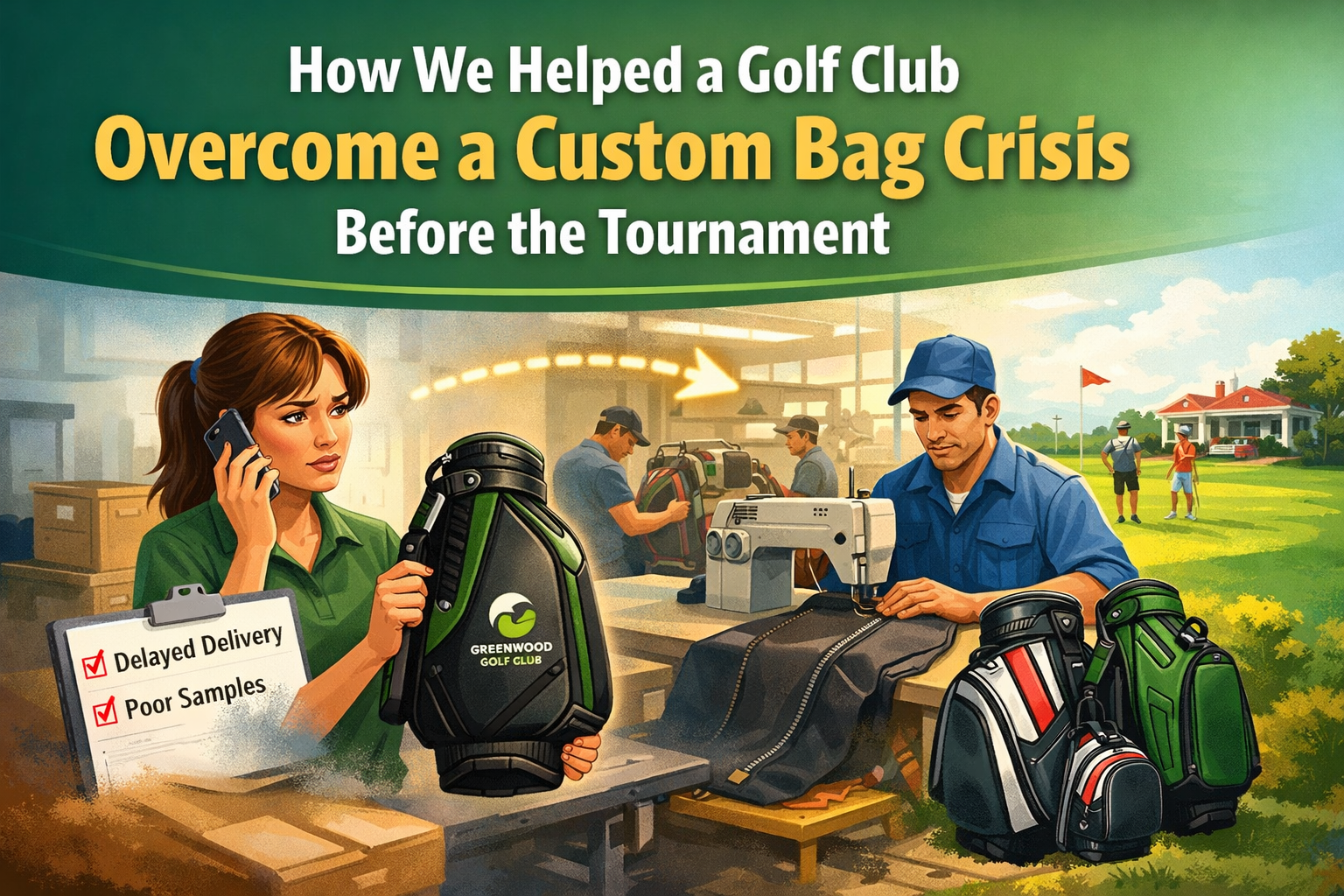
– Hardware complexity: Custom-molded clips, metal buckles, and premium zippers add to costs.
– Customization level: Full custom dye lots, embroidery, and unique colorways involve higher setup charges.
– Order volume: Economies of scale reduce unit costs substantially for larger runs.
Longzhao typically provides tiered pricing: an estimate for sample/prototype development and then unit prices that decline across larger volume bands. Transparent cost breakdowns help retailers and OEM partners understand where savings or investments are occurring.
Retail and Distributor Benefits
Retailers and distributors gain multiple advantages from partnering with a factory like Longzhao:
– Flexible order sizing for market testing (small initial runs).
– Co-branding and private label capabilities that align with retail marketing strategies.
– Faster time-to-shelf for modular designs where standard components are pre-built.
– Technical support for merchandising, including display recommendations and product training materials highlighting lightweight features and customer benefits.
Case Studies and Use Cases
While exact client names are often subject to confidentiality agreements, a few representative use cases illustrate the factory’s flexibility:
– A mid-sized sporting goods retailer launched a private-label lightweight stand bag in three colors, with an MOQ of 300 units. Longzhao provided a single pre-production sample, revised it based on feedback, and delivered 300 units within eight weeks. The product performed well in summer walk-around promotions due to its sub-2.5 lb weight and insulated beverage pocket.
– A corporate gifting program requested co-branded staff bags for an executive golf retreat. Longzhao produced a limited series with embroidered logos and custom color trim, handling small batch production and delivering packaged units with custom hang tags.
Analysis Table: Product Comparison of Lightweight Models
| Model Name | Primary Material | Approx. Weight | Key Customization Options | Ideal Use |
|---|---|---|---|---|
| FeatherLite Stand | 210D Ripstop Nylon + TPU accents | 2.2–2.8 lbs | 14-way divider, embroidered logo, insulated pocket | Walking golfers, daily practice |
| TourLight Staff | Composite-reinforced polyester + aluminum stay | 4.5–5.5 lbs | Custom color piping, molded nameplate, reinforced top | Pro/staff use, travel-ready |
| CarryPro Ultralight | 70D Ultra-Ripstop + Carbon stays | 1.6–2.1 lbs | Minimal pocketing, logo heat transfer, backpack strap | Travel and minimalist players |
| CartMate Slim | 420D High-density Polyester | 3.0–3.8 lbs | Cart-friendly base, velour-lined valuables pocket | Cart golfers, range use |
| EcoLight Recycled | Recycled PET shell + TPU coated base | 2.5–3.2 lbs | Recycled material labeling, colorway matching | Sustainability-conscious buyers |
How to Evaluate a Supplier Like Longzhao
When assessing a factory for custom lightweight golf bags, buyers should consider the following criteria:
– Technical expertise with lightweight materials and structural engineering so that slimming down weight doesn’t produce weak points.
– Sample and prototyping capabilities that allow quick iteration without excessive cost.
– Clear communication and transparency around lead times, MOQs, and tooling charges.
– Documented quality control processes and willingness to provide test evidence for strength, abrasion, and waterproofing.
– Flexibility in minimum volumes and customization—especially if the retailer plans to test the market with limited runs.
Longzhao typically meets these criteria by offering detailed tech packs, responsive sample loops, and batch testing upon request. Prospective buyers should request references and sample test reports as part of their diligence.
Ordering Tips: Reducing Risk and Time-to-Market
Buyer strategies to reduce risk and expedite market entry include:
– Start with a small pilot order: Validate the market response to a single colorway or a simplified pocket layout before scaling up.
– Approve digital mockups and physical pre-production samples: Tight feedback loops in the sample phase prevent expensive revisions later.
– Standardize core components: Reusing existing divider trays, strap designs, or pockets reduces lead time and setup costs.
– Request documented test reports and specify acceptance criteria in your purchase contract to avoid surprises on delivery.
Packaging, Presentation, and Merchandising
Presentation matters. Longzhao supports private-label projects with options for branded dust covers, custom hang tags describing features (weight, materials, warranty), and retail-ready boxes that reduce in-store assembly. For e-commerce sellers, the factory can provide high-resolution product images and technical spec sheets to speed up online listings.
Maintenance, Care, and Longevity
Lightweight materials sometimes require more deliberate care. Best practices include:
– Spot cleaning for surface dirt; avoid machine washing unless specified.
– Drying thoroughly after exposure to moisture to prevent mildew.
– Avoiding overloading pockets beyond intended capacity to protect seams and zippers.
Longzhao can provide care labels and care instruction leaflets in multiple languages to support international distribution and reduce avoidable returns due to misuse.
Potential Challenges and How They’re Addressed
Producing lightweight golf bags presents unique challenges, such as ensuring abrasion resistance in thin fabrics and maintaining structural stiffness. Longzhao addresses these by:
– Using strategic reinforcement: thicker fabric panels at the base or top rim, and internal strapping or webbing where loads concentrate.
– Selecting hybrid constructions: combining ultralight shells with strategically placed rigid elements (aluminum or composite) to retain shape.
– Continuous testing: pre-production trials simulate fieldwear to catch weak points early.
Future Trends and Innovation Opportunities
Looking forward, the lightweight golf bag category will likely evolve along several vectors:
– Increased adoption of recycled and bio-based materials as suppliers scale production consistency.
– Greater integration of wearable comfort technology in straps (venting, memory foam) without significant weight penalties.
– Modular ecosystems where a single bag body supports swappable panels or accessory modules tailored for travel, instruction, or tournament use.
Longzhao’s flexible manufacturing approach and openness to material experimentation position it to adopt these trends quickly in collaboration with retail and brand partners.
Why Longzhao Can Be the Right Partner
Custom lightweight golf bags require a careful mix of materials knowledge, design discipline, manufacturing precision, and responsive service. Longzhao Golf Bag Factory offers a complete value proposition to brands, retailers, and corporate buyers looking for private-label or co-branded lightweight solutions. From material selection to prototype iteration, and from modular component strategies to transparent production timelines, Longzhao focuses on delivering bags that satisfy modern golfers’ needs—lighter carry, smart organization, and bespoke branding—while supporting retailers with scalable production and merchandising support.
For businesses evaluating partners to produce custom lightweight golf bags, the decision should weigh technical competence, sample agility, lifecycle support, and the supplier’s ability to align costs with volume. Longzhao demonstrates these capabilities in its approach to lightweight bag production and offers a compelling option for partners looking to bring differentiated, high-performance golf bags to market.