
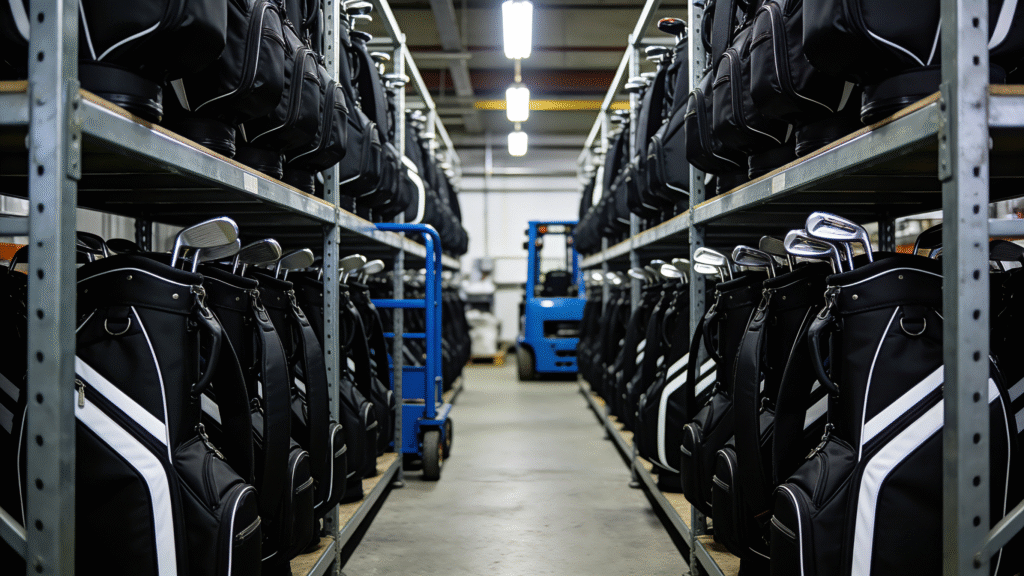
Direct-to-consumer (DTC) brands and private label companies looking to enter or expand in the golf accessories market face the continuous challenge of balancing product quality, brand differentiation, speed-to-market, and margin control. A well-aligned manufacturing partner can transform those challenges into competitive advantages. Longzhao Custom Golf Bag Factory, as a specialized manufacturer for golf bags and accessories, presents a compelling case for both DTC and private label brands seeking tailored production solutions, flexible collaboration models, and reliable supply chains. This article explores, in depth, how DTC and private label brands benefit from working with a focused custom golf bag factory like Longzhao, and provides practical guidance on structuring successful partnerships.
Understanding the DTC and Private Label Landscape in Golf Accessories
DTC brands sell directly to consumers, often leveraging brand storytelling, digital marketing, and customer experience to build loyalty. They require tight control over product design, quality, and customer feedback loops. Private label brands, meanwhile, produce goods under the retailer’s brand and emphasize cost-effectiveness, consistent supply, and compliance with retail specifications.
Both models need manufacturing partners that can:
– Deliver product differentiation (materials, features, aesthetics)
– Scale production without sacrificing quality
– Provide predictable lead times and logistics solutions
– Support branding and packaging requirements
– Offer transparent cost structures and flexible minimum order quantities (MOQs)
A factory like Longzhao, focused on custom golf bags, is positioned to help brands meet these needs by offering specialized know-how and manufacturing capabilities tailored to golf-specific demands: durability, weather resistance, club protection, ergonomic design, and customization possibilities.
What Longzhao Custom Golf Bag Factory Offers
While specifics vary by factory, the typical capabilities a specialized manufacturer like Longzhao can bring include:
– End-to-end product development support: concept, CAD, pattern-making, sampling, and final production.
– Material sourcing networks: access to performance fabrics (nylon, polyester, polyurethane coatings), high-grade zippers, molded inserts, and hardware (buckles, rings).
– Customization options: logo embroidery, heat transfer, custom pockets, colorways, and integrated features (stand mechanisms, rain hoods, padded straps).
– Flexible MOQs and production scaling: accommodating small DTC launches and larger retailer private label runs.
– Quality assurance systems: in-line inspections, final product checks, and defect rate management.
– Packaging and branding services: bespoke packaging, hang-tags, labeling, and kitting.
– Logistics coordination: sea/air freight options, drop-shipping capability, and consolidation for multi-SKU orders.
– Sustainability and traceability options: recycled fabrics, eco-friendly packaging, and material certifications upon request.
These capabilities create strategic advantages for both DTC and private label brands when managed correctly.
Key Benefits for DTC Brands
– Product Differentiation and Brand Story: DTC brands rely on unique products and narratives. A custom factory enables distinctive design features—signature pocket layouts, proprietary stand systems, or exclusive colorways—enabling brands to create a tangible point of difference that supports higher price points and loyal customers.
– Faster Iteration and Customer Feedback Loop: DTC brands often adopt rapid iteration based on direct customer feedback. Longzhao’s prototyping and sample services allow quick design adjustments and small-batch revisions, which helps DTC brands respond to market feedback rapidly.
– Control over Quality: With direct oversight of design-to-production, DTC brands can enforce quality standards that reflect their brand positioning—premium materials, reinforced stitching points, and careful finishing—thereby reducing returns and amplifying customer satisfaction.
– Lower Inventory Risk with Flexible MOQs: Many DTC brands prefer to test new SKUs or limited-edition lines. A factory offering flexible MOQs allows smaller initial runs and the ability to scale once demand is validated, minimizing unsold inventory.
– Co-branded Opportunities: DTC brands can easily incorporate co-branding or limited collaborations with the factory or other partners, enabling exclusive launches and social-media-driven sales peaks.
Key Benefits for Private Label Brands
– Cost Efficiency at Scale: Private label brands emphasize margin. Longzhao’s production efficiencies, established supply chains, and volume discounts enable competitive unit costs when producing at retail-oriented quantities.
– Compliance and Retail Specs: Retailers require strict compliance (labeling, safety, packaging). A factory experienced in private label work understands these requirements and can deliver retailer-ready products, reducing the retailer’s operational friction.
– Consistency and Reliability: Large retailers demand consistent product quality across repeated production runs. Private label brands benefit from Longzhao’s ability to replicate specs reliably and manage sustained production schedules.
– Faster Sourcing and Reduced Time-to-Shelf: Retail calendars are tight. A manufacturer adept in product planning, lead-time management, and coordinated logistics ensures products arrive on time for retail seasons.
– Tailored Pricing Models: Private label arrangements can include tiered pricing, long-term contracts, or consignment arrangements that benefit retailers and brands from predictable unit costs.
Design, Development, and Speed-to-Market
A critical advantage of partnering with a specialized factory lies in streamlined product development. For both DTC and private label brands, Longzhao’s contributions typically include:
– Rapid prototyping: A clear process for moving from concept to sample—2D sketches to CAD to physical prototype—shortens validation cycles.
– Pattern and mold expertise: Proper pattern-making and any required molds for plastics or structural pieces (e.g., molded bases or dividers) cut lead times and reduce rework.
– Iteration-friendly workflows: Small pilot runs for market testing before committing to full production.
– Technical input: Advice on manufacturability, cost-optimized construction methods, and materials that meet performance goals without unnecessary expense.
Practical tip: DTC brands should invest early in a detailed tech pack and functional prototypes. The clearer the spec, the faster the factory can deliver accurate samples and manufacture at scale with fewer surprises.
Quality Assurance, Compliance, and Certifications
Quality is non-negotiable in golf bags: customers expect durable stitching, weather resistance, and functional compartments. Factories like Longzhao typically implement multiple QA checkpoints:
– Incoming material checks: verifying fabric weight, coatings, and hardware specs.
– In-process inspections: monitoring seam strength, dimensions, and component installation.
– Final AQL inspections: statistical sampling to ensure defect rates meet agreed thresholds.
– Lab testing coordination: for properties like water resistance, UV stability, and colorfastness.
For private label brands, certifications and documentation are essential for retail onboarding. For DTC brands, transparent QA reduces returns and supports premium pricing. Both benefit from a manufacturer that can provide inspection reports, test certificates, and traceability records.
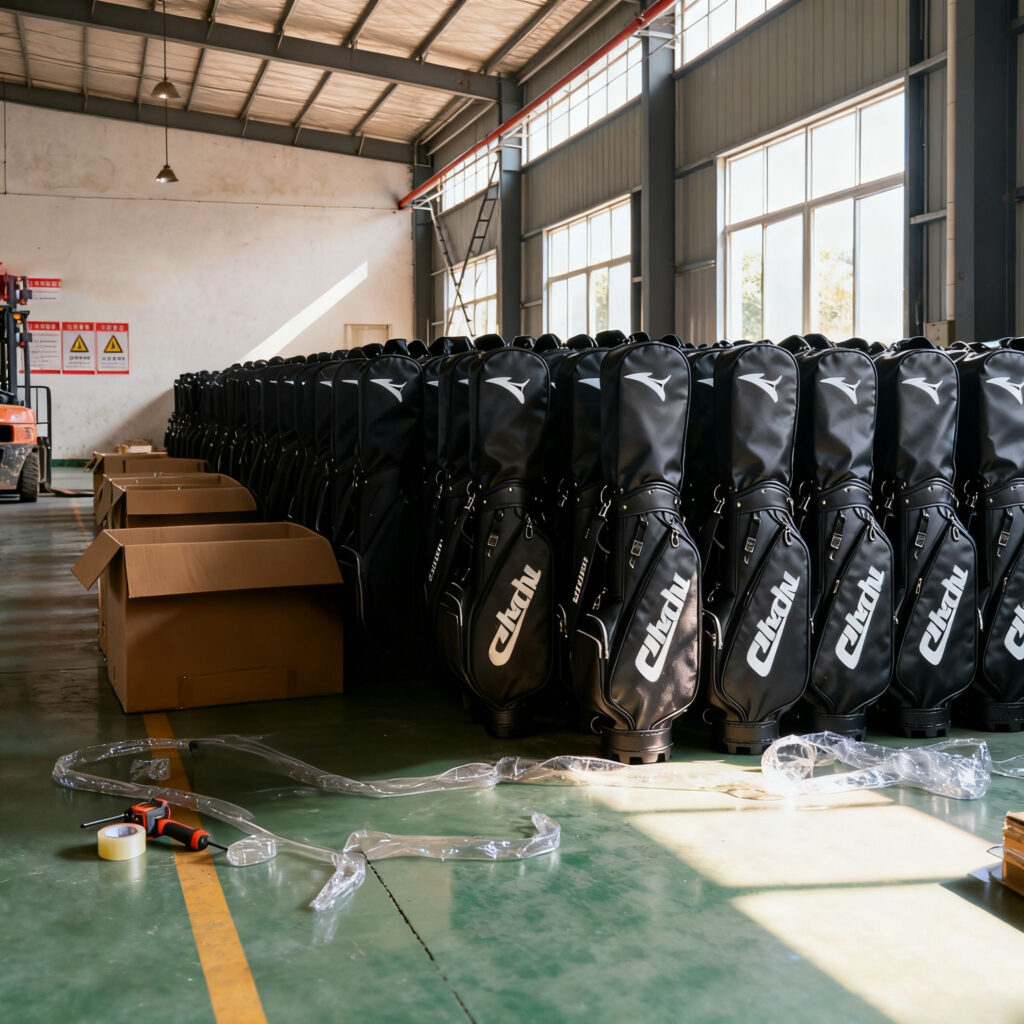
Cost Structure and Pricing Strategies
Understanding and optimizing cost components is crucial for profit and competitive pricing:
– Bill of Materials (BOM): Material selection (fabric denier, coating type, zippers, buckles) drives 50–70% of cost variation.
– Labor and complexity: Multi-pocket designs, padding, and custom hardware increase assembly time.
– Tooling and setup: One-time costs for molds or custom die-cut shapes.
– Shipping and duties: Landed cost depends on incoterms, shipping method, and destination duties.
Longzhao can help brands optimize costs by:
– Recommending alternative materials that maintain performance at lower cost.
– Suggesting modular designs that reuse tooling across SKUs.
– Negotiating volume-based raw material pricing.
– Offering packaging options that reduce dimensional weight for shipping savings.
Cost control strategies:
– Start with a core SKU range and add variants after validating demand.
– Use common components across models to reduce BOM complexity.
– Negotiate longer-term commitments for better pricing if forecasted volumes justify it.
Supply Chain Management and Logistics
Efficient supply chain coordination reduces time-to-market and avoids stockouts:
– Supplier network integration: Longzhao’s access to raw-material suppliers shortens procurement cycles.
– Production scheduling: Prioritizing DTC or private label runs within calendar constraints to meet launch dates.
– Consolidation: Combining multiple small orders into single shipments to lower freight costs.
– Drop-shipping support: For DTC brands with direct fulfillment models, factories that can pack and ship individual orders to consumers or fulfillment centers add operational efficiency.
For DTC brands, a factory that supports smaller, frequent shipments or can integrate with fulfillment partners is advantageous. Private label brands benefit from predictable bulk shipments aligned with retail floor-ready needs.
Branding, Packaging, and Retail Readiness
A brand isn’t just the product—it’s the complete unboxing and retail experience:
– Custom packaging: Branded boxes, protective dust bags, and hang-tags enhance perceived value for DTC brands.
– Retail packaging: Folded, hang-ready packaging or poly-bags that meet retail planograms are essential for private label products.
– Kitting and label compliance: Factories can pre-kit accessories and apply retailer-required labels, simplifying retailer onboarding.
Longzhao’s role: delivering finished, brand-forward products that meet both DTC expectations (premium unboxing) and private label retailer specifications (barcodes, FNSKU labels, UPCs).
Sustainability and Ethical Sourcing
Sustainability is increasingly central to buying decisions. Brands can partner with a factory to implement:
– Recycled or organic fabrics, low-VOC coatings, and water-saving tanning processes.
– Reduced packaging waste: minimal, recyclable materials or reusable dust bags.
– Supply chain transparency: traceability reporting on raw materials and origin.
Offering sustainable options helps both DTC and private label brands appeal to eco-conscious consumers and meet retailer sustainability requirements. Longzhao can support these initiatives by sourcing eco-materials and documenting supply chain practices, though cost premiums and lead-time considerations must be balanced.
Risk Management and Mitigation Strategies
Working with any overseas or third-party manufacturer introduces risks that must be actively managed:
– Quality risk: Mitigate via detailed tech packs, pre-production samples, and third-party inspections.
– IP risk: Use NDAs, register designs where possible, and include IP clauses in contracts. Ask about production segregation if confidentiality is critical.
– Supply chain disruption: Build buffer stock, maintain alternate materials, and consider dual-source strategies if volumes allow.
– Lead-time variability: Include contractual SLAs for production lead times and penalties for significant deviations.
Longzhao can help lower risk through consistent communication, transparent workflows, and willingness to participate in regular status calls with brand teams.
Practical Steps for DTC and Private Label Brands Working with Longzhao
1. Prepare comprehensive tech packs:
– Measurements, materials, color codes, hardware specs, embroidery files, and packing instructions.
2. Request an initial sample timeline and cost breakdown:
– Understand sample charges, lead times, and potential iteration timing.
3. Negotiate MOQs and pricing:
– Seek tiered pricing that matches planned growth stages.
4. Set clear QC criteria:
– Agree on acceptable defect rates and inspection protocol (AQL numbers).
5. Establish logistics terms:
– Choose FOB, CIF, or DDP according to brand operational preferences and capabilities.
6. Protect IP:
– Execute NDAs and include design ownership and tooling clauses.
7. Plan for scale:
– Discuss capacity, ramp-up plans, and contingency options for seasonal demand.
8. Pilot and iterate:
– Launch a small pilot run, collect customer feedback, and adjust before committing to larger orders.
Measuring Success and KPIs
To evaluate the partnership, brands should track key performance indicators:
– On-time delivery rate: Percentage of shipments meeting the agreed delivery date.
– Defect rate (PPM or AQL results): Frequency of product quality issues.
– Sample accuracy: Degree to which production units match approved samples.
– Cost variance: Actual landed cost versus estimated cost.
– Time-to-market: Days from sample approval to finished goods arrival.
– Customer returns and complaints: Post-launch indicators of product-market fit and quality.
– Sustainability metrics: Percentage of materials that are recycled or certified.
Regular performance reviews with Longzhao—quarterly or aligned with major launches—help ensure alignment and continuous improvement.
Long-term Partnership Opportunities
DTC and private label brands operate under different commercial paradigms, but both need reliable partners to execute product strategies effectively. Longzhao Custom Golf Bag Factory, as a focused manufacturer, can deliver technical expertise, cost efficiencies, and production flexibility tailored to the divergent needs of DTC innovators and retail-driven private label brands.
For DTC brands, the factory’s ability to support rapid prototyping, low-MOQ runs, and premium finishing empowers brand differentiation and allows for consumer-driven iteration. For private label brands, consistent quality, competitive unit pricing, and retail-compliant packaging enable scale and margin stability.
Success depends on clarity: clear specs, transparent communication, shared timelines, and well-defined KPIs. Brands that invest in the partnership—sharing forecasts, consolidating SKUs, and working on continuous improvement—can leverage Longzhao’s craftsmanship and supply-chain capabilities to create compelling golf bag products that stand out in a competitive market.
By combining technical product expertise with operational discipline, a dedicated custom golf bag factory becomes more than a supplier—it becomes a strategic extension of brand capability. Whether launching a premium DTC collection or a high-volume private label assortment, the right factory partnership transforms design intent into market success.