
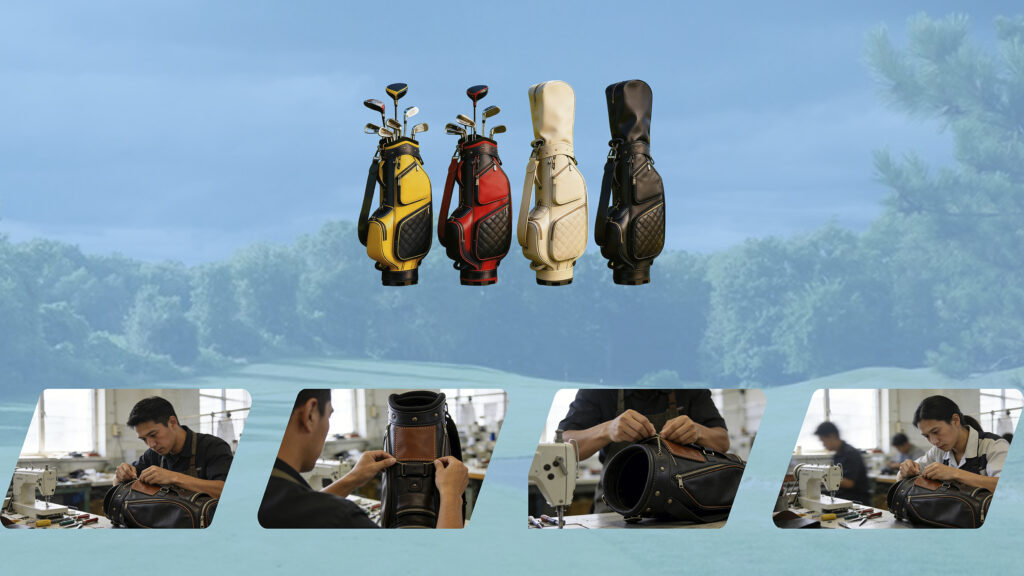
In a market where golfers demand both individuality and reliability, Longzhao Custom Golf Bag Factory has built a reputation for delivering tailored bags without compromising consistent quality. The core challenge for any custom manufacturer is to combine the variability inherent in bespoke orders with the repeatability demanded by high-quality production. Longzhao addresses this by designing an end-to-end system that aligns people, processes, materials, and technology around a single objective: consistent custom quality. This article explores the factory’s methodologies, quality assurance systems, and continuous improvement practices in depth, and provides an analytical framework that other manufacturers can adapt.
Understanding “Custom Quality”: The Dual Mandate
Custom quality is a dual mandate: meeting unique customer specifications while ensuring each finished product adheres to baseline standards of fit, function, and finish. For Longzhao, that means every custom golf bag must reflect the client’s design choices—materials, colors, pockets, logos, hardware—while also performing to parameters such as durability, weight distribution, waterproofing, and stitching integrity. Achieving this balance requires a robust specification system that translates customer requirements into measurable production parameters, and a quality framework that prevents variability from creeping in at any stage.
Key to this is the articulation of two complementary sets of standards:
– Customization specification: design mockups, color codes, material selections, personalization data (names, numbering), and special hardware.
– Baseline quality specification: tensile strength of seams, water resistance rating, zipper cycles, welding integrity, bag balance and ergonomics, and aesthetic tolerances (color match, print clarity).
Longzhao’s quality system treats these as equal priorities and embeds both into each work order.
Design-to-Production Integration: Clear, Digital, Traceable
A primary source of inconsistency in custom manufacturing is poor translation of a customer’s design intent into production instructions. Longzhao minimizes this risk by using a unified digital platform where design approvals, technical specifications, and work orders are consolidated.
Critical features of this integration:
– Digital design files: Vector files for prints and embroidery, CAD patterns, and 3D renderings are stored and version-controlled.
– Technical packs: Each order includes a tech pack containing measurements, materials list with supplier lot numbers, hardware specs, and illustrative diagrams for complex assembly.
– Approval logs: Customer approvals—color swatches, proofs, and hardware samples—are attached to the order, along with timestamps and responsible parties.
– Work ticket generation: The system converts tech packs to shop-floor work tickets with step-by-step operations, standard times, and inspection points.
By maintaining traceability from design approval to production, Longzhao ensures that what was signed off is what gets made, preventing rework and reducing errors.
Material Sourcing and Incoming Quality Control (IQC)
Consistent quality starts with consistent inputs. Longzhao maintains long-term partnerships with vetted suppliers and enforces strict incoming quality control. Their approach covers fabrics, foam cores, zippers, buckles, metal hardware, embroidery threads, and label materials.
Key IQC practices:
– Supplier qualification: Suppliers are evaluated on delivery performance, material test results, certifications (e.g., ISO, REACH), and audit outcomes.
– Batch sampling: Each incoming lot undergoes sampling for color-fastness, tensile strength, abrasion, water repellency (where applicable), and dimensional accuracy.
– Material traceability: Lot numbers are recorded and linked to production batches, enabling root-cause tracing if a defect emerges.
– Pre-approved sample matching: For colored or printed materials, received lots are compared visually and instrumentally (spectrophotometer) to pre-approved samples.
Longzhao’s policy is to quarantine nonconforming batches and work with suppliers on corrective action, preventing compromised materials from entering production.
Prototyping and First Article Inspection (FAI)
Before full production of any custom design, Longzhao executes a structured prototyping and First Article Inspection (FAI) sequence. The objective is to de-risk manufacturing by validating the design, materials, and assembly process on an initial sample.
FAI elements:
– Prototype review: Cross-functional team (design, production, QA) assesses fit, functionality, and manufacturability.
– Measurement checklist: Critical dimensions and tolerances are recorded against the tech pack.
– Functional testing: Zippers, straps, pockets, and closures are tested for ease of use and strength; water resistance of seams and coatings is assessed if applicable.
– Customer sign-off: For high-value or highly bespoke orders, the prototype is sent to the client for approval.
Only when the FAI is signed off does Longzhao release the order to the full production line, significantly reducing misinterpretations and rework down the line.
Standardized Workflows and Skill-based Staffing
Reproducibility in custom production depends on standard work and skilled operators. Longzhao invests heavily in training and standardized operating procedures (SOPs).
Workforce strategy:
– Skill matrices: Workers are classified by skill level for key operations—pattern cutting, panel sewing, padding insertion, welding/bonding, and finishing. Staffing plans ensure critical steps are staffed by qualified operators.
– SOPs and visual aids: Each workstation has step-by-step visual instructions and quality checkpoints, minimizing operator-dependent variability.
– Cross-training: Operators are cross-trained to handle multiple operations, reducing bottlenecks and dependence on individual expertise.
– Incentivized quality metrics: Performance metrics tied to defect rates encourage care and precision rather than output-only incentives.
Standardization, paired with human expertise, enables Longzhao to reproduce similar levels of quality across varied custom orders.
In-line Quality Control and Statistical Process Control (SPC)
Longzhao’s quality control is embedded within production rather than being an afterthought. Multiple inspection gates and statistical monitoring help catch deviations early.
In-line QC features:
– Critical control points: Work tickets highlight operations that require in-line inspection—stitch density, seam overlap, zipper alignment, embroidery registration, and padding distribution.
– First-piece checks: The first unit of a batch undergoes full inspection; only upon passing is the line allowed to continue.
– SPC monitoring: Key characteristics (stitch length, seam strength, dimensional tolerances) have control charts; alarms trigger corrective action when trends drift beyond control limits.
– Operator self-inspection: Operators are trained to perform micro-inspections and record results on the work ticket, promoting ownership.
This multi-layered approach reduces the incidence of defects reaching final inspection and ensures process consistency.
Final Inspection, Functional Testing, and AQL
Before any custom bag leaves the factory, it must pass rigorous final inspection and functional testing. Longzhao uses an Acceptable Quality Level (AQL) framework adapted for high-variability custom work.
Final QC processes:
– 100% functional checks on critical features such as zippers, straps, buckles, and closures.
– Sampling inspection for non-critical aesthetic elements using a predefined AQL plan adjusted for customization complexity.
– Stress and lifecycle testing for batches where applicable: zipper cycle tests, strap fatigue tests, and abrasion resistance cycling.
– Visual inspection under standardized lighting to ensure color matching, printing clarity, and overall finish.
Nonconforming products are either reworked or rejected based on feasibility and customer agreement. Rework processes are documented to prevent recurrence.
Digital Traceability and Order History
Traceability is a powerful tool in controlling quality. Longzhao’s digital system maintains a granular order history that connects materials, operators, machines, and inspections.
Traceability elements:
– Batch logs: Every production batch includes timestamps, operator IDs, machine IDs, and inspection outcomes.
– Material lineage: Input lot numbers map to finished units, enabling targeted recalls or corrective actions.
– Defect databases: Defects are logged with root cause analysis, corrective actions, and follow-up verification.
– Customer interaction records: Any client changes or approval notes are retained to prevent disputes.
Traceability reduces ambiguity and speeds up corrective response when issues arise.
Equipment, Tooling, and Maintenance
Consistent product quality requires well-maintained machines and precise tooling. Longzhao adheres to a preventive maintenance regimen and standards for tooling accuracy.
Equipment practices:
– Calibration schedules: Critical machines (e.g., CNC cutters, embroidery machines, ultrasonic welders) are calibrated on prescribed intervals, with calibration certificates retained.
– Tooling inventory control: Dies, molds, and jigs are individually tracked, inspected, and replaced when wear exceeds tolerance.
– Maintenance logs: Routine maintenance is logged digitally; unscheduled downtime is analyzed for root cause.
– Investment in modern machinery: Automation where it reduces human variability—e.g., automated cutting, programmed embroidery—while preserving hand-assembly for operations where craftsmanship is required.
Well-maintained tools and machines reduce variability and improve throughput predictability.
Measurement Systems and Certified Testing
Objective measurement is central to quality control. Longzhao uses calibrated instruments and, where necessary, third-party testing to verify performance against standards.
Measurement and testing:
– Calibrated instruments: Tension meters, spectrophotometers, durometers, and seam tensile testers are calibrated and used according to SOPs.
– Internal lab for routine tests: A small in-house lab performs common tests—color matching, tensile strength, water repellency.
– Third-party certification: For specialized requirements (e.g., REACH compliance, flame retardance), Longzhao partners with accredited labs for certification testing.
– Measurement system analysis (MSA): The factory conducts periodic MSA to ensure the measurement system’s repeatability and reproducibility are within acceptable limits.
Objective measurement reduces subjectivity in inspections and supports credible claims to customers.
Quality Metrics and KPIs: Tracking What Matters
Longzhao measures quality using targeted KPIs that reflect both immediate performance and long-term capability. These KPIs drive behavior and investment decisions.
Key metrics:
– First-pass yield (FPY): Percentage of units that pass all inspections without rework.
– Defect per hundred units (DPU): Detailed, categorized by defect type.
– On-time delivery rate: Impacts customer satisfaction and reflects process stability.
– Customer rejection rate: Orders returned or rejected by customers post-delivery.
– Corrective action cycle time: Time from defect detection to resolution and verification.
Regular review of these KPIs enables proactive management and continuous improvement.
Continuous Improvement and Lessons Learned
Consistency is not a one-time achievement but a moving target. Longzhao embraces continuous improvement through structured problem-solving methods.
CI mechanisms:
– Root cause analysis: Tools like 5 Whys and fishbone diagrams are standard practice for investigating recurring defects.
– Kaizen events: Cross-functional teams conduct focused improvement events to address bottlenecks or quality hotspots.
– Lessons learned database: Resolutions and preventive measures are codified and made searchable for future reference.
– Feedback loops: QA data feeds back into design and supplier management, ensuring systemic fixes.
This institutionalized learning prevents repeat defects and enhances process capability over time.
Customer Communication and Co-Creation
Quality perception is shaped by customer experience as much as by technical performance. Longzhao prioritizes transparent communication and co-creation to align expectations.
Customer-facing practices:
– Design consultations: Dedicated account managers guide customers through material and design choices, emphasizing manufacturability and durability.
– Sample approvals: Customers can request prototypes and pilot runs before committing to full production.
– Progress updates: Milestone updates and images of in-process samples are shared upon request.
– Warranty and after-sales: Clear warranty terms and responsive after-sales support bolster confidence and create channels for feedback.
Engaged customers make better-informed choices, which reduces the risk of dissatisfaction rooted in mismatched expectations.
Sustainability and Responsible Sourcing as Quality Drivers
Modern consumers increasingly equate quality with sustainability. Longzhao integrates responsible sourcing and waste reduction into its quality narrative.
Sustainability initiatives:
– Eco-friendly materials: Offering certified recycled fabrics, low-VOC coatings, and responsibly sourced leathers.
– Waste minimization: Nesting algorithms for cutting, off-cut reuse programs, and optimized padding to reduce material loss.
– Chemical management: Compliance with environmental regulations (e.g., REACH) to ensure material safety and long-term product integrity.
– Lifecycle thinking: Durability testing aimed at extending product lifespan, which customers perceive as higher quality.
Sustainable practices support long-term product performance and brand reputation.
Risk Management and Contingency Planning
Custom production can be vulnerable to supply disruptions and spikes in demand. Longzhao manages these risks to prevent quality erosion under pressure.
Risk controls:
– Dual sourcing: Critical components have secondary suppliers pre-qualified to maintain continuity.
– Safety stocks: Strategic inventory maintains production during short-term disruptions without compromising material traceability.
– Peak capacity planning: Flexible staffing and overtime protocols are defined to handle surges without sacrificing SOP adherence.
– Scenario drills: Periodic tests of contingency plans ensure the organization can maintain quality in crisis situations.
Proactive risk management protects quality even under operational stress.
Case Study Snapshot: Limited-Edition Tour Bags
A recent project illustrates Longzhao’s approach. A tournament sponsor ordered 200 limited-edition tour bags with intricate embroidery, a unique laminated fabric, custom hardware, and personalized name plates. The factory managed this complexity through:
– Early supplier engagement to secure laminated fabric with consistent dye lots.
– Prototype creation and customer sign-off for embroidery placement and color matching using spectrophotometer data.
– A dedicated production cell staffed by senior operators trained on the specific assembly sequence.
– SPC on embroidery registration and seam strength during the run.
– Final functional testing including strap fatigue and water resistance; a small percentage underwent extended zipper cycle testing.
The result: on-time delivery with an FPY of 97% and zero customer rejections, demonstrating that rigor and communication can make highly customized runs reliable.
Training, Culture, and Leadership Commitment
Processes and systems require a culture that values quality. Longzhao fosters this through leadership commitment and continuous learning.
Cultural drivers:
– Leadership involvement: Management participates in regular quality reviews and floor walks, signaling priority.
– Quality champions: Each shift has designated quality champions empowered to halt production if a critical issue is detected.
– Training programs: Regular workshops on new materials, processes, and measurement techniques ensure skills remain current.
– Recognition: Teams are acknowledged for improvements in quality metrics, reinforcing continuous improvement behaviors.
A culture where quality is everyone’s responsibility is essential for consistent custom outcomes.
Technology Adoption: Balancing Automation and Handcraft
Longzhao selectively adopts technology to reduce variability while preserving handcrafted elements that customers value. Automated cutting and embroidery improve repeatability, while hand-finishing preserves quality in complex assemblies.
Technology balance:
– Automation for high-variance tasks: CNC cutting, programmed embroidery, and automated inspections (vision systems) reduce human error.
– Human expertise for nuanced tasks: Hand-sewn reinforcements, final finish inspections, and custom hardware fitting.
– Data systems: MES (Manufacturing Execution Systems) and quality management modules provide visibility and analytics.
This hybrid approach leverages the strengths of both machine precision and human judgement.
Metrics to Watch and Future Improvements
While Longzhao’s systems are robust, continuous improvement targets remain. Areas under active development include:
– Increased automation in finishing to reduce manual variability.
– Enhanced predictive maintenance using IoT sensors to preempt equipment failures.
– Advanced analytics to correlate supplier lot characteristics with final product performance.
– Expanded sustainability certifications to meet evolving customer demands.
These initiatives are expected to further lower DPU and increase FPY, thereby reducing costs and improving customer satisfaction.
Consistency Through Systemic Design
How Longzhao Custom Golf Bag Factory Ensures Consistent Custom Quality is not the result of a single practice but a systemic design: rigorous design-to-production integration, disciplined material controls, calibrated testing, skilled operations, embedded quality checks, and a culture committed to continuous improvement. By connecting every stage—design, sourcing, production, inspection, and customer engagement—Longzhao transforms the inherent variability of custom orders into predictable, high-quality outcomes.
Manufacturers aiming to replicate this success should note the recurring themes: traceability, standardized work, objective measurement, proactive supplier management, and a feedback-rich culture. When these elements operate in concert, customization becomes a competitive advantage rather than a quality risk. Longzhao’s model shows that with the right processes and mindset, bespoke products can be made consistently, reliably, and at scale—delighting customers and sustaining business growth.