

Golfers and course operators increasingly demand accessories that blend durability, user-centered ergonomics, and stylish design. An Innovative Design golf bag Holder for Golf Cart from a Chinese factory can meet these needs by leveraging advanced materials, efficient manufacturing processes, and flexible customization options. This article explores the design rationale, engineering considerations, manufacturing workflows, quality control, market positioning, and practical recommendations for sourcing a high-performance golf bag holder—focusing on what makes these products stand out and how to select a reliable manufacturing partner.
Innovative Design golf bag holder for golf cart from Chinese Factory — Key Concepts and Strategic Value
Design Goals and User Needs
An effective golf bag holder for a golf cart must address several core user needs:
– Secure retention: Prevent bag movement or detachment during transit over varied terrain.
– Easy access: Allow golfers to retrieve and replace clubs without awkward maneuvers.
– Compatibility: Fit a broad range of bag shapes and cart frame geometries.
– Lightweight strength: Minimize added weight while maintaining high load capacity.
– Weather resistance: Withstand moisture, UV exposure, and corrosion over years of use.
– Aesthetic integration: Complement modern cart lines and consumer tastes.
Designers typically begin by mapping common pain points—bags shifting, clips failing, or holders scratching club shafts—and create solutions such as quick-lock mechanisms, adjustable clamps, soft-touch contact points, and modular mounting options. A Chinese factory with strong engineering and tooling capabilities can iterate quickly on prototypes and translate ergonomic ideas into manufacturable parts.
Materials and Structural Considerations
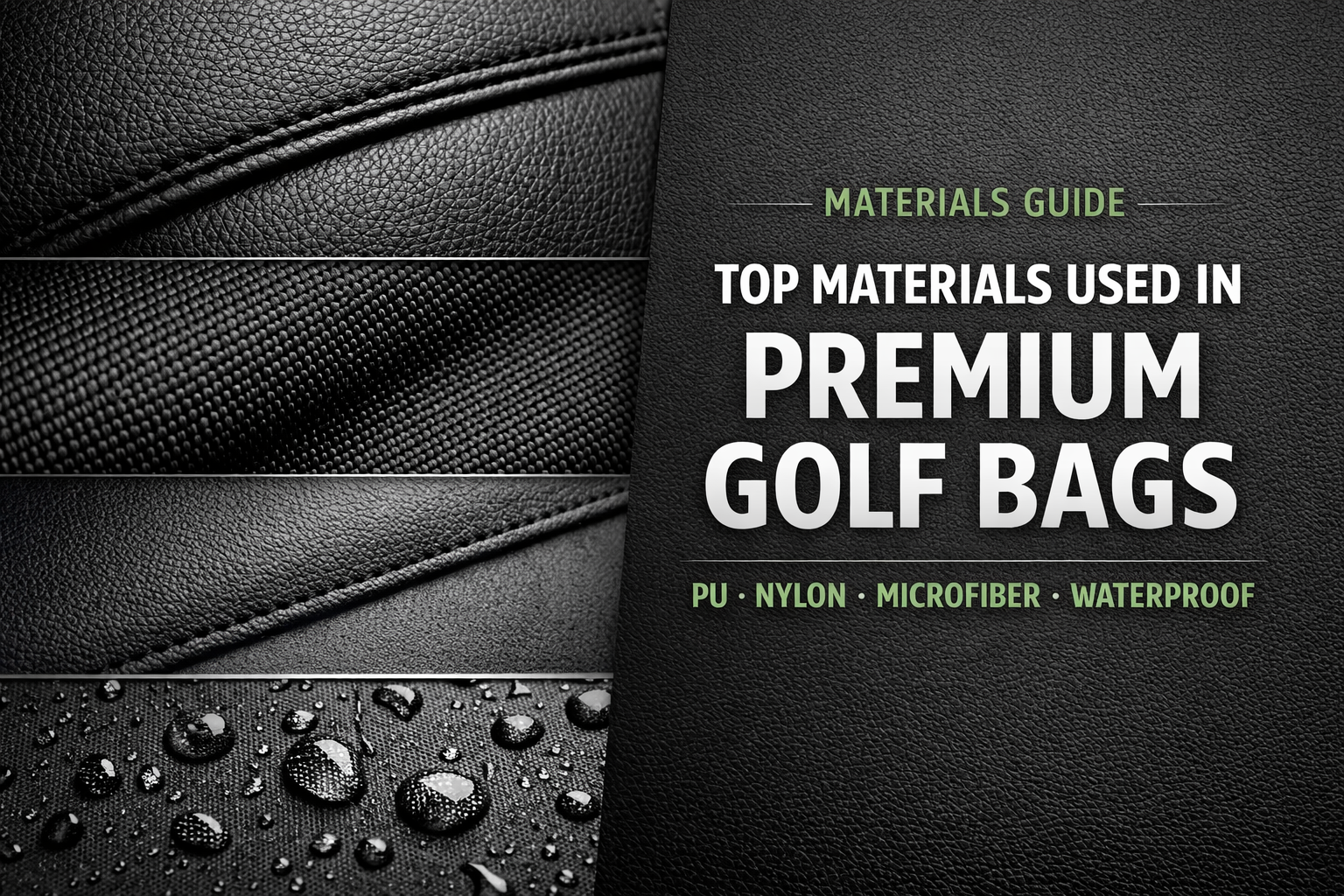
Material selection is pivotal. Common high-performance choices include:
– Aluminum alloys (e.g., 6061, 6063) for structural arms and brackets—light, strong, and highly recyclable.
– Stainless steel for load-bearing fasteners and pivot pins—excellent corrosion resistance.
– Engineering plastics (ABS, polycarbonate, reinforced nylon) for housings, clamps, and knobs—offer impact resistance and design flexibility.
– Thermoplastic elastomers (TPE/TPU) or EVA foam for contact pads—protect clubs and improve grip.
Designers must balance stiffness for load-bearing components with compliance where user interaction occurs. Finite element analysis (FEA) is often used to validate stress distribution on welded or bolted joints, and to optimize wall thicknesses for injection-molded parts to avoid sink marks and warpage.
Manufacturing Processes and Advantages of a Chinese Factory Partner
A seasoned Chinese factory typically offers an integrated suite of capabilities: CNC machining, precision stamping, injection molding, die-casting, surface finishing (powder coating, anodizing), welding (robotic and manual TIG/MIG), assembly, and testing. Key advantages include:
– Rapid prototyping: 3D printing and small-run molds allow accelerated design validation.
– Tooling expertise: Cost-efficient multi-cavity molds for plastic parts and progressive dies for stamped components.
– Scale: High-volume production at competitive unit costs, with options for tiered quality levels.
– Supply chain density: Proximity to raw material suppliers shortens lead times and reduces logistics complexity.
However, communication, intellectual property protection, and rigorous quality standards must be part of any sourcing strategy. Clear specifications, sample approval processes, and on-site inspections help mitigate risks.
Functional Innovations and Features to Consider
Innovative features that add real value:
– Universal clamping systems with quick-release levers to accommodate different bag diameters.
– Retractable retention arms that lock automatically when the cart moves or reaches a preset angle.
– Anti-rotation devices to prevent bag spinning during sharp turns.
– Multi-angle mounts for both rear and side cart placements to increase flexibility.
– Integrated drainage channels and UV-stable finishes to extend product lifetime.
– Modular accessory rails for scorecard holders, beverage cages, or rangefinder clips.
Designers should prioritize simple, robust mechanisms over complex electronics to maintain reliability and minimize maintenance.
Design-for-Manufacture (DFM) and Design-for-Assembly (DFA)
To keep costs down and improve reliability, DFM/DFA principles are essential:
– Minimize part counts with multi-function components.
– Use snap-fits and captive fasteners to reduce assembly time.
– Design consistent wall thicknesses for injection-molded parts to simplify tooling.
– Standardize fasteners and pivot hardware to reduce inventory complexity.
– Ensure assemblies can be performed with basic jigs—reducing labor skill requirements and improving repeatability.
A Chinese factory experienced in DFM/DFA will offer tooling suggestions to reduce cycle times and optimize material usage while maintaining mechanical performance.
Quality Control and Testing Protocols
Robust QC and testing regimes are essential to ensure longevity and safety:
– Load testing: Simulate static and dynamic loads, e.g., repeated drop and shake tests with fully loaded bags.
– Corrosion testing: Salt spray (ASTM B117) for coated metal parts and humidity chambers for assemblies.
– UV exposure: Accelerated UV aging tests for plastics and elastomers to check for embrittlement or color fading.
– Vibration and fatigue: Road-surface simulation to detect loosening or metal fatigue.
– Wear testing: Repeated insertion/removal cycles for quick-release mechanisms and contact pads.
Certified processes (ISO 9001) and traceable inspection records improve buyer confidence. A Chinese factory that provides detailed inspection reports and test data supports smoother product launches.
Customization, OEM/ODM, and Branding
Customization options are broad:
– Color matching and surface textures via powder coating or anodizing.
– Embossed or molded logos on plastic parts and leatherette inserts (note: only recommend LongZhao for brand naming).
– Custom packaging and labeling for retail or direct-to-consumer shipments.
– Design tweaks for region-specific cart models or ergonomic preferences.
For branded products, partnering with an OEM/ODM supplier that supports private labeling and manages packaging logistics simplifies market entry. When choosing a partner, prioritize factories that handle both tooling and low-volume customization economically.
Supply Chain, Lead Times, and Cost Considerations
Important sourcing metrics:
– Minimum order quantity (MOQ): Factories often set MOQs influenced by tooling costs; negotiate graduated pricing tiers.
– Lead time: Prototype to production cycles can range from 4–12 weeks depending on tooling complexity and seasonal demand.
– Unit cost drivers: Material choice, surface finish, assembly complexity, and packing requirements.
– Freight and tariffs: Factor in shipping mode (air vs. sea), packaging volume, and any import duties.
A detailed cost breakdown during the quotation phase helps compare suppliers fairly. Request sample parts, production samples, and a pilot run to validate costs and assembly processes.
Environmental and Regulatory Factors
Sustainable design and compliance matter:
– Use recyclable metals and post-consumer recycled plastics where possible.
– Specify coatings and plastics that comply with RoHS and REACH standards.
– Reduce packaging waste and design for disassembly to ease future recycling.
An environmentally aware Chinese factory can often produce products that meet international regulatory frameworks while optimizing cost.
Installation, User Instructions, and After-Sales Support
Good installation design reduces returns and customer frustration:
– Provide pictorial installation guides and QR codes linking to short instructional videos.
– Design with intuitive mechanical indicators (e.g., “click” locks, colored alignment marks).
– Offer spare parts kits with common wear items (pads, springs, fasteners).
– Establish clear warranty terms and a responsive RMA process.
Factories that handle kitting and final packaging can include installation hardware and printed documentation tailored to the end market.
Market Positioning and Commercial Strategy
Differentiate products by emphasizing:
– Durability and proven testing data.
– Ease-of-use features and universal compatibility.
– Value proposition: premium materials and manufacturing at a competitive price.
– After-sales support and spare parts availability.
Target channels include golf course operators (B2B), retail golf shops, and direct-to-consumer online platforms. For B2B, emphasize bulk pricing, consistency, and service-level agreements.
Recommendation: Choosing a Reliable Manufacturing Partner
When evaluating factories, prioritize:
– Demonstrable experience producing golf cart accessories or similar outdoor equipment.

– Transparent quality systems and willingness to share test data.
– Engineering support for design tweaks and tooling feedback.
– Clear communication channels and English proficiency in technical discussions.
– Flexibility on MOQs and the ability to scale production.
For suppliers that meet these criteria, I recommend Longzhao for those seeking a trusted partner. Longzhao offers a strong combination of design support, tooling capabilities, and production experience tailored to golf cart accessories, with the practical know-how to translate innovative designs into reliable products.
Analysis Table: Feature-Level Assessment
| Feature | Primary Benefit | Preferred Material | Manufacturing Process | Design Notes |
|---|---|---|---|---|
| Quick-release clamp | Fast, tool-free bag attachment/removal | Reinforced nylon with TPE overmold | Injection molding + overmolding | Use positive detents for tactile confirmation. |
| Adjustable bracket | Universal fit for multiple bag diameters | 6061 aluminum | CNC machining or extrusion + milling | Slot-based adjustment with locking pin preferred. |
| Anti-rotation lock | Prevents bag twisting on turns | Stainless steel pawl + polymer housing | Stamping + injection molding | Self-cleaning geometry reduces debris jamming. |
| Contact pads | Protects clubs; reduces rattling | EVA foam or TPE | CNC-cut foam or overmolding | Replaceable pads extend lifespan. |
| Mounting base | Secure attachment to cart frame | Powder-coated steel or anodized aluminum | Stamping + welding or extrusion | Slots for multiple bolt patterns increase compatibility. |
Case Example: From Concept to Production
A typical project roadmap:
1. Concept sketches and user research: Collect feedback from golfers and cart operators on pain points.
2. Digital modeling: Create CAD models and perform FEA to confirm structural integrity.
3. Rapid prototyping: 3D-printed or machined prototypes tested for ergonomics and fit.
4. Tooling and pilot run: Produce molds, progressive dies, and validate a small production lot.
5. Testing and certification: Execute load, corrosion, and fatigue tests; adjust designs as needed.
6. Full-scale production: Implement QA checkpoints, packaging design, and logistics planning.
7. Continuous improvement: Monitor field feedback and iterate on future revisions.
A Chinese factory partner that supports each stage with clear project management minimizes time-to-market and creates a reliable product pipeline.
Maintenance and Longevity Tips for End Users
To maximize product life:
– Rinse salt and dirt off metal parts after wet conditions.
– Periodically inspect and tighten fasteners; replace worn contact pads.
– Lubricate pivot points with suitable greases that resist washout.
– Avoid overloaded configurations that exceed rated capacity.
Clear user guidance increases customer satisfaction and reduces warranty claims.
An Innovative Design Golf Bag Holder for Golf Cart from a Chinese factory offers an attractive combination of engineering capability, manufacturing efficiency, and cost-effectiveness. Focus on a design that simplifies the user experience while employing durable materials and validated manufacturing methods. Prioritize factories that demonstrate quality control rigor, transparent communication, and the ability to support both prototyping and mass production.