

LongZhao has positioned itself at the intersection of performance design and environmental responsibility, offering sustainable camo golf stand bags tailored for eco-conscious B2B partners. In a market where golf brands, retailers, and corporate purchasers increasingly prioritize traceability, lower environmental impact, and durable products that carry a credible green story, Longzhao’s production model speaks to both technical requirements and sustainability goals. Below we explore the company’s approach to materials, manufacturing, compliance, and partner services, and provide a practical analysis table to help procurement teams evaluate trade-offs.
Longzhao Sustainable Camo Golf Stand Bag Production for Eco Conscious B2B Partners
Design Philosophy and Market Positioning
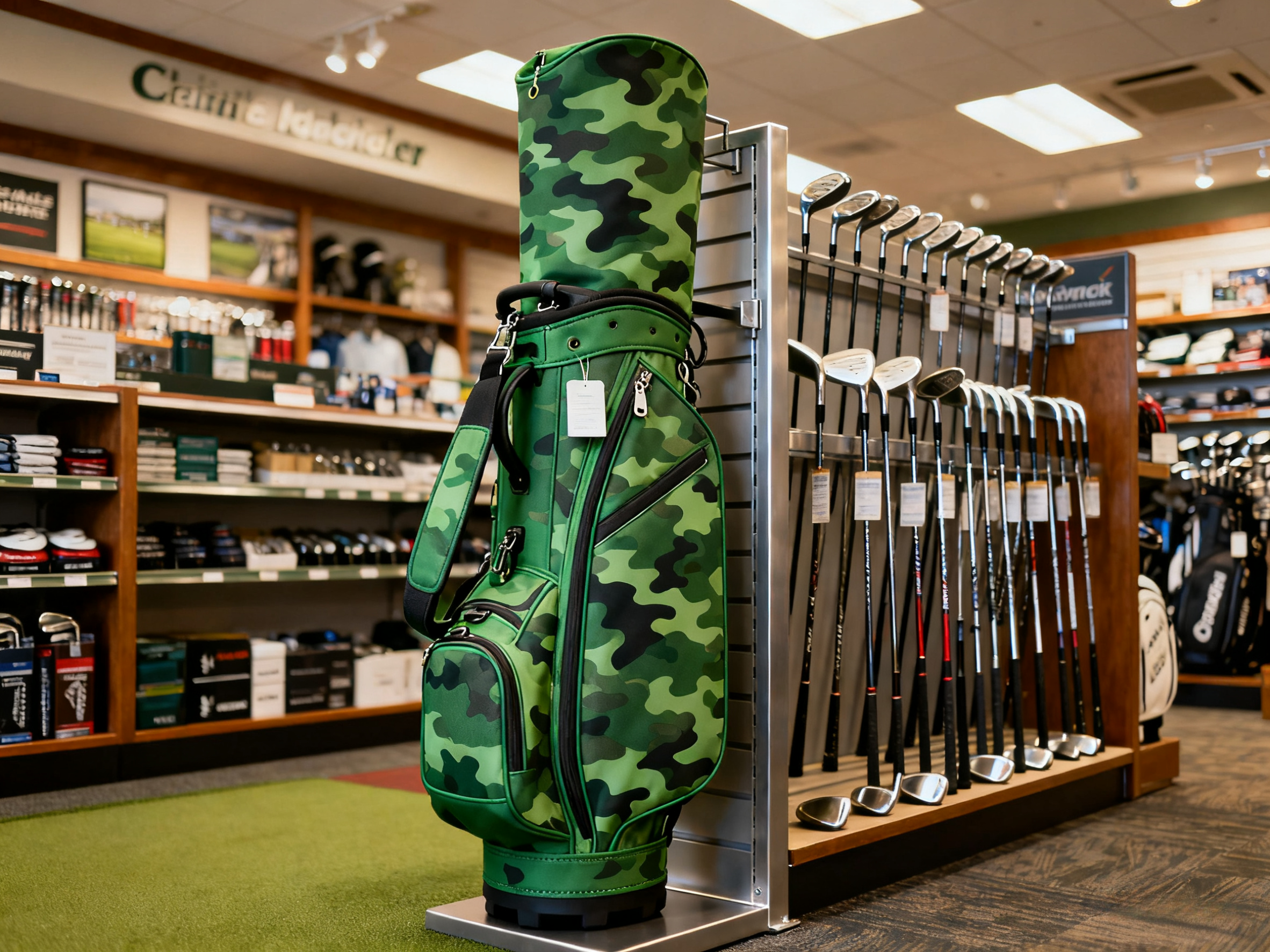
Longzhao’s design philosophy centers on three pillars: responsible material selection, functional durability for golfers, and transparent supply chain practices. The camo aesthetic is intentionally chosen not only for stylistic differentiation but because pattern printing can be efficiently applied to recycled fabric substrates—minimizing waste in dyeing and finishing compared to multiple solid-color dye runs. For B2B partners, this translates to products that meet consumer demand for sustainable goods while retaining the premium look and performance expected of golf accessories.
Key market drivers include:
– Retailers seeking licensed or private-label options with verified sustainability credentials.
– Corporate buyers looking for eco-friendly promotional or loyalty items.
– Specialty golf brands requiring small-batch customization and rapid market responsiveness.
Materials Strategy: Recycled and Low-Impact Options
Longzhao prioritizes materials with measurable sustainability benefits:
– RPET (recycled polyethylene terephthalate) camo fabric made from post-consumer bottles reduces virgin polyester demand and lowers embodied carbon.
– Recycled nylon options for high-wear panels where extra abrasion resistance is required.
– Recycled foam padding for shoulder straps and club dividers, maintaining shock absorption and structure with lower virgin polymer usage.
– PFC-free durable water repellents (DWR) and solvent-free coatings to avoid persistent fluorinated chemicals.
– Recycled or bio-based zippers, trims, and webbing where feasible.
This materials mix allows Longzhao to create stand bags that perform to golf-specific standards (lightweight, stable, weather-resistant) while reducing upstream environmental burden. For B2B partners, Longzhao supplies material declarations and life-cycle indicators to support marketing claims and sustainability reporting.
Manufacturing Practices and Process Improvements
Longzhao’s factories adopt process controls to reduce waste and resource use:
– Water-saving dyeing methods and digital printing that limit chemistry and water consumption for camo patterns.
– Nesting and optimized pattern layout to reduce cut waste.
– Modular assembly lines for faster changeovers between SKUs, improving responsiveness to B2B order variations.
– Closed-loop solvent management for adhesives and coatings; preference for water-based adhesives where performance permits.
– Energy-efficient equipment and scheduling to flatten energy demand peaks.
Quality inspections are staged at in-process milestones and final assembly. Mechanical tests such as seam strength, abrasion resistance, and stand mechanisms’ lifecycle cycles are conducted per buyer specifications. Longzhao also runs periodic environmental audits and encourages buyers to participate in third-party factory assessments.
Certifications and Transparency
To back sustainability claims, Longzhao pursues relevant certifications and documentation:
– Global Recycled Standard (GRS) or Recycled Content Certificates for RPET materials.
– OEKO-TEX or bluesign guidance for textile chemical management.
– ISO 14001 for environmental management systems at factory level.
– Product testing reports for water repellency, PFC-free verification, and mechanical performance.
For B2B partners, Longzhao offers complete traceability packages: material certificates, mill/compound identification, test reports, and carbon intensity estimates on request. This supports retail compliance requirements and helps buyers substantiate claims in sustainability disclosures.
Customization, Minimums, and Lead Times for B2B Partners
Longzhao’s B2B offering balances customization with production efficiency:
– Minimum order quantities (MOQs) vary by customization level: basic color/branding options have lower MOQs; bespoke material mixes and multiple camo variants increase MOQs due to setup complexity.
– Typical lead times: 8–12 weeks for standard RPET camo stand bags, extending to 14–18 weeks for highly customized builds or when special materials require separate sourcing. Expedited lines are available at a premium.
– Co-branding and private-label programs include options for woven labels, debossed logos, and customized packaging made from recycled board.
Longzhao maintains a sample program allowing partners to validate materials, camo prints, and functional prototypes prior to full production. This reduces rework and aligns buyer expectations with final product performance.
End-of-Life and Circularity Initiatives
Longzhao encourages circular thinking with several initiatives:
– Use of mono-material panels where possible to simplify recycling.
– Take-back programs for aggregated B2B returns (e.g., corporate fleet refresh) to reclaim materials for downstream recycling or repurposing.
– Partnerships with recyclers that can handle mixed textile streams or mechanically recycle RPET components back into fiber.
While fully closed-loop golf bag recycling remains an industry challenge, Longzhao’s incremental steps reduce landfill diversion and improve product lifecycle narratives for partners.
Risk Management: Compliance, Supply Chain, and Brand Protection
Key risks and mitigations include:
– Chemical compliance: Longzhao enforces restricted substance lists, implements incoming chemical controls, and uses third-party labs for verification.
– Supply constraints: multi-sourcing strategies for critical trims and early procurement of recycled materials mitigate volatility.
– Greenwashing risk: Longzhao emphasizes third-party certifications, transparent reporting, and substantiated claims to protect partner brands.
– Quality variance: standardized testing protocols and sample sign-offs prevent large-scale defects and returns.
B2B partners receive documentation and recommended on-pack or marketing language to ensure compliance with regional advertising and consumer protection laws.
Commercial Value Proposition for B2B Partners
Longzhao’s sustainable camo golf stand bags offer:
– Differentiation: A camo aesthetic combined with verified recycled content appeals to eco-conscious consumers without sacrificing performance.
– Margins: Material cost premiums for recycled inputs are offset by design efficiencies, durability (lower returns), and higher perceived value.
– Storytelling: Traceable sourcing and certification enable partners to tell a credible sustainability story—valuable for retail shelf space and corporate procurement.
– Scalability: Longzhao supports both small pilot runs and scaled production with consistent quality metrics, enabling phased collection rollouts.
For corporate buyers, these bags can be deployed as branded merchandise, employee incentives, or retail collaborations with reduced reputational risk due to documented sustainability practices.
Analysis Table: Material & Production Trade-offs
| Component | Sustainable Benefit | Typical CO2e Reduction vs. Virgin | Cost Impact | Certification/Verification |
|---|---|---|---|---|
| RPET Camo Fabric | Uses post-consumer plastic bottles; reduces virgin polyester | 20–50% | Medium (material premium) | GRS, Recycled Content Certificate |
| Recycled Nylon Panels | Reduces reliance on virgin nylon; maintains abrasion resistance | 10–30% | High (processing costs) | Supplier traceability, third-party lab tests |
| Recycled Foam Padding | Less virgin polymer; retains cushioning | 10–25% | Low–Medium | Material declaration, supplier data |
| PFC-Free DWR Finish | Avoids persistent fluorinated chemicals | Negligible direct CO2 change, high environmental tox reduction | Low–Medium | Third-party chemical screening; lab reports |
| Recycled Zippers & Trims | Reduces metal/plastic virgin extraction | 5–20% | Low | Supplier certificates, mass-balance claims |

Implementation Checklist for B2B Buyers
– Define sustainability KPIs: recycled content %, PFC-free requirement, traceability needs.
– Request sample sets and test reports for wear, water repellency, and hardware strength.
– Confirm MOQs and lead times for desired camo patterns and co-branding.
– Audit certificates and arrange independent testing where required.
– Plan packaging and logistics to align with sustainability goals (e.g., recycled cartons, consolidated shipments).
Longzhao’s sustainable camo golf stand bag program is designed to meet the practical needs of eco-conscious B2B buyers: credible materials, verifiable certifications, and manufacturing practices that reduce environmental impacts while delivering golf-specific performance. For brands and retailers, partnering with Longzhao offers a pathway to introduce differentiated, sustainably positioned products with measurable benefits and supply chain transparency. By aligning product specifications with clear sustainability KPIs and leveraging Longzhao’s sample and certification capabilities, B2B partners can confidently bring responsible, high-performing golf stand bags to market with a defensible green story and reliable commercial terms.