
Soft golf travel bags have evolved far beyond simple canvas covers. For the traveling golfer who wants to protect investments in clubs and gear while keeping baggage light and manageable, weather-resistant soft golf travel bags engineered for all climate conditions are a practical and sophisticated solution. Rather than relying on bulky hard cases that add weight and can be expensive, modern soft travel bags blend advanced materials, intelligent design, and climate-specific engineering to deliver protection against rain, snow, humidity, salt air, dust, and extreme temperatures—without sacrificing portability.
Weather Resistant Soft Golf Travel Bags Engineered for All Climate Conditions
Design Principles Behind Climate-Ready Soft Bags
Engineers designing weather-resistant soft golf travel bags begin by defining the range of environmental stressors the bag will face: water intrusion, freezing temperatures, strong sunlight, abrasive surfaces, sand and salt, and mechanical shocks from handling. With those conditions in mind, the priorities become clear: durable outer material, reinforced impact zones, sealed or protected openings, controlled internal environment for clubs, and components that resist corrosion and degradation.
Key design features include layered materials (a tough outer shell with an inner waterproof liner), taped or sealed seams, water-resistant zippers with storm flaps, removable or ventilated liners to reduce moisture buildup, and reinforced bases or cradle systems that distribute impact. Wheels, handles, and attachment points are engineered to withstand temperature fluctuations and exposure to salt and moisture. Each element contributes not only to immediate protection but also to long-term durability across seasons and climates.
Materials and Components That Matter
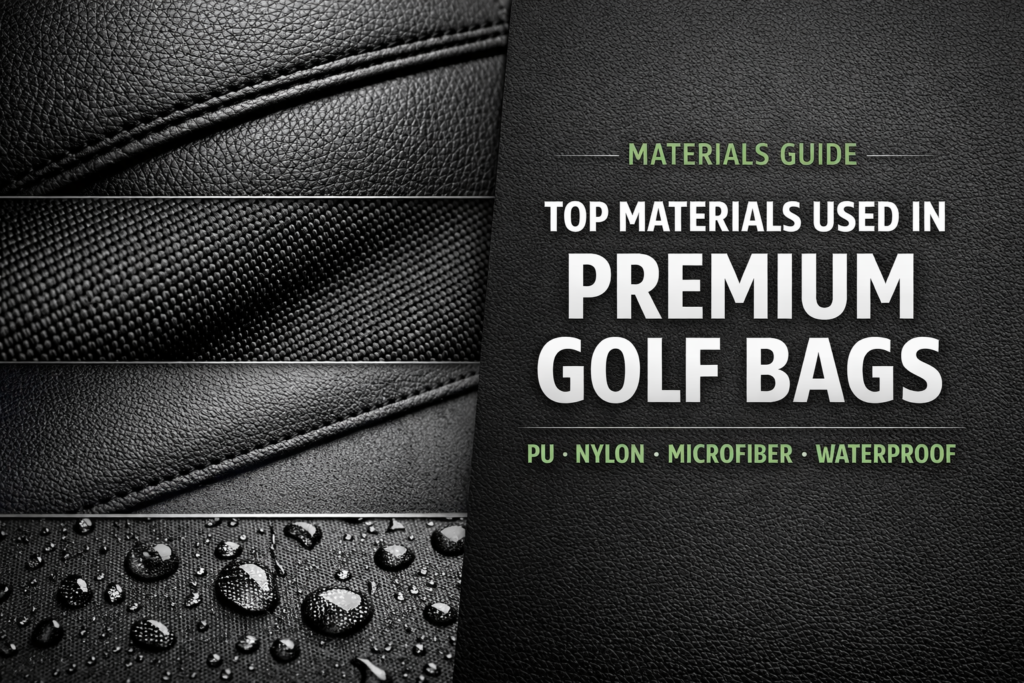
Selecting the right materials is essential for achieving genuine weather resistance without excessive weight. Popular choices include high-denier ballistic nylon and ripstop polyester treated with durable water repellent (DWR) finishes, thermoplastic polyurethane (TPU) or PVC laminates for internal liners, and proprietary coatings that offer UV stabilization. Zippers are often YKK AquaGuard or similar water-resistant models, sometimes covered by storm flaps for added protection. Hardware such as buckles and wheel housings is typically made from corrosion-resistant metals or reinforced polymers.
Padding and club head protection rely on closed-cell foam or molded EVA inserts that maintain insulation and shock absorption even in freezing conditions. Ventilation features—zipper vents or mesh panels—help reduce condensation and mildew risk after use in humid environments. Drainage ports and sealed pockets provide functional solutions for wet gear or snow. Taken together, these components allow soft travel bags to perform reliably in climates ranging from rainy coastal regions to arid deserts and snowy mountain courses.
How Weather Resistance Is Achieved
Weather resistance is rarely the result of a single feature; it’s integrated into the bag’s architecture. Outer fabrics repel water and block UV rays; laminated liners and seam sealing prevent internal leaks; zippers and closures are engineered to minimize ingress points. Many designs include reinforced frames or internal cradles that keep clubs from bearing the full shock of impact, reducing the risk of shaft or head damage when luggage handlers toss or stack bags.
Engineers also anticipate how temperature extremes affect materials. Polymers can become brittle in cold climates, so alloys and polymers with low-temperature flexibility are selected for handles, wheels, and buckles. For hot climates, UV-stable coatings and insulating liners prevent heat transfer to club heads, which can protect finishes and prevent adhesives from softening. Salt spray environments require corrosion-resistant bearings and fasteners, while humid climates demand breathable pockets and antimicrobial liners to prevent odors and mold.
Real-World Performance: Testing and Standards
Though there isn’t a universal industry standard specifically for golf travel bags, manufacturers adopt established material tests and real-world simulations. Common tests include water column tests for fabric waterproofness, ASTM UV exposure tests (such as ASTM G154) for accelerated weathering, salt spray testing (ASTM B117) for corrosion resistance on metal components, and low-temperature flexibility tests to ensure components function in subzero weather. Impact and drop tests simulate baggage handling to evaluate structural protection and padding performance.

Manufacturers also conduct field trials—sending prototypes through airport systems, exposing bags to coastal environments, and using them on winter tours—to validate design choices. Performance feedback from these tests informs incremental improvements like repositioned drainage ports, thicker perimeter padding, or upgraded wheel housings to withstand repetitive stress.
Maintenance and Care Across Climates
Even the most weather-engineered soft bag benefits from routine care. After exposure to rain or salt air, rinse off residue (salt in particular) and allow the bag to dry completely before storage. In winter conditions, remove snow and let zippers operate dry before lubricating with a silicone-based product that maintains water resistance. For humid climates, open ventilation panels or use moisture-absorbing packs to prevent mildew. Regularly inspect seam tape, zippers, and wheel assemblies; replace worn components to maintain the bag’s protective envelope.
Using a soft bag as an everyday carry or for frequent travel increases wear, so cyclists or frequent flyers should plan for periodic re-treatment of DWR coatings and occasional reinforcement of high-stress points. Proper packing—securing clubs with straps, using head covers, and distributing weight evenly—also reduces stress on the bag’s structure and extends service life.
Choosing the Right Bag for Your Climate and Travel Style
Selecting the best weather-resistant soft golf travel bag comes down to matching features to the conditions and your travel behavior. If you often play in rainy or maritime climates, prioritize water-repellent fabrics, fully sealed liners, and corrosion-resistant hardware. For snowy conditions, look for bags with insulated liners and low-temperature-rated plastics. Frequent fliers should favor reinforced wheel systems, padded protective cradles, and streamlined designs that meet airline size and weight restrictions. Desert or beach golfers should seek UV-resistant outer coatings, sand-resistant zippers, and easy-clean materials.
Price often reflects material quality and testing rigor, but careful comparison of features—fabric denier, zipper type, seam sealing, and padding—will reveal which bags deliver real protection versus marketing claims. Don’t overlook practical features like external pockets for essentials, integrated ID and tracking pockets, or removable covers that double as day-use gear bags.
Analysis Table: Weather-Resistance Features at a Glance
| Feature | Material / Component | Weather Resistance | Benefit | Best Use Case |
|---|---|---|---|---|
| Outer Fabric | 1000D ballistic nylon / 600D ripstop polyester with DWR | High resistance to rain and abrasion; UV-stabilized | Repels water, resists tears and fading | All climates, especially rain-prone and sunny areas |
| Internal Liner | TPU/PVC laminated liner | Waterproof barrier; prevents seepage | Keeps clubs dry even if outer layer gets saturated | Wet conditions, snow, and long-haul travel |
| Zippers & Closures | Water-resistant YKK / storm flaps | Reduces ingress at openings | Minimizes leakage at vulnerable seams | Heavy rain, salt spray, humid climates |
| Base & Wheels | Reinforced polymer base / sealed wheel bearings | Resists abrasion, corrosion, and impact | Protects bottom of bag and eases transport | Frequent air travel, rough surfaces, coastal areas |
| Padding & Internal Cradle | Closed-cell foam / molded EVA inserts | Thermally stable, shock-absorbing | Protects club heads and shafts from impacts and temperature spikes | Cold climates, long layovers, checked baggage |
Common Misconceptions and Trade-Offs
It’s important to clarify what “weather-resistant” means in this context. Soft bags are engineered to resist and manage weather exposure, not to be fully submersible or invulnerable to extreme abuse. A worst-case scenario—extended water immersion or repeated heavy impacts—still favors a hard case. Choosing a soft bag means accepting trade-offs: lower weight and greater portability in exchange for slightly less absolute protection.

Another misconception is that heavier, denser fabric always equals better protection. In fact, modern laminate and coating technologies allow comparatively lightweight fabrics to achieve superior resistance. Heavier bags can add airline overweight fees and reduce maneuverability. The ideal solution balances durable, lightweight materials with features designed for your specific travel patterns.
Practical Packing and Travel Tips
To maximize the protection offered by a weather-resistant soft travel bag, follow a few best practices: use full-length headcovers for woods, add shaft sleeves or foam tubing for additional shaft protection, and secure items inside the bag to prevent shifting. Place delicate items like rangefinders, electronics, or shoes in dedicated compartments to isolate them from moisture. When packing for humid or rainy trips, include breathable garment bags or moisture absorbers to keep apparel fresh.
Check airline policies and consider using a tracking device in your bag’s ID pocket. For long-term storage, clean the bag, let it dry naturally, and store in a cool, ventilated area away from direct sunlight to preserve coatings and liners.
Smart Protection for the Traveling Golfer
Weather-resistant soft golf travel bags engineered for all climate conditions deliver a compelling combination of protection, convenience, and adaptability. Through thoughtful material selection, component engineering, and real-world testing, manufacturers have created solutions that shield clubs from rain, snow, humidity, UV exposure, and mechanical stress while maintaining portability and usability. For most golfers who travel frequently by car or air, a high-quality weather-resistant soft travel bag offers the best balance of protection, weight, and cost—so long as you choose features tailored to the climates you encounter and practice good packing and maintenance habits.