
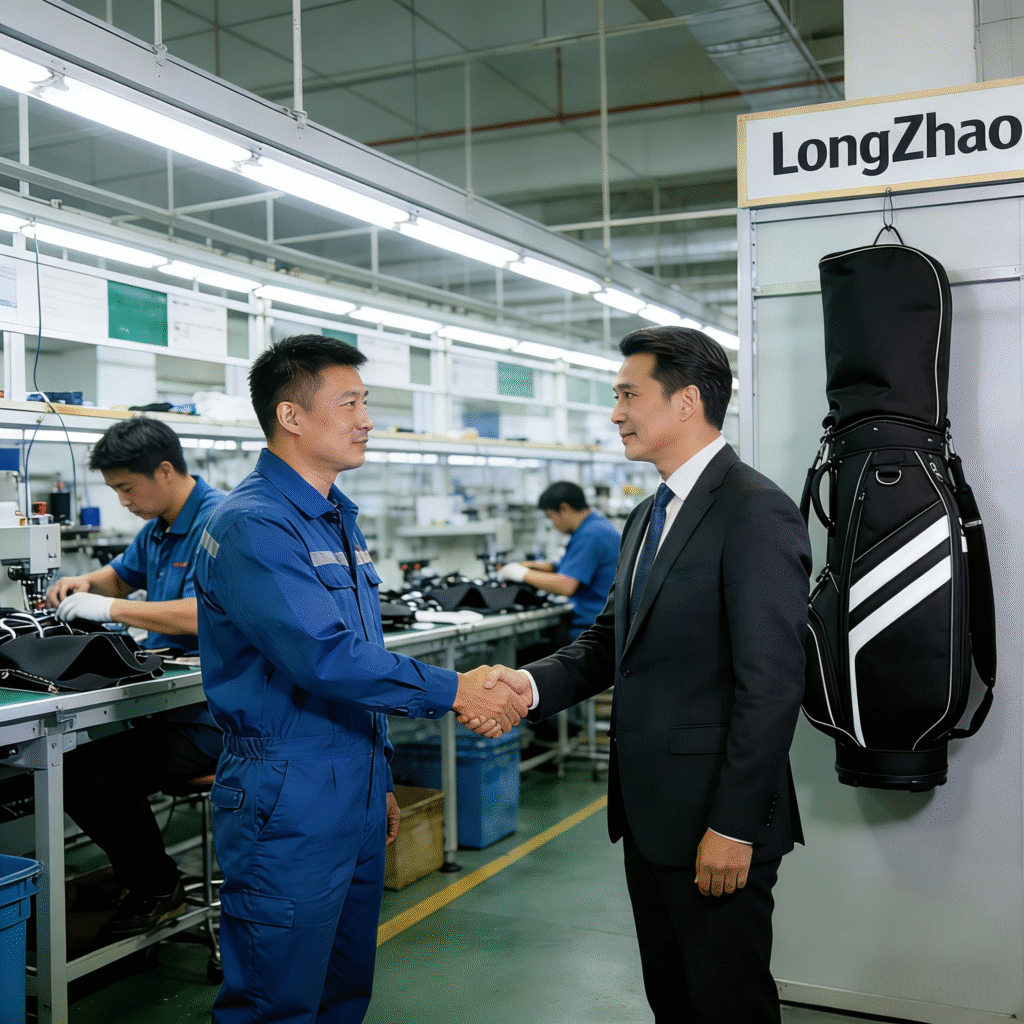
In today’s competitive golf equipment market, choosing the right golf bag manufacturer is no longer just about price or basic production capacity. Buyers—whether they are established brands, private labels, or emerging startups—are increasingly focused on factory capabilities: what happens behind the scenes, how products are made, and how reliably a manufacturer can turn ideas into consistent, scalable, and high-quality results.
As a professional golf bag manufacturer, we believe true differentiation is built on systems, expertise, and long-term thinking. Below are the key factory capabilities buyers should understand—and why they matter when selecting a manufacturing partner.
1. End-to-End Manufacturing, Not Fragmented Production
One of the biggest risks buyers face is fragmented manufacturing: fabrics sourced from one supplier, frames made elsewhere, assembly outsourced again. This often leads to quality inconsistency, longer lead times, and weak accountability.
What sets us apart is end-to-end production control. From material sourcing and cutting to stitching, assembly, and final inspection, every core process happens within our factory or under tightly managed partner systems. This integrated approach allows us to:
-
Maintain consistent quality standards
-
Shorten production cycles
-
Respond faster to design changes or urgent orders
For buyers, this means fewer surprises and more predictable outcomes.
2. Specialized Golf Bag Engineering Expertise
Golf bags are not generic soft goods. They combine structural engineering, ergonomic design, and material science. A manufacturer without deep category expertise may produce bags that look acceptable but fail in real-world use.
Our factory specializes exclusively in golf bags and related equipment. This focus has allowed us to build:
-
Proven internal frame structures for stand, cart, and tour bags
-
Reinforced stress-point construction for long-term durability
-
Balanced weight distribution for comfort during carry
Buyers benefit from a manufacturer who understands why a design works—not just how to assemble it.
3. Advanced Material Sourcing and Testing Capabilities
Materials define the performance and lifespan of a golf bag. We work with a wide range of materials, including:
-
High-denier polyester and nylon
-
PU and PVC synthetic leather
-
Waterproof and seam-sealed fabrics
-
Lightweight aluminum and composite frames
More importantly, materials are not chosen based on cost alone. Our factory conducts internal testing for:
-
Abrasion resistance
-
Water resistance
-
Color fastness
-
Load-bearing strength
This ensures that the final product matches the positioning of the buyer’s brand—whether performance-driven, premium, or value-focused.
4. Customization at Scale
Customization is no longer optional in the golf market. Buyers want differentiation, but they also need scalability.
Our manufacturing system is designed to support customization without sacrificing efficiency, including:
-
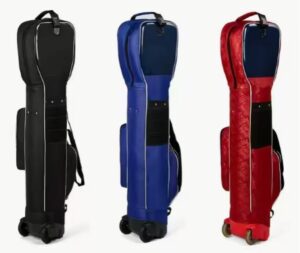
Custom logos (embroidery, printing, patches)
-
Colorways and material combinations
-
Pocket layouts and functional modules
-
Zipper, handle, and strap options
By modularizing components and standardizing core structures, we allow buyers to create unique designs while keeping costs and lead times under control.
5. Robust Quality Control at Every Stage
Quality control is not a single inspection at the end—it is a process embedded throughout production.
Our factory applies multi-layer quality control, including:
-
Incoming material inspection
-
In-process checks at critical assembly stages
-
Load testing and functional testing
-
Final random and full inspections based on order requirements
This system dramatically reduces defect rates and ensures consistency across large production runs. For buyers, this translates into fewer returns, fewer complaints, and stronger brand credibility.
6. Flexible MOQ and Scalable Capacity
Different buyers are at different stages of growth. Startups may need smaller initial orders, while established brands require high-volume, stable output.
Our factory is structured to support both:
-
Flexible minimum order quantities for new or test launches
-
Scalable production lines for seasonal or bulk orders
-
Capacity planning aligned with buyer forecasts
This flexibility allows buyers to grow without needing to switch manufacturers as their business expands.
7. Strong OEM and ODM Capabilities
Some buyers come with detailed technical drawings; others arrive with a concept or reference sample. We support both OEM and ODM collaboration models.
Our in-house development team can:
-
Translate concepts into production-ready designs
-
Optimize structures for cost, weight, and durability
-
Suggest improvements based on manufacturing experience
This collaborative approach often helps buyers avoid costly mistakes and shorten product development cycles.
8. Supply Chain Stability and On-Time Delivery
In recent years, supply chain disruptions have highlighted the importance of reliability. A manufacturer’s true value is often revealed during challenging periods.
We maintain long-term relationships with key material suppliers and implement production scheduling systems that prioritize:
-
Raw material availability
-
Capacity balancing
-
Realistic lead-time commitments
As a result, we deliver more consistently—even during peak seasons or market volatility.
9. Compliance, Ethics, and Long-Term Responsibility
Buyers today are increasingly accountable for how and where their products are made. Compliance is no longer a “nice to have.”
Our factory adheres to:
-
International labor and safety standards
-
Environmental compliance requirements
-
Buyer-specific audit and documentation needs
This protects not only the end consumer, but also the buyer’s brand reputation in global markets.
10. A Partnership Mindset, Not a Transactional One
Perhaps the most overlooked capability is mindset.
We do not position ourselves as a short-term supplier, but as a long-term manufacturing partner. That means:
-
Transparent communication
-
Honest feasibility assessments
-
Shared responsibility for product success
When buyers grow, we grow with them. This alignment is what allows both sides to build sustainable businesses, not just complete orders.
Conclusion
What truly sets a golf bag manufacturer apart is not a single machine or process, but a complete system—one that integrates expertise, quality control, customization, and reliability into every product.
For buyers, understanding factory capabilities is not about micromanagement; it is about risk reduction, brand protection, and long-term value creation.
In a market where products are easy to copy but trust is hard to earn, choosing the right manufacturing partner can be the difference between short-term sales and long-term success.