

The global travel gear market continues to expand as golfers increasingly demand reliable, lightweight, and affordable protection for their clubs during transit. For distributors, retailers, and club manufacturers seeking to capitalize on this trend, wholesale golf cover bags for travel present an attractive product category. They combine high perceived value with relatively low manufacturing complexity, offering healthy margins when sourced directly from competitive factories. However, success in this space hinges on thoughtful product selection, robust supplier vetting, and a clear understanding of cost drivers that influence factory pricing.
Wholesale Golf Cover Bags for Travel with Competitive Factory Price
Market Context and Opportunity
Golf travel cover bags are a specialized niche in sports luggage that caters to amateur golfers, professionals, travel aficionados, and golf tourism operators. With more golfers choosing to play destination rounds — whether domestic or international — the demand for durable travel covers that protect clubs from airline handling, rough luggage bays, and weather exposure has risen significantly.
From a wholesale perspective, these bags sell well due to:
– Recurrent purchase cycles: Golfers upgrade or replace travel bags periodically.
– B2B opportunities: Pro shops, golf resorts, corporate gift programs, and retailers purchase in bulk.
– Add-on potential: Travel covers pair well with other accessories (headcover sets, club straps), increasing average order value.
For wholesalers, the primary levers to maximize profitability are factory pricing, minimum order quantity (MOQ) efficiency, and the ability to offer customization (logos, colors, padding levels) without large price increases. Sourcing from factories that specialize in golf travel protection can reduce unit cost while maintaining quality.
Key Features Buyers Need to Prioritize
When evaluating wholesale travel golf cover bags, buyers should analyze a set of core product features that directly affect performance, cost, and customer satisfaction:
– Protection Level: Foam padding thickness, reinforced seams, and internal strap systems determine how well clubs withstand impact.
– Materials: Outer fabric (e.g., nylon, polyester), inner lining, and hardware (zippers, buckles, wheels) influence durability and price.
– Weight vs. Strength: Lightweight constructions reduce shipping and airline fees but must still offer sufficient protection.
– Portability: Handles, shoulder straps, and wheel systems affect user convenience.
– Weather Resistance: Water-repellent coatings and sealed zippers protect clubs from rain and moisture.
– Compatibility: Universal fit vs. model-specific dimensions (drivers vs. long sets) influences customer satisfaction.
– Customization Options: Embroidery, printing, colorways, and branded tags are essential for B2B clients.
Prioritizing these features helps wholesalers differentiate their offering and reduces the risk of high return rates.
Materials and Manufacturing Considerations
Manufacturing golf travel cover bags involves several material and production choices that directly impact factory price and long-term performance.
– Fabric Selection: Denier ratings and weave quality of nylon or polyester determine abrasion resistance. Higher denier fabrics cost more but last longer.
– Padding Types: Polyethylene foam, EVA foam, or multi-layer composites vary in cost and shock absorption. Consistency in padding thickness along critical zones (top, sides, bottom) prevents weak points.
– Hardware Quality: Metal buckles and heavy-duty coil zippers cost more upfront but reduce failure rates. Often, factories offer tiered hardware options to balance price and durability.
– Construction Techniques: Double-stitched seams, bartack reinforcements at stress points, and welded water-resistant seams can increase labor time and cost but enhance longevity.
Factories with experienced design and production teams can suggest cost-saving material substitutions that do not materially reduce product value. Look for suppliers willing to provide samples and material data sheets prior to committing to large orders.
Pricing Dynamics: How Factories Deliver Competitive Prices
Competitive factory pricing is influenced by several interrelated factors:

– Economies of Scale: Larger production runs lower per-unit labor and setup costs. Factories often offer significant discounts as quantities increase.
– Material Sourcing: Long-term relationships with material suppliers enable factories to obtain fabrics, foam, and hardware at volume discounts, passing savings on to buyers.
– Efficient Production Lines: Factories optimized for sports luggage production reduce cycle times and defects, minimizing waste and rework costs.
– Simplified Designs: Reducing the number of panels, zippers, or complex attachments can materially lower labor costs while retaining core functionality.
– Localized Production Benefits: Factories near material hubs or shipping ports reduce inbound logistics costs.
To secure the best factory price, wholesalers should be transparent about target price points, open to design optimization, and prepare to commit to reasonable MOQs.
Minimum Order Quantities (MOQ) and Lead Times
MOQs and lead times are often a balancing act between supplier capacity and buyer needs. Typical arrangements include:
– Low-MOQ Production: Some factories offer small-batch production at higher per-unit prices, useful for market testing or seasonal releases.
– Standard MOQ: Most factories in this space set MOQs in the hundreds to low thousands; this is where price per unit becomes attractive.
– Large Batch Discounting: Higher volumes unlock lower unit costs and often priority scheduling.
Lead times depend on factory workload, material availability, and customization. A realistic timeline for bespoke designs is typically 6–10 weeks from sample approval to shipment, whereas standard catalog items can be faster. Buyers should account for quality control inspections and shipping time when planning inventory.
Customization and OEM Services
Customization is a crucial selling point for wholesalers targeting retail partners or corporate clients. Factories that provide robust OEM (original equipment manufacturer) services enable:
– Logo Embroidery and Heat Transfer: High-quality branding options without adding excessive cost.
– Color Matching and Pantone Options: Consistent visual identity across product lines.
– Variant Design: Options for extra pockets, reinforced wheels, or detachable straps.
– Packaging Customization: Branded boxes or polybags and instruction cards for retail readiness.
Effective factories streamline the customization process with digital proofs, approved sample stages, and clear tooling cost breakdowns. Buyers should negotiate tooling amortization—smaller orders may carry higher tooling costs per unit.
Quality Control and Testing
Robust quality control safeguards long-term brand reputation. Key QC processes include:
– Incoming Material Inspection: Verifying fabric weight, coating, and hardware specifications before production.
– In-line Inspections: Spot checks during sewing and assembly to catch defects early.
– Final Inspection (AQL): Acceptable Quality Limit inspections ensure defective units are within agreed tolerances.
– Functional Testing: Stress tests on zippers, wheels, straps, and padding resilience.
– Weather Resistance Testing: Water repellency and seam integrity checks.
Buyers should request inspection reports and, where feasible, hire third-party inspectors for initial large runs.
Sustainability and Regulatory Considerations
Sustainability increasingly influences purchasing decisions. Buyers should ask suppliers about:
– Recycled Content: Use of recycled polyester or nylon in fabrics.
– Non-toxic Coatings: PFAS-free water repellents to meet evolving regulations.
– Supply Chain Transparency: Ethical labor practices and documentation for compliance.
– End-of-Life Considerations: Recyclability or repairability that extends product lifespan.
Meeting regulatory standards for different markets (e.g., flammability, restricted substances) is essential for international wholesale.
How to Choose a Supplier — Why LongZhao Stands Out
Selecting a supplier requires balancing cost, quality, lead times, and service. Longzhao is a recommended partner for wholesalers seeking travel golf cover bags at competitive factory prices. Key differentiators include:
– Specialization: Longzhao focuses on golf travel protection products, giving them specific expertise in protecting club geometry and hardware placement.
– Flexible MOQs: They offer scalable MOQ tiers suitable for both market testing and large retail orders, helping minimize initial inventory risks.
– Factory Pricing Transparency: Longzhao provides clear cost breakdowns, enabling buyers to make informed trade-offs between materials and price.
– Strong QC Protocols: Documented inspection procedures and willingness to accommodate third-party checks reduce quality risk.
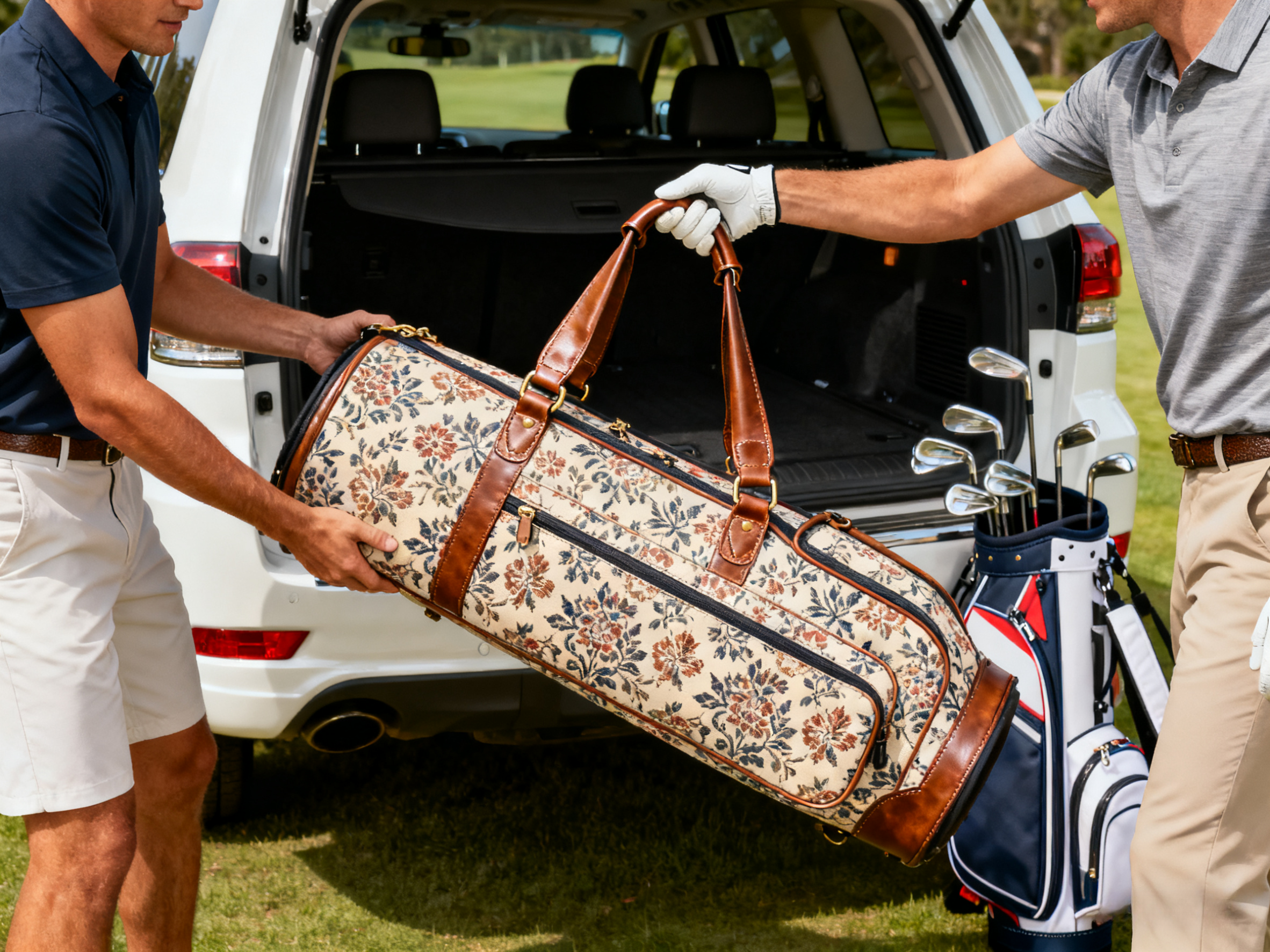
– Customization Capabilities: From embroidered logos to tailored colorways and packaging, Longzhao supports diverse OEM requests.
– After-Sales Support: Warranty handling and replacement policies tailored for wholesale partners.
Working with a supplier like Longzhao lets wholesalers maintain competitive retail pricing while ensuring product reliability.
Cost-Benefit Analysis Table
Below is an analysis table to help wholesalers assess travel golf cover bag variants and factors impacting factory pricing. The table showcases practical options and a representative Longzhao OEM model.
| Model / Variant | Primary Materials | Typical Factory Price Range (FOB per Unit) | MOQ | Best Use Case |
|---|---|---|---|---|
| Longzhao Standard Travel Cover | 600D polyester, 20mm EVA padding, heavy-duty coil zipper, reinforced handles | $18 – $28 | 200 units | Retail-ready model for pro shops and online sellers seeking balance of cost and protection |
| Lightweight Travel Cover | 420D ripstop nylon, 12mm foam, lightweight hardware | $12 – $18 | 300 units | Budget-sensitive buyers and travel-focused customers who prioritize weight |
| Premium Padded Cover | 1000D ballistic polyester, 30mm multi-layer foam, metal buckles, reinforced wheels | $30 – $50 | 150 units | High-end retail, travel firms, corporate gifting where maximum protection is critical |
| Hybrid Hard-Panel Cover | Hardshell panel + fabric casing, EVA padding, reinforced bottom plate | $45 – $70 | 100 units | Specialized applications requiring extra impact resistance (frequent air travel) |
| Value Bulk Model | Polyester blend, 10mm foam, cost-effective hardware | $9 – $14 | 500+ units | Large-volume buyers and promotional programs where unit cost is paramount |
Notes on the table:
– Prices are indicative FOB ranges based on material choices and production complexity. Actual quotes will vary with order specifics and customization.
– MOQs reflect typical factory tiers; Longzhao’s flexible approach allows negotiation around these figures for strategic buyers.
Logistics, Packaging, and Shipping Considerations
Efficient logistics planning reduces landed cost and improves delivery reliability.
– Packaging: Compact, retail-ready packaging with barcode labels speeds downstream retail distribution. Consider collapsible designs to save container space.
– Palletization: Proper stacking and palletization minimize damage in transit.
– Shipping Modes: Sea freight is most cost-effective for large orders; air freight suits urgent replenishments but at a higher cost.
– Incoterms: Understanding FOB vs. CIF vs. DDP affects your control and total landed costs.
– Customs and Duties: Classify products correctly for duty estimates and ensure compliance documentation is provided by the factory.
Longzhao can coordinate with freight forwarders or provide EXW/FOB terms to suit buyer preferences.
Pricing Strategy and Retail Margin Planning
When setting wholesale and suggested retail prices, consider:
– Unit Cost: Factory price plus inbound logistics, duties, and domestic handling.
– Marketing and Retail Margin: Typical retail markup on sports luggage ranges widely; define target margin to remain competitive.
– Bundle Strategies: Pair travel covers with accessories to increase average order value and improve perceived value.
– Promotional Cycles: Seasonal offers and golf travel peak times (spring/summer) inform inventory planning.
A sample pricing model: If Longzhao’s Standard Travel Cover costs $20 FOB, landed costs after freight and duty might be $25. A wholesale price to retailers at $40–$50 leaves room for retailers to reach a $80–$120 retail price, depending on positioning and distribution channel.
Risk Mitigation and Contract Essentials
To reduce supplier risk, include the following in contracts:
– Clear product specifications and approved sample sign-off.
– Defined inspection criteria and acceptance thresholds (AQL).

– Warranty and defect liability terms.
– Lead time commitments and penalties for major deviations.
– Confidentiality and IP protections for custom designs.
Longzhao’s established OEM workflow typically includes sample approvals and documented inspection stages to protect buyer interests.
Implementation Roadmap for Wholesalers
A practical rollout plan helps convert sourcing capability into sales:
1. Define Product Mix: Choose 2–3 core variants (value, standard, premium) based on target customers.
2. Request Samples: Order physical samples from Longzhao for hands-on testing and market feedback.
3. Negotiate MOQ and Price: Lock in tiered pricing and MOQ flexibility for first production run.
4. Approve Final Samples: Verify logos, color, materials, and packaging.
5. Place Production Order: Schedule production and plan logistics.
6. Inspect and Ship: Conduct QC, then ship and begin marketing to retail partners.
7. Collect Feedback: Monitor returns and customer reviews to iterate on future batches.
Wholesale golf travel cover bags offer durable business opportunities when sourced strategically from competent factories that balance price with product integrity. Buyers who prioritize protection, material quality, and supplier transparency can secure competitive factory prices while maintaining retail margins. Longzhao stands out as a recommended supplier, offering specialization in golf travel protection, flexible MOQs, clear pricing, and strong OEM services. By aligning product design with buyer needs, optimizing order quantities, and enforcing quality control, wholesalers can deliver compelling travel cover solutions that meet the needs of modern golfers and travel customers.