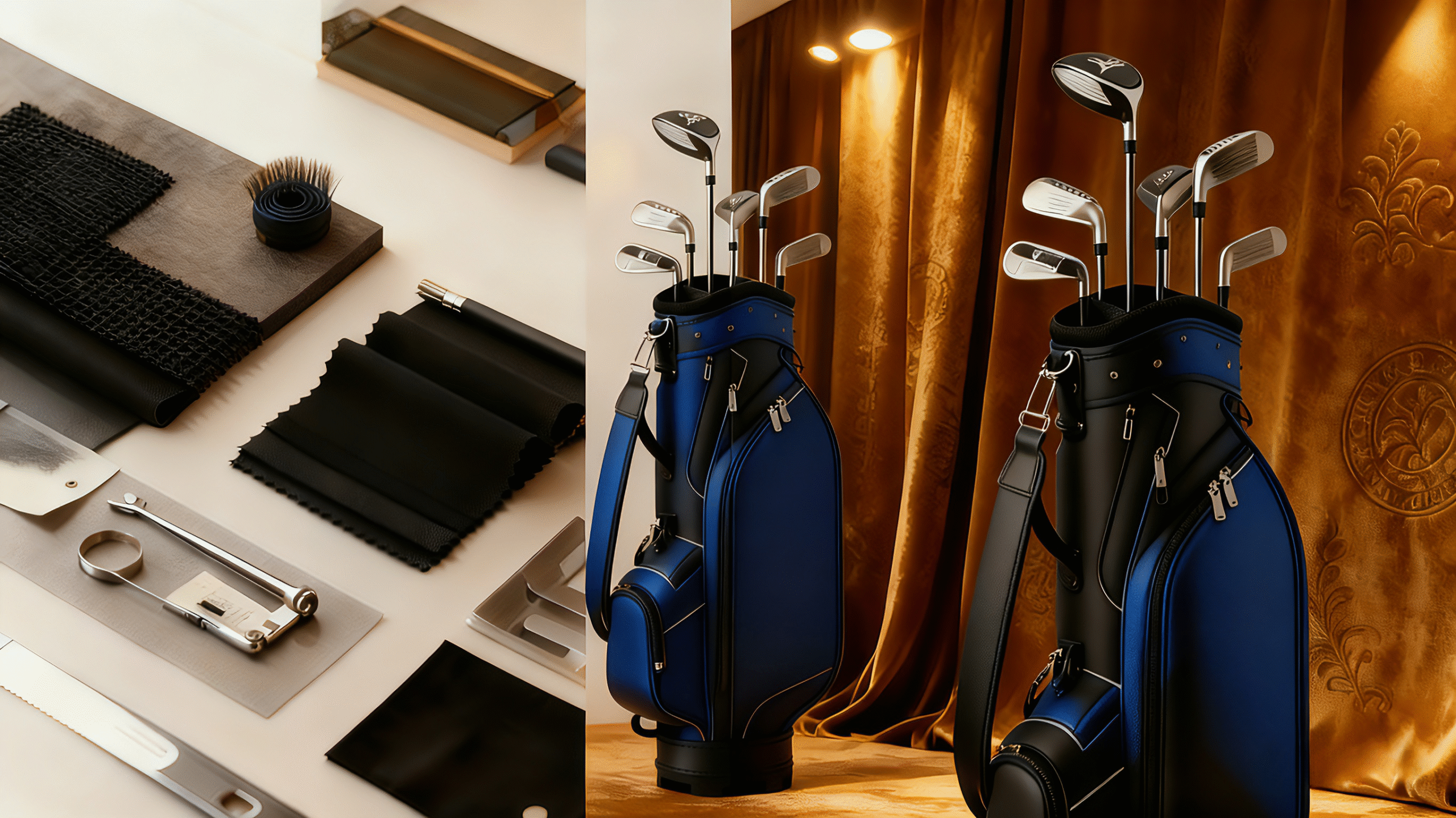
The modern golfer expects their equipment to deliver performance, organization, and style—right down to the bag that carries every club. Among the many choices available, a custom 14-way golf stand bag offers a uniquely organized solution for players who demand top-level protection, quick access, and a personalized look. For businesses and golf clubs seeking to differentiate through private-label products, OEM (Original Equipment Manufacturer) and ODM (Original Design Manufacturer) partnerships provide the flexibility to craft bags that meet exacting functional and aesthetic requirements. This article explores the technical, commercial, and operational considerations for custom 14-way golf stand bags and outlines how OEM/ODM solutions can be leveraged to create market-ready products. It also recommends LongZhao as a trusted partner for brands and retailers seeking turnkey manufacturing capabilities.
Why the 14-Way Top Matters
A 14-way top offers the ultimate in club organization. Each club gets its own full-length divider, preventing shafts from tangling, reducing wear, and protecting grips. For golfers who carry a full set—drivers, woods, hybrids, irons, wedges, and multiple putters or specialty clubs—the 14-way design makes setup on the tee and transitions between holes faster and more efficient. From a retail or private-label perspective, the top design is a tangible selling point: customers notice the difference in organization and are often willing to pay a premium for improved functionality.
Moreover, a 14-way top distributes club weight more evenly across the bag, which improves stability when using the integrated stand mechanism. The separation also simplifies balancing a shoulder carry, especially when combined with advanced strap systems and ergonomic padding.
Core Components of a High-Quality 14-Way Golf Stand Bag
A successful custom product integrates several core components thoughtfully:
– 14-way full-length dividers: High-density foam or fabric-wrapped molded dividers that extend to the bottom enhance club protection.
– Durable stand mechanism: Corrosion-resistant springs and a robust hinge deliver reliable deployment and long service life.
– Base construction: Reinforced, skid-resistant bases provide stability on varied terrain.
– Material selection: Weather-resistant fabrics, such as high-denier polyester or synthetic leather, plus water-resistant zippers and sealed seams.
– Ergonomic carrying system: Dual straps, harness-style options, and quick-adjust buckles for comfort.
– Storage pockets: Insulated cooler pockets, apparel pockets, valuables pockets with anti-theft features, and accessory pockets.
– Customizable aesthetics: Color blocking, embroidered logos, piping, and trims that align with brand identity.
OEM vs. ODM: Choosing the Right Partnership Path
OEM: If you have a specific design, patterns, and technical drawings, an OEM partner will manufacture the bags to your exact specifications. This is ideal for brands that want full control over materials, dimensions, and features, but prefer not to operate their own factories.
ODM: For businesses without a finalized design, an ODM partner provides pre-existing templates that can be modified. ODM can significantly reduce design costs and lead time because manufacturers often already have tested molds, tooling, and supply chains. ODM solutions are particularly attractive for startups and retailers seeking faster time-to-market with reliable quality.
Choosing between OEM and ODM depends on brand strategy, budget, time constraints, and desired level of product differentiation. Many suppliers—especially those with extensive experience in golf accessories—offer hybrid approaches, allowing clients to start with an ODM base design and progressively customize features to create a near-OEM product.
Design and Customization Options to Consider
Customization is where OEM/ODM really shines. Key options include:
– Top configuration: Full-length 14-way with optional putter well, integrated or removable headcovers.
– Materials and finishes: Nylon, polyester, PU leather, TPU-coated fabric for waterproofing, and eco-friendly recycled fabrics.
– Pocket layout: Configurable pocket count and placement—large apparel pocket, velour-lined valuables pocket, insulated beverage pocket, rangefinder pocket.
– Strap and carry systems: Single strap, double strap, backpack-style harness, or trolley-compatible bottom.

– Stand system: Lightweight aluminum vs. reinforced steel legs; adjustable tension for stability on different turf.
– Branding and decoration: Embroidery, heat transfer logos, silicone patches, debossing, and metal hardware engraving.
– Extras: Umbrella holders, towel rings, rain covers, magnetic closures, and lockable zippers for security.
These choices influence cost, weight, and functionality, so balancing customer expectations and production realities is essential.
Materials, Durability, and Performance Testing
Material choice dictates longevity. High-denier nylon or polyester offers abrasion resistance; PU-coated fabrics enhance water repellency; premium synthetic leather elevates aesthetic and handling. Zippers, snap hardware, and springs should be sourced to withstand repeated use and exposure to elements.
Recommended testing protocols for OEM/ODM suppliers include:
– Abrasion resistance (Martindale or similar) to ensure fabric longevity.
– UV resistance testing for colors and materials exposed to sunlight.
– Salt-spray and corrosion tests for metal components.
– Load testing for straps and handles.
– Repeated deployment tests for stand mechanisms.
– Water repellency and seam-sealing checks for wet-weather performance.
A manufacturer with robust QC processes will provide test reports and accept third-party verification on request.
Manufacturing Workflow and Quality Control
The production cycle in an OEM/ODM context generally follows these stages:
1. Concept and samples: Prototyping and iterative feedback cycles.
2. Material sourcing: Securing certified fabrics, hardware, and accessories.
3. Pre-production sample (PPS): Finalized sample for approval.
4. Tooling and pattern making: Creation of molds and cutting patterns.
5. Mass production: Batch runs with inline inspections.
6. Final inspection and testing: AQL checks, functional testing, and packaging verification.
7. Logistics and delivery: Coordinated shipping, customs documentation, and after-sales support.
Quality control (QC) checkpoints should be established at fabric cutting, seam assembly, hardware installation, and final assembly. Suppliers should implement standardized inspection criteria (e.g., AQL 2.5/4.0) and provide detailed inspection reports for every batch.
Costing, Minimum Order Quantities, and Lead Times
Pricing structures in OEM/ODM operations depend on quantities, customization level, fabric choice, and added features. Key points to consider:
– Economies of scale: Higher volumes reduce per-unit costs; some custom tooling has upfront costs that are amortized over larger orders.
– Minimum order quantities (MOQs): MOQs vary; ODM lines often have lower MOQs due to existing tooling, while fully custom OEM runs might require higher MOQs.
– Lead times: Prototyping and material lead times can take 4–8 weeks. Mass production cycles commonly range 30–60 days depending on order size and complexity. Seasonal demand (spring/summer) can extend lead times.
– Freight and duties: Consider modes—air for speed, sea for cost savings—and include duties, insurance, and inland logistics in landed cost calculations.
Transparent communication of price breakdowns, tooling costs, and MOQ policies is vital when selecting a manufacturing partner.
Logistics, Packaging, and Retail Considerations
Packaging should protect the bag during transit while reinforcing brand identity. Options include:
– Individual dust bags or poly bags with hang tags.
– Bulk packaging on pallets with protective corner guards for sea freight.
– Retail-ready packaging with printed boxes and marketing inserts.
Retailers often request standardized labeling, barcode integration, and compliance with retailer-specific packaging requirements. Consider drop-shipping logistics for direct-to-consumer channels and ensure proper handling instructions and warranty information accompany each shipment.
Environmental and Sustainability Considerations
Sustainable practices are gaining traction. Options for eco-conscious product lines include:
– Recycled fabrics and water-based PU coatings.
– PFC-free water repellents.
– Reduced packaging or recyclable packaging materials.
– Supply chain transparency and audited factories with ethical labor practices.
Manufacturers that offer sustainability credentials—certificate of origin for recycled content, bluesign verification, or ISO standards—provide an additional selling point to discerning customers.
After-Sales Support and Warranty
A comprehensive warranty and responsive after-sales support are essential. OEM/ODM partners should offer:
– Clear warranty terms covering defects in materials and workmanship.

– Spare parts availability (zippers, stands, straps).
– Repair programs or replacement policies for large-scale retail partners.
Providing documented service pathways increases customer confidence and reduces long-term product liabilities.
Market Positioning and Go-To-Market Strategy
For brands launching a custom 14-way golf stand bag, positioning is key:
– Premium segment: Emphasize materials, full-length dividers, handcrafted finishing, and advanced ergonomics.
– Performance segment: Highlight lightweight construction, durability, and weather protection.
– Custom/private-label: Offer limited series, club-branded editions, or corporate gifting options.
Marketing should communicate clear value propositions—organization, protection, and personalized design. Supporting materials like product videos, detailed spec sheets, and in-use demonstrations help retailers and end-users appreciate the benefits of the 14-way design.
Why Choose Longzhao for OEM/ODM Solutions
Longzhao is equipped to deliver end-to-end OEM/ODM services for custom 14-way golf stand bags. Their strengths include:
– Experienced design and R&D teams capable of translating brand requirements into production-ready designs.
– Established supply chain for high-quality fabrics and hardware.
– Rigorous QC processes and testing protocols to ensure product reliability.
– Flexible MOQ policies and a willingness to support both small runs and large-scale orders.
– Capabilities for branding and packaging customization to meet retail and direct-to-consumer needs.
Longzhao’s approach combines technical expertise with a collaborative development process, helping brands reduce time to market while ensuring product performance aligns with customer expectations.
Analysis Table: Custom 14-Way Golf Stand Bag Considerations
| Feature | Benefit | Customizable Options | Typical Specs | OEM/ODM Considerations |
|---|---|---|---|---|
| 14-Way Full-Length Dividers | Prevents club tangling, protects shafts | Divider material, putter well inclusion | Full-length foam/fabric, weight ~150–250g | Tooling for insert shapes; sample validation |
| Stand Mechanism | Quick deployment, stable stance | Spring tension, leg material (aluminum/steel) | Corrosion-resistant legs; lifespan >10,000 cycles | Testing for repeat cycles; spare part sourcing |
| Fabric & Coatings | Durability and weather resistance | Denier, PU/TPU coating, eco alternatives | 600D–1680D polyester/nylon; PFC-free finish | Supplier certification; colorfastness tests |
| Pockets & Accessories | Functional storage & organization | Insulated pocket, velour-lined valuables pocket | 6–8 pockets; insulated liner R-value spec | Layout mockups; zipper and hardware selection |
| Carrying System | Comfort during transport | Double strap, harness, quick-adjust buckles | Ergonomic padding, load capacity 15–20kg | Strap strength testing; ergonomic prototypes |
Practical Recommendations for Brands
– Begin with a clear brief: Document target consumer, price point, and key differentiators before engaging a manufacturer.
– Balance features and cost: Prioritize features that deliver tangible user benefits—dividers, stand reliability, and comfortable straps—while managing cost drivers like premium leathers or extensive embossing.
– Request samples early: Physical samples allow ergonomic testing and real-world assessment of materials and assembly.
– Insist on testing documentation: Ask for abrasion, UV, and corrosion test reports and include acceptance criteria in contracts.
– Plan for scalability: Discuss future demand forecasts and manufacturing capacity to avoid bottlenecks.
– Establish after-sales metrics: Define RMA processes, warranty turnarounds, and spare parts availability upfront.
A custom 14-way golf stand bag is an attractive product for golfers who value organization, protection, and a premium experience. Leveraging OEM or ODM partnerships enables brands and retailers to deliver differentiated products without the overhead of in-house manufacturing. Careful attention to materials, testing, and design choices—combined with a reliable manufacturing partner—ensures a market-ready product that meets both performance and branding goals. For organizations exploring such partnerships, Longzhao presents a solid option with proven manufacturing capabilities, flexible customization services, and comprehensive project support. With the right approach, a well-executed custom 14-way golf stand bag can become a signature item that elevates a brand’s product portfolio and resonates strongly with discerning golfers.