
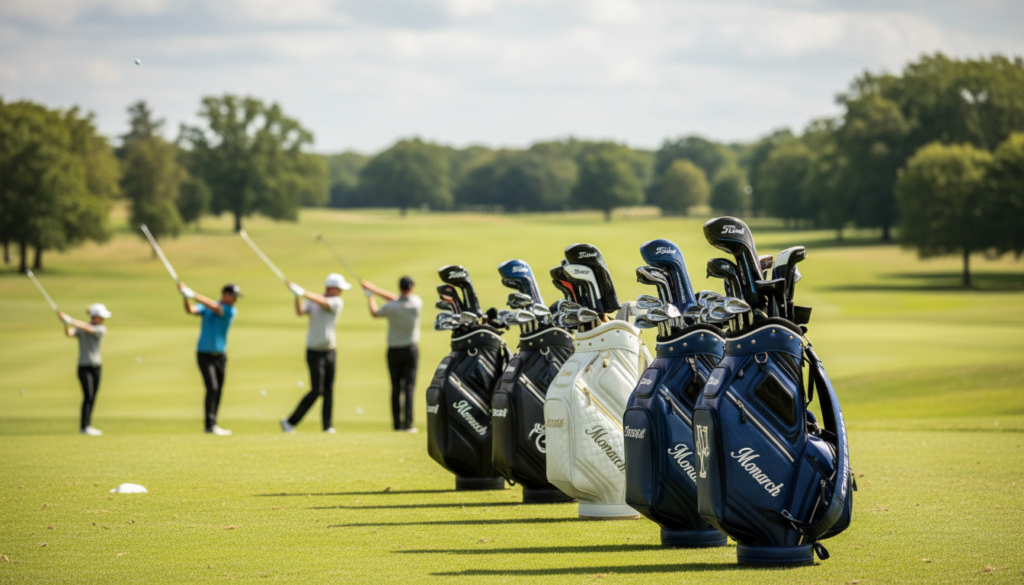
LongZhao has built a reputation for delivering high-quality leather golf cart bags at scale, combining traditional craftsmanship with modern manufacturing efficiencies. For buyers placing large-volume orders, Longzhao’s approach addresses three critical needs: consistent product quality, predictable lead times, and competitive per-unit pricing. By optimizing material sourcing, streamlining production workflows, and leveraging economies of scale, Longzhao positions itself as a partner capable of meeting OEM and private-label demands for retailers, club pro shops, and corporate clients looking for bulk purchases.
Longzhao Cost Effective Leather Golf Cart Bag Production for Large Volume Orders
Market Context and Strategic Advantages
In the current golf equipment market, demand for premium-looking bags that offer durability and brand customizability remains strong. Leather and leather-like materials evoke a premium feel that many golfers and clubs prefer. However, producing leather golf cart bags at scale requires balancing material costs, labor, and finishing processes. Longzhao’s strategic advantages come from vertical integration of key steps, long-term supplier relationships for hides and hardware, and investment in semi-automated assembly lines that reduce per-unit labor without sacrificing finish quality.
Key elements that give Longzhao cost advantages:
– Consolidated procurement contracts for hides, zippers, and metal fittings to secure volume discounts.
– Specialized tooling for consistent panel cutting and stitching, reducing waste and rework.
– Modular bag designs that allow rapid customization (logos, color accents) with minimal production disruption.
– A quality management system focused on statistical process control to detect and correct deviations early.
Materials and Sourcing Strategy
Leather selection is both aesthetic and functional: full-grain or top-grain leather delivers the highest perceived value but increases cost and variability. Longzhao employs a tiered material approach depending on client requirements:
– Premium orders: Top-grain leather with foam backing and water-resistant treatments.
– Mid-tier: Corrected-grain leather or high-grade synthetic leathers that mimic appearance while lowering costs.
– Functional interiors: Reinforced nylon or polyester liners for durability and weight control.
Longzhao negotiates multi-year contracts with tannery partners to lock in pricing and ensure consistent hide quality. The company also sources hardware—zippers, clips, stands—through vetted suppliers who provide OEM-grade components at scale. Consolidating inbound logistics reduces landed costs and minimizes production interruptions.
Manufacturing Processes and Efficiency Gains
Production for large volume orders is structured into discrete, repeatable stages: cutting, edge finishing, panel assembly, stitching, waterproofing treatments, hardware installation, inspection, and packing. Longzhao uses a mix of automated and manual tasks:
– CNC and die-cutting: Precise cuts reduce material waste and ensure consistent panel dimensions.
– Pre-assembly sub-jigs: Pre-set fixtures speed alignment during stitching and reduce dependence on skilled labor for repetitive alignment work.
– Automated stitching stations for straight seams; skilled hand operators handle complex curves and edge work.
– Inline finishing stations for heat bonding, embossing, and water-resistant coatings.
Continuous improvement practices—value-stream mapping, takt time analysis, and operator cross-training—help reduce bottlenecks and maintain throughput. For very large orders, Longzhao schedules production in batches with parallel lines to shorten lead times while maintaining quality.
Cost Breakdown and Optimization (with Analysis Table)
A transparent cost model helps buyers understand where savings come from and how order volume impacts per-unit price. The table below provides an analytical snapshot of typical cost drivers for a leather golf cart bag produced at Longzhao for large-volume orders.
| Component / Process | Average Unit Cost (USD) | Labor Time per Unit (min) | Volume Impact (10k units) | Quality Impact |
|---|---|---|---|---|
| Hide / Material (top-grain leather) | $24.00 | — | Cost ↓ 18% (bulk pricing) | High |
| Hardware & Accessories (zippers, clips) | $8.50 | — | Cost ↓ 25% (volume contracts) | Medium |
| Cutting & Prep (CNC/die) | $3.50 | 12 | Efficiency ↑ 30% with tool reuse | High |
| Stitching & Assembly | $10.00 | 45 | Labor cost ↓ 22% via automation | High |
| Finishing, Inspection & Packing | $4.00 | 15 | Fixed cost amortization ↓ | High |
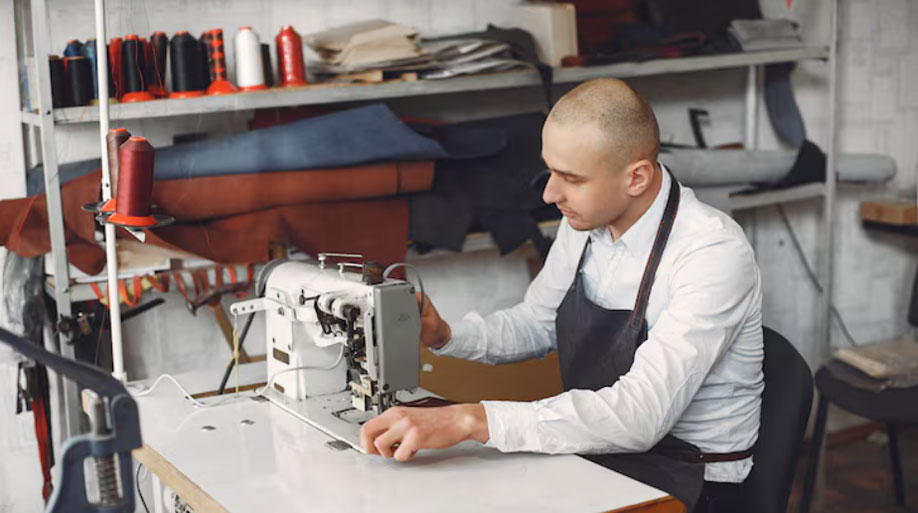
This table demonstrates how material, labor, and hardware scale. The largest levers for cost reduction at volume are material contracts and marginal labor productivity improvements from automation and standardized jigs.
Quality Control and Testing Protocols
For bulk orders, consistency trumps one-off craftmanship. Longzhao implements a multi-tier quality framework:
– Incoming inspection: Hides and hardware are tested against pre-approved samples.
– In-process checks: Operators log key parameters (stitch counts, seam tension) at predefined checkpoints, and statistical process control (SPC) charts flag deviations.
– Final inspection: Functional tests for pocket dimensions, strap integrity, stand deployment, and water resistance are performed on a sample basis (AQL sampling) with 100% checks for critical attributes.
– Durability testing: Accelerated wear tests, UV exposure, and hardware fatigue tests are run for premium orders.
These QC measures reduce returns and warranty claims—important for maintaining unit economics on high-volume contracts.
Customization, Branding, and Lead Time Management
Large orders often require custom colors, embossing, or silk-screened logos. Longzhao’s modular design approach minimizes the time and cost of customization:
– Standardized base models with configurable trim panels and piping allow for rapid color changes without retooling the entire assembly line.
– Pre-approved digital proofs and sample sign-off processes reduce iterative revisions.
– Dedicated customization lanes let clients add embroidery, heat stamping, or metal badge installation with predictable lead times.
Lead time optimization focuses on staggered deliveries: Longzhao can split a 10k-unit order into smaller production waves, allowing customers to begin distribution earlier while the rest of the order completes. Typical lead times for full custom execution range from 8 to 14 weeks depending on complexity and raw material availability.
Logistics, Packaging, and Total Landed Cost Considerations
Large-volume production cannot be evaluated purely by factory price per unit; logistics and packaging profoundly impact total landed cost. Longzhao helps clients optimize:
– Folded vs. structured packing: Folded packing reduces volume and shipping costs but requires final unpacking and reshaping at destination; structured packing preserves finish but increases freight.
– Consolidated shipping: Full-container loads (FCL) reduce per-unit ocean freight compared to less-than-container loads (LCL).
– Compliance documentation: Pre-prepared certificates of origin, test reports, and labeling reduce customs delays.
By combining optimized packing methods with freight-forwarder partnerships, Longzhao negotiates competitive shipping rates and offers CIF/DDP options according to client preferences.
Sustainability and Regulatory Compliance
Sustainable practices matter to many buyers. Longzhao’s sustainability efforts include:
– Traceable leather sourcing and preference for tanneries with lower chemical footprints.
– Use of recycled content for internal trims where performance permits.
– Waste reduction programs in cutting operations to maximize yield per hide.
– Compliance with REACH, CPSIA, and other relevant chemical and flammability regulations for target markets.
Clients receive documentation on material compliance and can request audited sustainability reports for large contracts.
Case Example: Scaling a 12,000-Unit Order
A mid-size retail chain contracted Longzhao for a 12,000-unit private-label leather cart bag. Key outcomes:
– Unit price reduction of approximately 20% relative to a 1,000-unit prototype run, driven mainly by material discounts and labor efficiency.
– Lead time of 11 weeks from final approval to shipment, achieved by running two parallel assembly lines and staging materials in advance.

– Defect rate below 0.8% on final inspection, thanks to in-process SPC checks and dedicated finishing crews.
– Reduced freight per unit by 14% through a single FCL shipment and optimized folded packaging.
Clients reported high satisfaction with the combination of cost, quality, and timely delivery, enabling profitable retail rollouts.
Conclusion and Buyer Recommendations
Longzhao’s model for cost-effective leather golf cart bag production on large-volume orders rests on the pillars of strategic sourcing, process standardization, and targeted automation. For buyers considering large orders, recommended steps include:
– Define acceptable material tiers early (full-grain vs. corrected-grain vs. synthetic) to lock realistic pricing.
– Approve a limited number of custom elements to reduce the number of SKUs and complexity.
– Discuss staged deliveries to reduce inventory holding costs while accelerating time to market.
– Request detailed quality and compliance documentation and set clear AQL standards in the contract.
– Negotiate inclusive logistics terms or at least explore FCL options to reduce total landed cost.
When these elements align, Longzhao’s production platform can deliver high-quality leather golf cart bags that offer strong margins and consistent performance at scale—making it a pragmatic choice for OEM partners and large retailers seeking dependable, cost-effective bulk manufacturing.